
Best Spring Destinations in Europe: 9 Places for Flowers, Festivals, and Fewer Crowds
Updated: Aug 13

The best spring destinations in Europe include Paris, Amsterdam, Seville, the Swiss Alps, Cinque Terre, Dubrovnik, Sicily, Matera, and Sintra. Spring travel in Europe runs from late March to early June, with April and May offering the best balance of mild weather, blooming landscapes, and fewer crowds. Cities host major festivals, such as Seville's Feria de Abril, and Amsterdam's tulip season, while places like Cinque Terre and the Swiss Alps offer spectacular scenery before peak summer tourism begins.
Best Spring Destinations in Europe at a Glance
Destination | Best Month | Why Visit |
April–May | Gardens, café culture, spring festivals | |
April | Tulip season and Keukenhof | |
April | Semana Santa and Feria de Abril | |
May | Alpine flowers and scenic trains | |
April–May | Hiking trails before summer crowds | |
May | Quiet Old Town and pleasant weather | |
May | Festivals and wildflowers around temples | |
April–May | Golden light and fewer tourists | |
April–May | Misty palaces and lush gardens |
Quick guide: Tap any destination to jump to the detailed section.
Here is the honest guide to all nine, what makes each one worth the trip in spring, what has changed, and what the generic lists will not tell you.
Key Takeaways: Best Spring Destinations in Europe
Best for flowers: Amsterdam and the Swiss Alps
Best for festivals: Seville and Sicily
Best for coastal scenery: Cinque Terre and Dubrovnik
Best for iconic European cities: Paris
Best day trip: Sintra from Lisbon
Best hidden gem: Matera, Italy, a cave city of golden stone that feels far quieter and more atmospheric in springbefore summer crowds arrive
9 Best Places to Visit in Europe in Spring: Interactive Map
When does Spring begin in Europe?
Spring in Europe runs officially from late March to late June. In practical travel terms, the sweet spot is April and May, when the weather has settled, the worst of the tourist crowds have not yet arrived, and the best festivals and blooming seasons are in full swing.
Why travel to Europe in the spring?
The honest reason experienced travelers prefer spring is simple: summer in Europe has become a victim of its own success.
The crowds are relentless, prices surge, and even the most beautiful cities can feel overwhelmed.
Spring offers the same destinations with a completely different atmosphere.
Fewer Crowds: April and May sit firmly in the shoulder season across most of Europe. The same cities, the same landmarks, and the same restaurants, but with room to breathe. Not empty, but far more manageable.
Better Prices: Flights and hotels are usually cheaper than in July and August, sometimes significantly so. The main exceptions are Easter week in Spain and southern Italy, and major festivals such as King’s Day in Amsterdam.
The Weather Sweet Spot: Spring brings mild temperatures, longer days, and soft light that makes European cities look their best. Cool enough in the morning for long walks, warm enough by afternoon to sit outside at a café.
Want to compare spring with other seasons? Browse my full Europe weekend escape matrix to find the best 3 or 4-day trip for your travel style.
Paris, France: Gardens, Café Terraces, and Spring at Its Best

Best for: Gardens, culture, and classic spring atmosphere Best months: April–May Why visit in spring: Cherry blossoms bloom in parks like Parc de Sceaux, café terraces reopen across the city, and events like Nuit des Musées bring museums to life before the summer crowds arrive. |
Paris has always been crowded, and it has always been worth it.
What spring gives you is the version of the city that earns its reputation most honestly, the café terraces full, the gardens green, and a soft light that makes even the tourist-heavy spots feel bearable.
I have been back more times than I can count, and Montmartre and Le Marais still have a village-like quality in April that almost disappears by July.
The Experience, The Hidden Bloom:
While most visitors head to the Luxembourg Gardens, the real hidden gem is Parc de Sceaux. Located on the outskirts, this is where the cherry blossom festival, Hanami, takes place in late March or early April. The scale of the pink blossoms here surprises even lifelong Parisians. Go on a weekday morning to experience it in near-total peace.
The Insider Tip, The Night of Museums:
The Nuit des Musées in May is a spring-only secret. Iconic museums like the Louvre and the d'Orsay open for free after hours. It feels genuinely special, seeing the art under moonlight rather than the harsh midday sun.
The Honest Truth, The Energy Shift:
Tennis fan or not, Roland Garros from late May to early June changes the energy of the 16th arrondissement. It is stylish, buzzing, and very Parisian. Even without a centre court ticket, just being in the city during the tournament is a highlight.
The Logistics, Timing the Icons:
Notre Dame is striking now that it is rebuilt, but like the Eiffel Tower and the Louvre, you must book in advance. Spring is no longer a quiet season. It is a quality season.
Planning a full week in the City of Light? I have detailed the best café terraces, the Foire du Trône festival, and exactly what to pack in my Essential Guide to Paris in Spring.
Amsterdam, Netherlands: Tulips, Canals, and One Garden That Justifies the Entire Trip
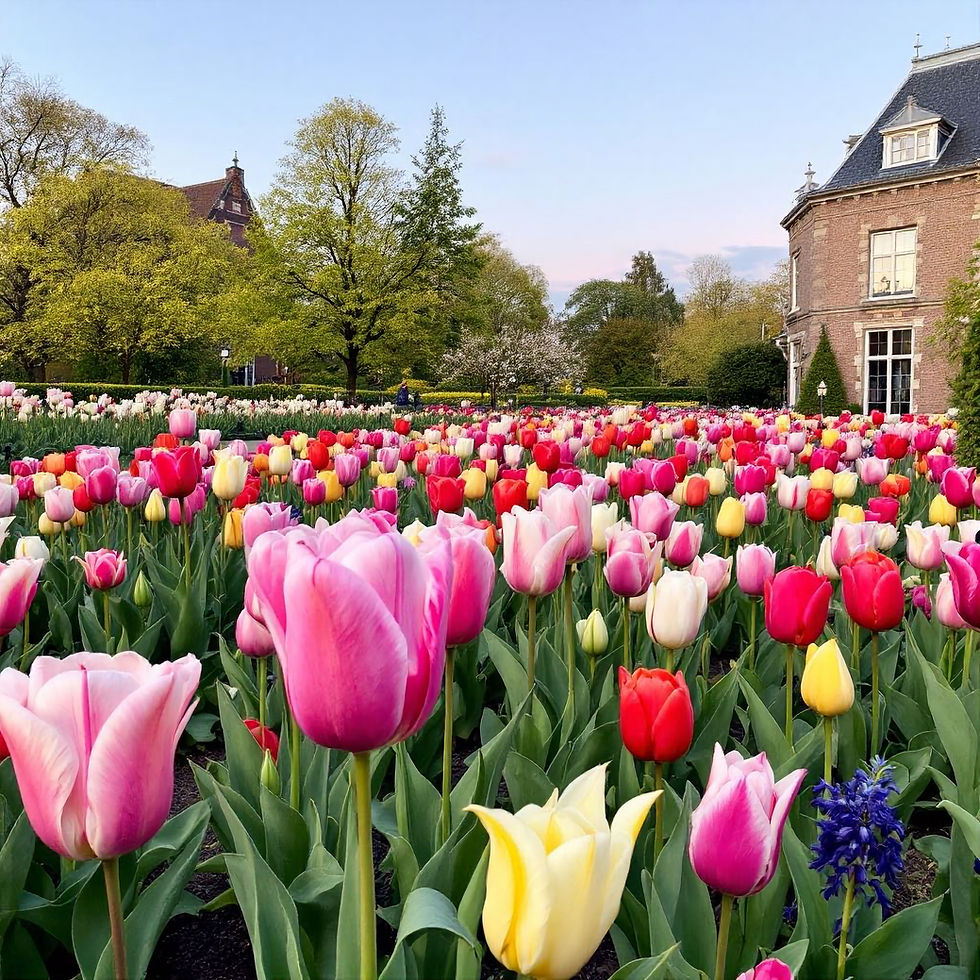
Best for: Tulip season and spring flowers Best months: April–early May Why visit in spring: Tulip fields and the Keukenhof gardens reach their peak while canal cruises, bike rides, and outdoor cafés return with the warmer weather. |
Amsterdam in spring is one of those combinations that just works. The canals reflect the blue sky, the city is alive with color, and somewhere just outside the city, there are fields of tulips that look almost too perfect to be real.
I've done the canal cruise, spent time in the museum quarter, and made the trip out to Keukenhof. Done together, they make for one of the most complete spring city breaks in Europe.
Keukenhof, the main event:
There is simply no garden quite like it anywhere in Europe, and spring is the only time you can see it. The garden opens for roughly eight weeks a year and sells out on busy weekends, so book tickets well in advance online.
Go on a weekday and arrive early if you want to move around at your own pace. And if you want to see the tulip fields beyond the garden fences, rent a bike in Lisse and cycle through the Bollenstreek, the surrounding bulb region is a patchwork of color that no camera quite does justice to.
Looking for more spring gardens across Europe? Read our guide to the most beautiful spring gardens in Europe.
The City in Bloom:
While everyone heads to Keukenhof, Amsterdam itself runs its own Tulip Festival throughout April and May, with flower displays installed across the city in parks, squares, and along the canals.
It turns an already beautiful city into something genuinely special. The canal cruise is worth doing in spring, specifically because the light and the colors along the water are at their best between April and early May.
Worth knowing if you're a cherry blossom fan: the Bloesempark in the Amsterdamse Bos has a beautiful Sakura display in late March and early April, quieter and more local in feel than Keukenhof and completely free.
The Museums:
The Van Gogh Museum and the Rijksmuseum are both world-class and worth at least half a day each. Book tickets in advance for both; the queues without a reservation are long even in spring.
If you only have time for one, the Van Gogh Museum is the more singular experience; there is nowhere else on earth you can see that concentration of his work.
The Neighborhoods:
De Pijp, with its Albert Cuyp Market, and the Jordaan are both worth an afternoon of wandering.
The Jordaan in particular has a quieter, more local feel than the city center and is full of good cafés and independent shops. Spring is when the outdoor terraces along the canals come back to life, and the whole neighborhood feels like it exhales after winter.
Traveler's Note:
King's Day on April 27th turns the entire city into one enormous street party with over 700,000 people celebrating. It is a fantastic experience if you want to see Amsterdam at its most alive and most Dutch.
Just know that hotels book out months in advance, and prices spike significantly around that date. Plan accordingly or avoid it entirely, depending on what kind of trip you want.
For Keukenhof tickets and tulip field bike tours, Viator and GetYourGuide both have reliable options. Book early, the good time slots go fast in April.
Seville, Spain: Orange Blossoms, Flamenco, and the Best Spring Festival in Europe

Best for: Festivals and Andalusian culture Best months: Late March–April Why visit in spring: Orange blossoms scent the streets while Semana Santa and the Feria de Abril transform the city with music, flamenco, and historic traditions. |
I visited Seville outside festival season, which means I can tell you something most travel posts can't: the city is stunning regardless of what's happening on the calendar.
The medieval streets, the smell of azahar drifting through the barrios in spring, the pace of life that feels completely its own.
Add one of Europe's most celebrated festival calendars on top of that, and you understand why Seville keeps appearing on every spring travel list worth reading.
The Festival Calendar:
If you can time your visit right, Semana Santa in late March or early April and the Feria de Abril a few weeks later are genuinely unmissable.
Semana Santa fills the streets with solemn religious processions, candlelight, and music that gives you goosebumps, whether you're religious or not.
The Feria de Abril is the opposite, an explosion of color, flamenco, food, and celebration that is as close to the soul of Andalusia as you'll get as an outsider.
Book your hotel at least six months in advance for either. Prices don't just rise during the Feria; they multiply.
The Alcázar:
A UNESCO World Heritage Site that genuinely earns the label. The blend of Moorish and Christian architecture is unlike anything else in Spain, and the gardens in spring are beautiful.
Book online in advance, as it sells out regularly. One detail most guides miss: the Upper Royal Apartments (Cuarto Real Alto) require a separate nominated timed entry ticket. If you want to see them, and you do, book the 10:00 AM slot when you purchase your ticket.
It gets you into the best part of the palace before the crowds arrive and before the spring heat makes the outdoor sections uncomfortable.
Insider Tip:
Cross the river to Triana. Most visitors stay in the historic center and never make it over the bridge, which is their loss.
Triana is where you find the real Seville: ceramics workshops that have been running for generations, authentic flamenco that isn't staged for tourists, and tapas bars where the salmorejo and tortillas de camarones are the best in the city.
It hasn't changed much, and that's exactly the point.
The Plaza de Toros:
The Plaza de Toros de la Maestranza is one of the most beautiful bullrings in Spain, regardless of your feelings about bullfighting.
The building itself is worth visiting, and spring is when the season runs with Spain's most renowned bullfighters. Whether you attend a fight or just tour the arena, it's a significant piece of Sevillian history that's hard to ignore.
Traveler's Note:
Seville in spring gets warm fast. By May, temperatures can hit the high 20s, and the city has very little shade in places.
Plan your outdoor sightseeing for mornings, find a café terrace for the midday hours, and save your evening for Triana. That rhythm is how Sevillanos actually live, and it makes for a much better trip.
The Swiss Alps: Scenic Trains, Alpine Blooms, and and Spring Hiking

Best for: Alpine scenery and scenic trains Best months: May–June Why visit in spring: Snow still crowns the peaks while valleys turn bright green and panoramic train routes like the Bernina Express reveal some of the most dramatic landscapes in Europe. |
Switzerland is expensive. There is no point pretending otherwise. But here is the thing: every time I have been, I have come back feeling it was worth it.
The scale of the scenery, the quality of the trains, the villages that look like someone designed them to be perfect and then forgot to tell anyone.
Spring in the Swiss Alps reveals a quieter side of the mountains. Snow still crowns the peaks above Zermatt and the Jungfrau region, while valleys around Interlaken and Grindelwald begin to turn green with alpine flowers.
The Trains:
If you do one thing in Switzerland, make it a panoramic train journey. I've done the Bernina Express and the Glacier Express, and both are genuinely spectacular in different ways.
The Bernina Express from Chur to Tirano crosses the Alps through scenery that makes you put your phone down and just look. Book in advance, reserve a window seat, and give yourself a full day for it. It is not a transfer; it is the destination. (Worth mention the Gotthard Panorama Express)
Grindelwald and the Jungfrau Region:
Grindelwald is the kind of Alpine village that should feel too perfect to be real, but somehow isn't.
The views of the Eiger, Mönch, and Jungfrau from the valley floor are dramatic in a way that photos don't fully capture. In spring, the hiking trails start opening up as the snow retreats and the meadows below the peaks turn a green that is almost aggressive in its intensity.
Take the cogwheel train up to Kleine Scheidegg for one of the best panoramic views in the Alps without needing to hike to earn it.
Interlaken and the Lakes:
Interlaken sits between two lakes, Thun and Brienz, and in spring, both are a deep, almost unreal blue framed by snow-capped peaks.
It makes for a good base for exploring the region, and the town itself is pleasant without being overly touristy in spring.
The boat trips on Lake Thun are worth doing on a clear day. From here, Mount Rigi is an easy and rewarding side trip. Known as the Queen of the Mountains, it is often included in rail passes, and the views over the lakes and Alps from the summit are extraordinary on a clear spring morning.
Insider Tip:
Zurich and the Lake Léman area are worth building into your Switzerland itinerary alongside the mountains. Zurich in spring is walkable, culturally rich, and a natural entry point before heading south.
For the full Lake Léman experience, including Montreux, Vevey, Lausanne, and the French side of the lake, our complete Lake Geneva guide covers it in depth.
Spring Festivals Worth Planning Around:
Two events that most visitors miss. Sechseläuten in Zurich on the third Monday of April is one of those only-in-Switzerland experiences, historic guild parades through the city followed by the burning of the Böögg, a giant snowman stuffed with fireworks that symbolizes winter's end. How fast it burns supposedly predicts the summer weather.
And if you are a tulip lover, the Tulip Festival in Morges on Lac Léman transforms Independence Park into a sea of color from March to May, quieter and more intimate than Keukenhof and genuinely beautiful.
Traveler's Note:
Switzerland rewards slow travel more than almost anywhere else in Europe. Resist the urge to rush between destinations.
Buy a rail pass, pick two or three bases, and give yourself time to just sit with the scenery. The cost per day drops significantly when you stop trying to cover everything.
One practical essential: download the SBB Mobile app before you arrive. It is the cleanest way to navigate the entire Swiss rail network and lets you grab Supersaver tickets on the fly, which makes a real difference if you are watching your budget.
The Swiss rail network is one of the best in the world, and buying a pass in advance saves both money and hassle. RailEurope is the easiest place to compare pass options and book before you arrive.
Cinque Terre, Italy: Still Beautiful, Still Worth It, Just Go in Spring

Best for: Coastal hiking and Mediterranean scenery Best months: April–May Why visit in spring: Wildflowers line the cliffside trails, temperatures are comfortable for hiking, and the villages remain far quieter than during the summer rush. |
Everyone warns you it is crowded. They are not wrong, but they are usually talking about July and August.
Come in April or May, and you get the cliffs, the colored houses, the trails above the sea, and almost none of the chaos. Spring is when Cinque Terre actually delivers on the postcard.
The Experience:
The trails above the villages are lined with wildflowers in April, and the light on Manarola's harbor at golden hour is at its absolute best before the summer haze sets in.
Monterosso hosts the Sagra del Limone in May, typically the third Saturday of the month, a spring-only celebration of the region's famous lemons worthtiming your visit around.
And the temperatures make the hiking between villages actually enjoyable rather than punishing.
The Insider Tip:
The Via dell'Amore between Riomaggiore and Manarola now requires a separate timed entry booking on top of the Cinque Terre Card. Book it online before you arrive; you cannot sort it at the trailhead.
The Honest Truth:
The villages are tiny, steep, and expensive to sleep in. The magic is real but it lasts about half a day per village. And in summer it is genuinely overwhelming. Spring is not a secret anymore either, but it is still the version of Cinque Terre that actually feels worth the trip.
The Logistics:
Base yourself in La Spezia or Levanto instead of the villages. Both are on the same train line, significantly cheaper, and far less crowded.
Traveler's Note:
If you have a spare half day, do not skip Portofino. Yes, it is expensive, and yes, it caters to a crowd that arrives by yacht, but the harbor, the colored houses, the walk up to the castle above the village.
I had a fantastic lunch there with stunning views that was not cheap but was absolutely worth it. Some places earn the price tag, and Portofino is one of them.
For the complete village guide, trails, costs, and where to stay, read our full Cinque Terre FAQ.
Dubrovnik, Croatia: One of Europe's Most Stunning Cities, Best Enjoyed in Small Doses

Best for: Historic cities and Adriatic views Best months: April–May Why visit in spring: The medieval walls and limestone streets can be explored comfortably before cruise ship crowds and summer heat dominate the Old Town. |
Dubrovnik is one of those cities that genuinely stops you the first time you see it. The medieval walls rising above the Adriatic, the terracotta rooftops, the clarity of the water below. It is extraordinarily well preserved and extraordinarily beautiful.
My honest take after visiting is that two to three days is the sweet spot. The Old Town is compact, you can cover the highlights properly without rushing, and you leave wanting to come back rather than feeling you have exhausted it.
The City Walls:
Walking the walls is the single best thing you can do in Dubrovnik, and spring is the ideal time to do it. The circuit takes about two hours at a relaxed pace, and the views over the Old Town rooftops and out to the Adriatic are spectacular at every turn.
In summer, the walls become uncomfortably hot and crowded by mid-morning. In spring, you can walk them at a human pace and actually enjoy the experience. Go early; the walls open at 8:00 AM in spring, and the first hour is genuinely peaceful.
One practical hack worth knowing: the Dubrovnik Pass costs roughly the same as the walls ticket alone and includes all the main museums and the city bus network, making everything else effectively free. Buy it before you buy just the walls ticket.
The Old Town:
Stradun Dubrovnik's main limestone street, is one of the most beautiful pedestrian streets in Europe. In spring, it has a calm that summer completely destroys.
Walk it in the early morning before the cruise ship passengers arrive, and you will see why people fall in love with this city. The side streets running off Stradun are worth exploring too, steeper, quieter, and full of small cafés and local shops that feel a long way from the tourist circuit on the main drag.
Mount Srd:
Take the cable car up to Mount Srd for the view that puts everything in perspective. Looking down over the Old Town, the walls, the islands, and the deep blue Adriatic from above is the moment Dubrovnik's scale and beauty really hit you.
It is also where you understand why Game of Thrones chose this city as King's Landing. The fortress at the top has a small museum worth a quick visit, too.
Insider Tip:
Lokrum Island is a ten-minute boat ride from the Old Town harbor, and most day visitors never make it there. A forested nature reserve with a Benedictine monastery, a botanical garden, and rocky swimming spots, it is the perfect half-day escape from the city walls circuit. In spring, the island is green, quiet, and lovely.
If your timing allows, the Dubrovnik Musical Spring brings the Dubrovnik Symphony Orchestra to the city each April, a low-key cultural event that most tourists do not even know is happening.
Traveler's Note:
Dubrovnik is best in spring for one simple reason: cruise ships. From June onwards, the Old Town fills with thousands of day visitors every morning and empties every evening, leaving behind a strange, hollowed-out atmosphere.
In April and May, the city still belongs to people who are actually staying there. That difference in atmosphere is significant, and it is the main reason spring is the right time to visit.
One date worth knowing about: Du Motion, Dubrovnik's half-marathon, takes place typically in late April. If you are a runner, it is a fantastic event set against one of the most dramatic race backdrops in Europe.
If you are not, just check the date before booking and decide whether the buzz works for you or whether you would rather have the Stradun to yourself.
Planning a broader Croatia trip? Our Croatia itinerary covers Dubrovnik alongside Split, Hvar, Zadar, and the Plitvice Lakes.
Sicily, Italy: Ancient Ruins, Baroque Festivals, and the Best Version of the Island

Best for: Ancient ruins, baroque festivals, and slow travel Best months: April–May Why visit in spring: Wildflowers bloom around the Valley of the Temples, festivals like the Infiorata di Noto fill baroque streets with color, and temperatures are ideal for exploring the island. |
Sicily is not a destination you rush. It is a crossroads of Phoenician ports, Greek temples, and Norman mosaics that take time to reveal themselves.
While I used to recommend October, my most recent visit in 2025 changed my mind: autumn has become the new high season. For those seeking the slow travel Sicily that still feels authentic, spring, specifically April through early June, is now the best window.
The Experience:
If you can time your visit for May, the Infiorata di Noto is unmissable. A baroque street transformed into a massive carpet of flower petal mosaics is a spring-only event, and the scale of it genuinely surprises you when you are standing in front of it.
In the Valley of the Temples, the wildflowers bloom around the Doric columns in a green and gold landscape that the dry heat of August completely destroys.
The Insider Tip:
In May and June, the Teatro Greco in Siracusa hosts classical performances at sunset. It is a rare chance to experience ancient ruins still used as a working theatre rather than just a monument to photograph. Book in advance, it sells out.
The Honest Truth:
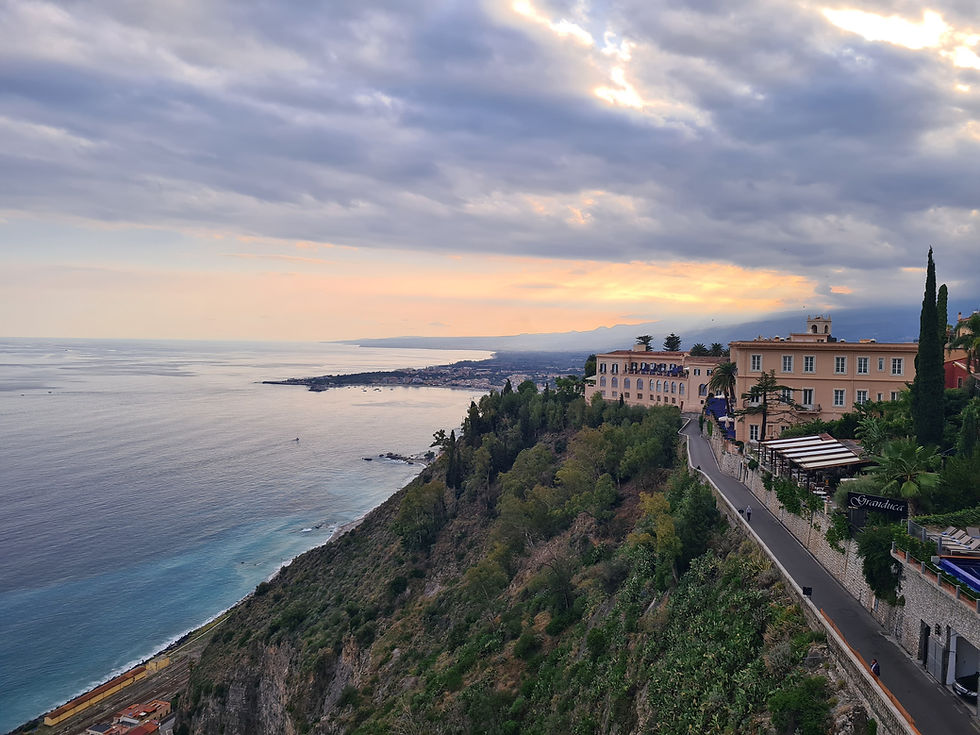
Taormina is spectacular but increasingly commercial and expensive. In spring, you can still enjoy the view of Etna from the theatre without the summer queue atmosphere. Two nights are plenty. Save your slow days for the south.
The Logistics:
You need a car to see the real Sicily, but respect the ZTL restricted traffic zones. Fines in historic centers are automatic and expensive. Park outside and walk in. It is the only way to save your budget for food.
Planning a full two weeks? I have detailed my exact 3-base strategy, a day-by-day itinerary, and a realistic budget breakdown in my 14-Day Sicily Slow Travel Guide.
Matera, Italy: Ancient Cave City Carved Into the Sassi

Best for: Hidden gem destinations and unique landscapes Best months: April–May Why visit in spring: The golden cave city glows in soft spring light and remains far quieter than the peak summer season. |
I ended up in Matera during a road trip through Puglia, almost as an afterthought. Glad I did not skip it. The Sassi are hard to describe without sounding like you are exaggerating.
Thousands of cave dwellings carved into a ravine, stacked on top of each other, going all the way down, golden stone in every direction. You walk through it and keep stopping just to look at the landscape spreading out below you.
The Experience:
Matera has had a big moment since No Time to Die filmed its opening chase here, Bond through the stone streets on an Aston Martin DB5, and the city has been firmly on the map ever since. It deserves attention.
Visit in spring before the peak summer crowds arrive, and you will find quiet mornings, beautiful light on the golden stone, and a pace that lets you actually absorb the place rather than just photograph it. Cross to the opposite ridge for the panoramic view of the entire Sassi. That view is the one. Nothing else quite puts the scale of it in perspective.
The Insider Tip:
The cave churches scattered through the rock are worth dipping into, especially Madonna de Idris, carved directly into the cliff with faded frescoes still visible inside.
Most visitors walk past them entirely. And eat well while you are there. The local cuisine is built around bread, legumes, and lamb in ways that feel honest rather than touristy, the kind of food that tastes as if it belongs to the place.
The Honest Truth:
Matera is not a flat city. The Sassi are built into a ravine, and getting around means a lot ofstairs, steep alleys, and uneven stone paths. You need to be reasonably fit and comfortable walking for a fewhours.
Wear proper shoes, not sandals. If you have mobility issues, it is worth researching specific routes in advance because some areas are genuinely challenging.
The Logistics:
Matera sits just outside Puglia in the Basilicata region, but fits naturally into a southern Italy road trip.
Bari is the nearest airport, and from there you can loop through Alberobello, Lecce, and the Adriatic coast before finishing in Matera. It makes for one of those trips where every stop surprises you.
Planning to explore the wider region? Our complete Puglia Itinerary covers everything from the trulli of Alberobello to the baroque streets of Lecce.
Sintra, Portugal: Palaces, Misty Forests, and a Perfect Day Trip from Lisbon

Best for: Palaces, gardens, and day trips from Lisbon Best months: April–May Why visit in spring: Lush gardens, misty forests, and blooming landscapes make sites like Pena Palace and Quinta da Regaleira feel especially atmospheric. |
Sintra is the kind of place you see in a photo and think it cannot actually look like that in real life. Then you get there, and it turns out it does.
Colorful palaces sitting on misty hilltops above the forest, the Atlantic somewhere in the distance. I went on a day trip from Lisbon, and even knowing it would be beautiful, it still surprised me.
Spring is the sweet spot, the gardens are green and flowering, the light is soft, and the weather is comfortable for walking between sites.
The Experience:
Pena Palace is the main event, that wildly colorful Romanticist palace at the top of the Serra with its surrounding forested park.
In spring, the gardens are lush, and the morning mist rolling in from the Atlantic gives the whole place an atmosphere that photos never quite capture.
Quinta da Regaleira is the quieter alternative, with gardens, grottos, and a famous spiral well that descends into the hillside. If you only have time for two sites, those are the two.
The Insider Tip:
Most visitors follow the same route between the same palaces. The walk up through the forest to the Moorish Castle is quieter, takes you above the crowds, and gives you one of the best panoramic views of the entire Serra de Sintra. It is free, and almost nobody does it properly. That said it is not a casual stroll: the path is uphill, uneven in places, and further than it looks on the map
The Honest Truth:
Sintra gets busy fast, even in spring. By mid-morning, the queues are long, lunch spots fill up, and the cobblestone paths between sites are steep and slippery. Avoid week-ends and arrive before 9:30am; that is not a suggestion.
Book Pena Palace online before you go; it sells out on spring weekends. Bring a picnic so you are not dependent on finding a table at lunchtime.
The Logistics:
The train from Lisbon's Rossio station takes 40 minutes and costs almost nothing, and it is the only sensible way to get there. Once at the station, use the 434 tourist bus or a registered tuk-tuk.
Private cars are now banned from the palace roads, and parking in the town center is a battle you will lose. The hills between sites are way steeper than on the map.
No dedicated Sintra post yet, but if you want the full practical breakdown of every palace, ticket prices, and how to structure the day, drop a question in the comments, and I will put one together.
Practical Planning Tips for a Spring Trip to Europe
Spring is the answer, but is it April or October that works for you? The spring vs fall seasonal guide settles the timing before you book anything
Flights
Spring flights to Europe often book up earlier than travelers expect, especially for April departures around Easter and major festivals. If you have flexibility, mid-week flights are usually cheaper and less crowded.
Helpful tools for tracking flights:
• Google Flights: best for exploring flexible travel dates and price trends
• Expedia: useful for comparing airlines and nearby airports
Hotels
Accommodation in popular spring destinations fills quickly, particularly during major events like Semana Santa in Seville or King's Day in Amsterdam. Booking earlier usually means better prices and more options.
Where to compare hotels:
• Booking.com: large inventory and flexible cancellation policies
• Hotels.com: good for comparing options and collecting nights towards free stays
Not sure where to start? Read our step by step guide to booking the best hotel deal.
Tours and Tickets
Several attractions on this list require advance reservations in the spring. Timed-entry tickets can sell out quickly, especially at famous landmarks.
Reliable platforms for tours and tickets:
GetYourGuide: strong selection of city tours and skip-the-line tickets
Viator: good for comparing guided tours across m
Tiqets: useful for concerts, festivals, and cultural events like Dubrovnik Musical Spring
Planning a trip to Italy? Read our guide on how to book tickets and skip the queues at Italy's top attractions.
Planning Your Spring Trip to Europe: Common Questions
When does spring start in Europe?
Spring in Europe runs from late March to late June, but the best time to travel is April and May. The weather is settled, crowds are thinner than in summer, and most blooming seasons and festivals are at their peak. March can still be cold and unpredictable, while June already feels like early summer in southern destinations like Sicily and Seville.
Is spring a good time to visit Europe?
Spring is one of the best times to visit Europe. You get mild weather, fewer crowds than summer, lower prices, and the continent at its most beautiful with everything in bloom. The only trade-off is unpredictable weather, especially in northern Europe. Pack layers and you'll be fine.
Is spring cheaper than summer in Europe?
Yes, spring is generally cheaper than summer in Europe, especially in April and early May. Hotels, flights, and tours cost noticeably less than in peak season. The exception is Easter week, when prices spike in Spain and southern Italy. Late April and early May offer the best balance of good weather and lower prices.
When is the best time to see tulips in Europe?
Mid-April is the best time to see tulips in Europe. The Keukenhof Gardens in the Netherlands, the most famous tulip destination, are open from late March to mid-May. Book tickets in advance as they sell out. For the full tulip fieldsexperience, the Bollenstreek region near Lisse is stunning from mid-April and easy to explore by bike.
What should I pack for Europe in spring?
Pack layers for spring in Europe. Mornings are cool, afternoons warm, and evenings unpredictable. A light jacket, a couple of sweaters, and comfortable walking shoes cover most situations. Comfortable shoes are the most important thing you'll pack since you'll be walking a lot, often on cobblestones. For a full packing breakdown, read what to wear in Europe in spring.
Which European city is best to visit in spring for the first time?
Seville is one of the best European cities to visit in spring for the first time. The weather is warm, the city is alive with festivals, and the historic center is stunning. Paris is the classic choice but comes with more crowds and higher prices. For something less expected, Cinque Terre in April is beautiful and still manageable before summer arrives.
What is the warmest spring destination in Europe?
Seville is the warmest destination on this list in spring, with temperatures reaching 20–25°C by April and climbing even higher in May. If you prefer warm weather without intense heat, April is the best time to visit. By late May, Seville can feel genuinely hot, and the city adjusts accordingly, with locals retreating indoors during the midday hours.
Is Europe too crowded in the spring?
Europe is less crowded in spring than in summer, but it is no longer a quiet season. Since 2022, many popular destinations have remained busy year-round, especially places like Paris, Dubrovnik, and Cinque Terre. What spring offers instead are shorter queues, easier restaurant reservations, and hotel prices that are usually lower than peak summer.
One practical detail: in smaller towns, particularly in southern Europe, some restaurants and shops may not fully reopen until late April. If you visit in late March, it is worth checking ahead.


Comments