
14-Day Sicily Itinerary: The Honest Slow Travel Guide (3 Bases, Etna, Temples + Beaches)
- 28 de fev.
- 26 min de leitura
14-Days Sicily Itinerary: Quick Answer
The ideal 14-day Sicily itinerary uses 3 bases: Cefalù (5 nights) → Ortigia/Siracusa (5 nights) → Taormina (3 nights). This slow-travel route covers Greek temples, baroque towns, Mount Etna, and the best beaches without constant hotel changes.
Duration: 14 Days Route: Cefalù (5n) → Ortigia (5n) → Taormina (3n) Best Months: May–June, Sept–Oct Transport: Car Recommended (except in cities) Budget: €140–€350 / day per person Mobility: Moderate walking; some hills/stairs Pace: Relaxed. This itinerary integrates a mix of high-energy days and built-in recovery mornings to help you pace your journey. Days 1–5: Northwest base – Cefalù or Palermo Days 6–10: Southeast base – Ortigia (Siracusa) Days 11–14: East coast base – Taormina (Etna & beaches) |
If Italy is a boot, Sicily is the jewel at its toe, but calling it just another region misses what makes it extraordinary.
Sicily is a crossroads of civilization: Phoenician ports, Greek temples, Arab gardens, Norman mosaics, and Spanish palaces all coexist under the same golden sun.
Here, legends are born (Bacchus was said to be conceived in a cave), and the island’s heritage is woven into modern imagination, from ancient myths to The Godfather’s Vito Corleone.
It’s home to Mount Etna, Europe’s most active volcano, ancient markets, baroque towns, world-class beaches, and a pace of life that invites travelers to slow down and savor each moment.
For travelers over 50, Sicily offers something rare: beauty without rush. Mornings exploring Greek theaters. Afternoons lingering over granita in sun-bleached piazzas. Evenings watching the sky turn pink behind medieval cathedrals.
This guide brings together the Why (the beauty, culture, and history) and the How (a practical, stress-free 14-day itinerary with easy bases designed for comfort, authenticity, and slow travel).
Sicily is also featured among the best spring destinations in Europe, thanks to its festivals and blooming landscapes. |
📝 A Personal Note: How Sicily Has Changed Over the Years
I first visited Sicily over 30 years ago, long before travel blogs and social media shaped expectations.
Back then, I would tell anyone who asked that Sicily was one of Italy's most culturally rich and unforgettable destinations, a place everyone must experience once in their lives.
When I returned in October 2025, the island was still breathtaking, especially in the warm, late-season light. But it had also changed.
Popular towns were far busier than I remembered, traffic was intense even outside summer, and some places, especially Taormina, felt more commercial than the atmospheric Sicily I knew decades ago.
This shift isn't necessarily "good or bad," but it is different, and it matters when choosing where to stay and how to structure your trip.
That's exactly what shaped the travel itinerary you're about to read.
📝 Why Trust This Guide? I have designed this itinerary specifically for slow travel. Unlike generic guides that require you to change hotels every night, this route utilizes three strategic "home bases." This allows you to unpack, settle in, and explore the island's complexity with comfort and ease, without exhausting drives or rushed sightseeing
❌ Mistakes I made in Sicily (What I'd change next time)
What are the most common mistakes travelers make in Sicily?
The top mistakes are staying too long in Taormina, assuming Sicily is still cheaper than mainland Italy, and expecting October to be low season.
Even after decades of traveling through Italy, Sicily surprised me in good ways and challenging ones. On my return in 2025, a few assumptions turned out to be completely wrong.
1. Staying Too Long in Taormina
Taormina is stunning, but not a practical long-term base. After five nights, the crowds, high prices, new toll system, and constant parking battle made it more stressful than relaxing.
👉 The Fix: Treat Taormina as a beautiful finale, not the center of your itinerary.
Stay 2–3 nights max, and reserve your slow days for Cefalù and Ortigia.
➡️ See the full breakdown in the Taormina Base section below.
2. Expecting Sicily to Be “Cheap”
Sicily used to be a valuable destination, but not in its tourism hotspots. Taormina, Ortigia, and Noto now match mainland prices for hotels, restaurants, and parking.
👉 The Fix: Focus more time on Sicily’s great-value areas: Cefalù, Ragusa, Modica, and the countryside.
➡️ See the Budget section for a realistic breakdown
3. Believing October Was Low Season
I remembered October as calm and crowd-free. That Sicily no longer exists. In 2025, October felt like semi–high season, with busy streets, full hotels, and crowded archaeological sites.
👉 The Fix: Book October as early as you would Jun, ideally 4–6 months in advance.
➡️ See the Best Time to Visit section for updated seasonal advice.
4. Planning Too Many Bases
Sicily looks compact on the map, but mountain roads, coastal traffic, and slow stretches make travel days longer than expected. I underestimated this completely.
👉 The Fix: Stick to three bases only, being Cefalù/Palermo, Ortigia, Taormina.
This is the key to a calm, comfortable trip, especially for travelers 50+.
➡️ See the Quick Summary for the full logic.
How to Choose Your Sicily Bases (In 30 Seconds)

If you’re confused about where to stay, use this simple logic:
My Winning Formula:Cefalù + Ortigia + Taormina (Perfect balance of culture, seaside, ruins, and relaxation without exhausting drives.) |
🧭 Table of Contents
Quick Do & Don’t for a Perfect Sicily Trip
✅ Quick Do’s
Choose 3 strategic bases (Cefalù, Ortigia, Taormina) to avoid exhausting drives.
Book early: Secure Etna tours, key hotels, and rental cars 4–6 months ahead.
Visit major sites early (Valley of Temples, Noto, Etna) to beat the heat.
Alternate the pace: Mix “busy days” (archaeology) with “easy days” (beach/winery).
Use open-jaw flights: Arrive in Palermo, depart from Catania (or vice versa).
❌ Quick Don’ts
Don't drive into ZTL zones (historic centers) as fines are automatic.
Don't rely only on public transport for the baroque towns or Etna.
Don't assume October is low season: it is now semi-high season.
Don't underestimate hills: wear proper supportive shoes.
Don't overpack your itinerary: Sicily is best experienced slowly.
🗓️ When Is the Best Time to Visit Sicily?
The best months to visit Sicily are May, June, September and October. May and June offer mild temperatures between 20–25°C, ideal for archaeology and walking. August should be avoided if you dislike extreme heat and crowds.
Is October still a good time to visit Sicily?
💡 October Reality Check: Yes, it is still a good season, but as explained in the Mistakes section, October is now semi-high season. Book hotels and cars 4–6 months ahead.
🌡️ Sicily Weather at a Glance
Apr | 17–22°C | Hiking, wildflowers, culture |
May | 20–25°C | Infiorata di Noto, Greek Theatre Festival |
Jun | 24–28°C | Beaches, boat trips, long days |
Jul | 30–35°C | Sea + nightlife (very hot) |
Aug | 32–38°C | Peak beach season (Ferragosto closures) |
Sep | 26–30°C | "Velvet Season," warm seas, wine harvest |
Oct | 22–26°C | Food tours, photography, mild weather |
Nov–Mar | 10–18°C | Museums, opera season, budget travel |
🌼 Spring (Apr–Jun) : Best Overall
Mild weather, blooming landscapes, perfect for archaeology and day trips.
🌋 Etna Tip: Best visibility of the year with clear mornings, stable conditions.
⚠️ Health Note: May is beautiful but high in pollen (olive/wildflowers). Bring allergy meds if sensitive.
👵 50+ Traveler Note: This season offers the easiest temperatures for walking and sightseeing without heat exhaustion.
☀️ Summer (Jul–Aug) : Hot, Busy, Beautiful
Amazing for swimming, harder for inland sightseeing due to heat (35°C+).
⚠️ Ferragosto (Aug 15): Expect shop closures and extremely crowded beaches. Book dining well in advance.
🍇 Fall (Sep–Oct) : Warm Seas & Harvest
The sea stays warm long after the air cools down. Sunsets are spectacular.
💨 Weather Watch: Occasional Scirocco winds (hot wind from Africa) can spike temps for 1-2 days.
🍷 Harvest: Best time for winery tours on Etna.
🌧️ Winter (Nov–Mar): Culture & Food Season
Not for beaches, but ideal for museums, opera, and food.
The Vibe: Quiet, atmospheric, and budget-friendly. Ideal for city breaks in Palermo or Catania.
When Should You Avoid Sicily?
Avoid August if you dislike extreme heat (35–38°C) and overcrowded beaches. Ferragosto (August 15) brings peak congestion and many restaurant/shop closures.
Late July is similarly brutal inland. If you're sensitive to heat, also avoid the last two weeks of July. December, while atmospheric in cities, brings unpredictable weather and many coastal facilities shut down entirely.
How Do You Get to Sicily? (Palermo vs Catania)

The easiest way to get to Sicily is by flying into Palermo (PMO) or Catania (CTA).
Palermo: Best if you’re focusing on Cefalù, the northwest coast, and day trips to Monreale, Erice, and Segesta.
Catania: Best if you spend more time around Ortigia (Siracusa), Noto, Ragusa, Taormina, and Mount Etna.
You can also arrive by ferry from mainland Italy (Naples, Genoa, Civitavecchia, or Villa San Giovanni to Messina), but for most travelers, flying into one airport and out of the other (open-jaw ticket) is the most time-efficient option.

Do I need a Car in Sicily?
Yes. You can visit major cities (Palermo, Catania, Taormina, Siracusa) by train, but a car is essential for baroque towns (Noto, Ragusa, Modica), nature reserves, and Etna wineries. For car-free travel, base yourself in Ortigia and book organized day tours.
⚠️ Important Driving Tips:
Avoid ZTL Zones: Historic centers have "Zona a Traffico Limitato" (Restricted Traffic Zones). Cameras will fine you automatically. Always park outside the center and walk/shuttle in.
Don't Drive in Palermo: It is chaotic. Pick up your car after your Palermo stay, or park it in a garage and leave it there.
If you’re nervous about ZTLs and tickets, read my guide to How to Buy Tickets in Italy (Official Sites vs GetYourGuide)
🚗 Driving vs. Public Transport (Train and Bus) : What’s Really Faster?
Trains work well along the coasts, but crossing Sicily, or reaching baroque towns, is much faster by car.
Palermo → Cefalù | 1 hour | 45 min (direct train) | Train is easiest (no parking stress) |
Cefalù → Ortigia | 3.5 hours | 5+ hrs (1–2 transfers) | Car essential — train is very slow |
Ortigia → Noto | 30 min | 40 min (bus/train) | Car = flexibility for beaches/stops |
Ortigia → Taormina | 1h30 | 2 hours (train) | Train is scenic and comfortable |
Taormina → Catania Airport | 50 min | 1 hr (bus) | Interbus is excellent and easy |
💡 My Advice:
If you prefer not to drive, hire a private transfer for the Cefalù → Ortigia segment. It’s the only connection that’s truly inconvenient on public transport.
How Much Does a Trip to Sicily Cost?
A 14-day trip to Sicily costs roughly €1,900–€3,500 per person for mid-range to boutique travel, including hotels, car rental, food, and activities. Sicily is generally more affordable than Tuscany or the Amalfi Coast. Below is an estimated budget for a Mid-Range to Comfort (50+) trip.
Category | Mid-Range (€€) | Comfort / Boutique (€€€) |
|---|---|---|
Daily Total (per person) | €140 – €220 | €220 – €350 |
Hotels (Double Room) | €90 – €180 | €180 – €300+ |
Car Rental | €35 – €60/day | €60 – €90/day |
Fuel + Tolls | €12 – €20/day | €12 – €20/day |
Dinner for Two | €40 – €70 | €80 – €120 |
Activities (Etna/Tours) | €60 – €80 | €100+ (Private Tours) |
→ Check current prices: Booking.com | Discover Cars | Sicily tourism
📈 Where You’ll Spend More
Taormina: Premium restaurants, expensive parking, higher hotel costs, tolls
Mount Etna: Cable car + 4×4 (~€70–€95 per person)
Fuel: Sicily distances look short on the map, but routes are winding and slow
Beach clubs: €25–€45 for 2 loungers + umbrella in high season
Palermo ZTL mistakes: Automatic fines if you accidentally enter restricted areas
📉 Where You’ll Save
Cefalù: Free beaches, good-value restaurants, affordable hotels
Ortigia: Excellent boutique stays at fair prices, walkable island (no transport needed)
Noto / Ragusa / Modica: Cheap parking, inexpensive trattorias, amazing food for less
April–June & September–October: Lower hotel prices + best weather
For a step-by-step overview, see my 10-Step Master Italy Planning Guide.
🏨 Where to Stay: The 3 Strategic Bases
This itinerary utilizes three comfortable bases, allowing you to minimize packing/unpacking, one of the joys of slow travel.
Base | Why It’s Smart | Covers |
Cefalù | Relaxed seaside base | Palermo, Monreale, Agrigento |
Ortigia | Walkable baroque island | Noto, Modica, Ragusa |
Taormina | Dramatic finale | Etna, Isola Bella |
1. Northwest Base: Cefalù or Palermo (4–5 nights)
Cefalù (Recommended): A relaxed seaside town. It is walkable, safe, and has a stunning Norman cathedral. Great for easing into the trip.
Palermo: The cultural powerhouse. Vibrant and chaotic. Great for street food lovers, but it can be loud and intense.
⚠️ Expert Tip: As a base for day trips, Palermo comes with real challenges. Leaving the city to reach the autostrada takes time, traffic can be unpredictable, and parking is often stressful even for experienced drivers.
If your plan is to explore outside the city (Segesta, Erice, Cefalù, Monreale), expect slower travel times and more logistics than from smaller, coastal towns.

2. Southeast Base: Ortigia, Siracusa (4–5 nights)
Ortigia is the best base in Sicily for travelers who want beauty, walkability, and authenticity without the crowds.
Ortigia: The Most Atmospheric and Authentic Base. Ortigia is the historical heart of Siracusa, set on a small island connected by two bridges. It is pedestrian-friendly, safe, and full of baroque beauty, with golden limestone streets that glow at sunset. At night, the island becomes magical, lively but not chaotic, elegant yet still authentic.
Why it works: What makes Ortigia such an exceptional base is its balance: beauty without overwhelm, culture without crowds, and atmosphere without noise. You’ll find excellent restaurants, wine bars, cafés, and small boutiques, all within a compact, walkable center.
Strategic Location: It’s one of the best-located bases in eastern Sicily. From Ortigia, you’re perfectly positioned for short and easy drives day trips to
Noto (30 min),
Modica (1 hr),
Ragusa (1 hr 20),
Marzamemi (50 min), and
Vendicari Nature Reserve (35 min).

🚗 Parking Note: The island itself is mostly ZTL (restricted traffic). However, parking is easy at the marina (Molo Sant’Antonio / Porta Marina), and several hotels offer private parking; just check before booking. From the marina, it’s a simple 5–10 minute walk into the historic center.
3. East Coast Base: Taormina (2–3 nights) The Grand Finale (Small Doses Recommended)
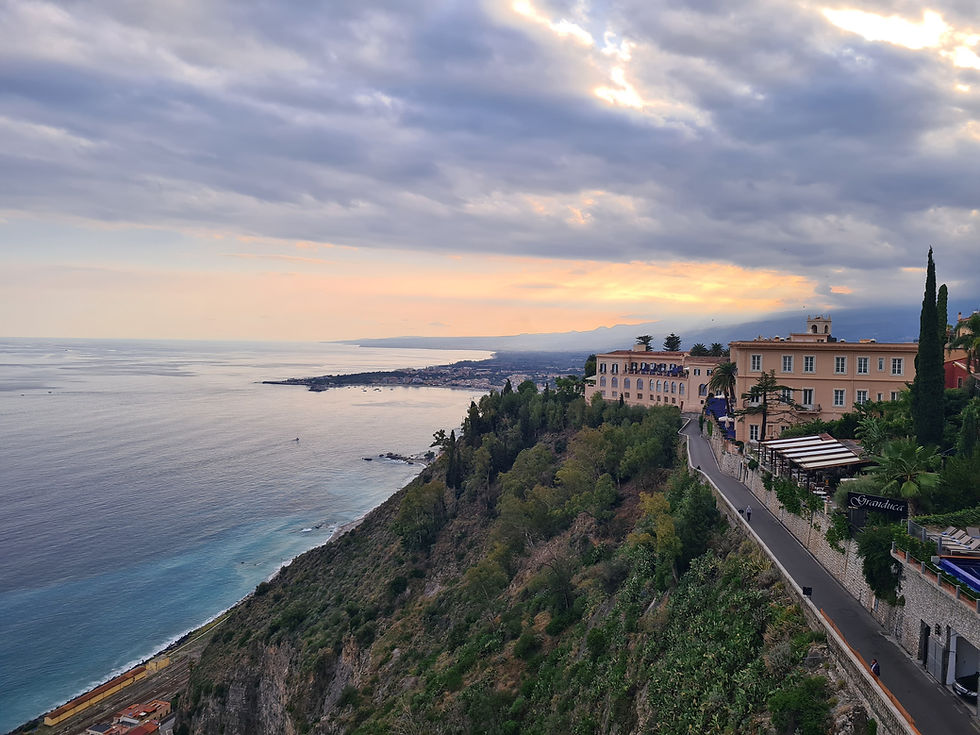
Taormina, often called the “Pearl of the Ionian Sea,” is undeniably stunning: a hilltop town with dramatic sea views, elegant boutiques, and the iconic Greek Theater framing Mount Etna. It’s a beautiful finale to any Sicily trip, but it works best as a short stay, not a long-term base.
Why It Works: Taormina delivers postcard-perfect views, memorable sunsets, excellent restaurants, and a glamorous atmosphere. It’s the ideal place to slow down at the end of your trip, enjoy a leisurely dinner, and soak in the scenery.
⚠️ The Reality (Important for Planning)
Taormina is breathtaking, and one of the most logistically challenging bases in Sicily.
Parking is a headache: Limited, expensive, and often crowded even in shoulder season.
Difficult access: The town sits high above the coast; reaching it often involves parking at Parcheggio Lumbi and taking elevators or shuttles.
Costly: Hotels, parking, and restaurants are priced closer to Capri or Positano than to the rest of Sicily.
New Toll System: There is now a fee each time you enter or leave Taormina by car: an unwelcome surprise for many travelers.
Mobility Note: Hill towns like Ragusa Ibla, Modica, and Taormina involve steep streets, stairs, and cobblestones. If you have knee or mobility issues, choose accommodations close to the historic center and plan more terrace time and fewer big climbs. You’ll still get the views.
⏳ Ideal Stay Length
2–3 nights: just enough to enjoy Taormina’s beauty without the stress that comes from using it as a long-term base.
🌋 Best For
A final scenic stop, a touch of luxury, and easy access to Mount Etna, Isola Bella, and the charming hilltop village of Castelmola.
Is Cefalù or Taormina Better?
Cefalù is better for relaxation, value, and ease. Taormina is better for drama and romance. Cefalù is flat, affordable, and less crowded. Taormina is steep, expensive, and breathtaking. Most travelers prefer starting in Cefalù and ending in Taormina; you get the contrast without the fatigue.
What Can You Skip in Sicily on a 14-Day Trip?
Skip the Aeolian Islands unless you're adding 3+ days. Skip Marsala and Trapani unless wine is your focus.
Skip trying to visit all eight Val di Noto baroque towns, pick Noto and Ragusa or Modica, not all three in one day.
And unless you have a particular reason, skip long stays in Taormina; 2 nights captures its magic without the logistical pain.
What is the Most Beautiful Town in Sicily?
Taormina is widely considered Sicily's most beautiful town, with its cliffside position, baroque lanes, and the iconic Greek Theater framing Mount Etna.
However, for authentic beauty without crowds, Ortigia in Siracusa rivals it: golden limestone at sunset, a walkable island, and far less commercial pressure. Among Sicilian towns, both deserve the title for different reasons.
🏨 Recommended Hotels
Some links in this post are affiliate links. If you book through them I may earn a small commission, at no extra cost to you. All recommendations and opinions are my own, including the honest ones.
For this itinerary, I recommend properties that are comfortable, atmospheric, and practical, with elevators (rare in Sicily!), quieter rooms, and easier parking.
Just outside the city center, 15 walk to Cefalu beach, or beach shuttle private beach access, terraces, outdoor pools , and off street parking. Perfect for slow mornings and quiet sunsets.
A restored historic palace on the waterfront. Beautiful interiors, an elevator (a luxury in Ortigia), and a prime, flat location near the Jewish Quarter.
Elegant, lush, and peaceful: slightly removed from the busiest part of Corso Umberto but still walkable. Gardens + pool = perfect for relaxing after sightseeing.
If you crave silence and nature, book 1–2 nights in a countryside masseria. Olive groves, infinity pools, fresh farm breakfasts, the ultimate slow-travel reset.
Where I Stayed:
Exactly where you want to be in Taormina: a short walk from Corso Umberto, with the rare luxury of onsite parking included in the rate. Breakfast was genuinely good, which matters more than you'd think after a long day on Etna. For a 1–2 night stay, it hits the right balance between comfort and location without the eye-watering prices of Taormina's top-tier boutique hotels.
A beautiful hotel inside a historic palazzo: comfortable, well-located, and with real character. The catch: it sits inside the ZTL zone. If you're exploring Palermo on foot or by taxi, this is a non-issue and actually a advantage. But if you're arriving by rental car, think twice. Navigating into a ZTL with luggage after a long drive is exactly the kind of stress this itinerary is designed to avoid.
Why You Must Go To Sicily
The historic cities here aren't just sightseeing stops; they are open-air museums where daily life happens amidst ancient ruins.
Cefalù: The Perfect First Base
This is where your Sicily trip begins. And, after a long flight and the chaos of Palermo airport, arriving in Cefalù feels like someone has quietly turned the volume down.
The Norman cathedral anchors the skyline, the beach sits right below the medieval walls, and the evening promenade along the seafront is one of those simple pleasures that reminds you why slow travel exists.
The cathedral deserves more than a quick look. Built by Roger II in 1131, it's a UNESCO World Heritage site with Byzantine mosaics in the apse that will stop you in your tracks: quieter and more intimate than the overwhelming grandeur of Monreale, but no less beautiful for it.
If you have the energy, climb La Rocca, the ancient crag that looms above the town. Go early, before the heat builds. The views over the rooftops, the beach, and the Tyrrhenian Sea stretching to the horizon are the kind that make you grateful you bothered.
And then come back down, find a table in the shade, and order a granita. You're in Sicily now. There's no rush.
My honest take: Cefalù is not where the big dramatic moments happen. It's where you arrive properly, where you shed the pace of home and start moving at Sicily's rhythm. There are no ZTL nightmares, no chaotic traffic, no parking battles.Five nights here isn't too many. For a trip built around slow travel, it's exactly right.
Palermo: A Collision of Civilizations
Palermo is one of the most culturally layered cities in Europe, chaotic, fascinating, and unforgettable. Here, Arab domes stand beside Baroque facades, Byzantine mosaics glow in golden light, and street markets echo with centuries of noise and flavor.
The Crown Jewel: The Palatine Chapel is a dazzling fusion of Arab craftsmanship, Byzantine artistry, and Norman power. Its gold mosaics shimmer like a jewel box, a masterpiece you won’t see anywhere else in Italy.
The Vibe: Stroll past the Quattro Canti, wander through the vibrant Ballarò Market, and watch how daily life unfolds in front of old Moorish courtyards. Palermo is not “easy,” but it is endlessly rewarding, a city that feels alive, layered, and unapologetically Sicilian.

Monreale: Sicily’s Golden Masterpiece
Just 30 minutes outside Palermo, Monreale Cathedral is one of the greatest artistic treasures in Italy, and somehow still overlooked by many travelers.
Inside, more than 6,000 square meters of Byzantine mosaics shimmer in gold, depicting biblical scenes in incredible detail. The Christ Pantocrator in the apse is one of the most magnificent mosaics in the Mediterranean.
The cloister is just as impressive, with 228 carved columns, each one different, a quiet place to absorb the beauty after the intensity of the cathedral.
If you’re staying in Cefalù or Palermo, Monreale makes an unforgettable half-day trip easily done by a packed local bus.

Taormina: Cliffside Elegance With a Timeless View.
Perched high above the Ionian Sea, Taormina is Sicily’s cinematic beauty, elegant, sunlit, and dramatically framed by Mount Etna in the distance.
The Icon: Its centerpiece is the Teatro Antico, a Greco-Roman theater carved into the hillside. Standing among its ancient columns while Etna smokes on the horizon is one of the most iconic views in all of Italy.
The Charm: Beyond the theater, Taormina charms with flower-draped balconies, chic boutiques, narrow medieval lanes, and panoramic terraces. Despite its popularity, it remains breathtaking, a place where history, glamour, and natural beauty blend effortlessly. No trip to Sicily feels complete without at least a touch of Taormina’s magic.
If ancient theaters fascinate you, see how the Colosseum tells a completely different story of Roman spectacle in this Ancient Rome one-day itinerary.
Ortigia (Siracusa): The Greek Soul of Sicily.
Founded in the 8th century BC, Siracusa was once one of the most powerful cities in the ancient Greek world. Its heart, Ortigia, sits on a small island where history feels alive in every stone.
The Duomo: Inside, you can still see the original Doric columns of the ancient Temple of Athena, a breathtaking reminder of Sicily’s layered past.
Neapolis Archaeological Park: Just across the bridge lies one of the island’s most extraordinary sites, home to the massive Greek Theater and the iconic Ear of Dionysius, a towering limestone cave with incredible acoustics. Standing inside it feels almost mythical.
The Atmosphere: Ortigia itself is elegant, atmospheric, and deeply authentic, a blend of golden baroque squares, lively markets, and quiet sea views that make it one of the most soulful corners of the island.
Agrigento: A Valley of Eternal Temples.
Agrigento is home to one of the most extraordinary archaeological landscapes in the world, the Valley of the Temples, a sweeping ridge lined with ancient Greek sanctuaries glowing gold in the Sicilian sun.
Here, the past doesn’t simply sit behind ropes; it surrounds you.
The Icons: You walk among olive trees and wildflowers, with perfectly preserved Doric columns rising against the sky. The most iconic is the Temple of Concordia, one of the best-preserved Greek temples anywhere, rivaling even those in Greece itself. Nearby lie the Temple of Juno, perched above the sea, and the massive remains of the Temple of Zeus.
The Experience: At sunset, the entire valley turns amber, making it one of the most magical golden-hour walks in Sicily. Though the modern town of Agrigento can feel busy and less charming, the Valley is absolutely unmissable, a place where Sicily’s ancient soul reveals itself in full, breathtaking scale.

The Temple of Concordia, Agrigento: built in 440 BC and still standing. One of the best-preserved Greek temples anywhere, including Greece itself.
Best Beaches
Cefalù: Swim right below a medieval town and Norman cathedral.
San Vito Lo Capo: Caribbean-like white sand and turquoise water.
Isola Bella: A tiny nature reserve island connected by a pebble strip.
🏖 Southwest Alternative: Menfi & Selinunte : With more time, you can also add the Menfi coast and Selinunte for wide, uncrowded Blue Flag beaches, wineries, and Greek ruins that are often quieter than Agrigento.
Mount Etna: The Fiery Giant
Rising 3,329 meters above the coast, Etna is a UNESCO site and Europe’s most active volcano, and one of Sicily's most polarizing experiences.
The experience: The sulfur hits you before the view does. Walking across ancient lava fields with smoke curling from the vents and the acrid smell of the earth's core in the air is genuinely unlike anything I've experienced.
Visceral, otherworldly, and deeply unsettling in the best possible way. For a few minutes up there, I genuinely felt like I was walking through hell, and I mean that as a compliment.
And yet I'll say something most travel blogs won't: the summit experience itself didn't fully match the drama of the landscape. What you get is a well-managed tourist operation: cable cars, 4x4 buses, hard hats, organized groups at the crater viewpoints. The mountain is extraordinary. The infrastructure around it is ordinary.
My honest verdict: Go for the sensory shock. It's real and it's unforgettable. But don't expect raw wilderness. And build the rest of the day around the slopes on the way down, because that's where Etna quietly reveals its greatest secret.
The Real Highlight: The volcanic soil on Etna's slopes produces Nerello Mascalese, one of Italy's most distinctive and mineral-driven red wines.
A long lunch at one of the estate wineries on the mountain, with Etna smoking above you and a glass of something extraordinary in hand, may end up being more memorable than the summit itself. It was for me.
The volcanic landscapes of Mount Etna are impressive, but the sunken caldera of the Cyclades is a unique geological wonder. You should see our Santorini 3-Day Itinerary to plan your visit to this iconic crater |

Slow-Travel Idea Near Cefalù: Madonie Mountains
If you love hiking and quiet hill towns, consider adding a day in the Madonie Mountains near Cefalù. Old pilgrim trails like the Via dei Frati cross silent forests, stone villages, and viewpoints where you can see Etna on clear days. It’s one of the best ways to experience a wilder, crowd-free side of Sicily.
Which is the prettiest island in Italy?
Sicily is widely considered the most historically rich island in Italy, but the competition is real.
Sardinia is often reduced to its beaches, which does it a disservice. The ancient nuraghe towers, wild interior landscapes, and genuinely untouched coastlines make it a serious rival, and in some ways a less discovered one.
Capri wins on glamour. But for the sheer density of civilizations layered into one island, Greek, Arab, Norman, Baroque, Sicily stands in a category of its own.
14 Days Sicily Itinerary
This two-week Sicily itinerary is designed as a slow-travel route, not as a rushed “Sicily road trip 14 days” where you change hotels every night.
Itinerary Overview
Day | Base | Highlights |
1 | Cefalù | Arrival + beach sunset |
2 | Cefalù | Cathedral + La Rocca |
3 | Cefalù | Palermo + Monreale |
4 | Cefalù | Valley of the Temples sunset |
5 | Transfer | Scenic drive inland |
6 | Ortigia | Duomo + waterfront |
7 | Ortigia | Greek Theater + Ear of Dionysius |
8 | Ortigia | Noto |
9 | Ortigia | Modica + Ragusa |
10 | Ortigia | Vendicari beach |
11 | Taormina | Greek Theatre sunset |
12 | Taormina | Mount Etna cable car + winery |
13 | Taormina | Isola Bella |
14 | Depart | Catania airport |
Days 1–5: The Northwest (Base: Cefalù or Palermo)
Day 1: Arrival in Palermo (PMO). Drive 1 hour to Cefalù. Enjoy a sunset walk by the sea.
Day 2: Explore Cefalù. Visit the UNESCO Norman Cathedral and relax on the beach. Optional hike up "La Rocca" for views.
Day 3: Day Trip to Palermo. Take the train or drive. See the Palatine Chapel, the Ballarò Market, and the Quattro Canti. Optional add-on: Visit Monreale Cathedral (30 min from Palermo) for extraordinary golden mosaics, one of Sicily’s true masterpieces
Day 4: Erice or Segesta. Visit Erice (a foggy medieval hilltop town) or Segesta (a solitary Greek temple in the countryside).
Day 5: Drive to Ortigia. A scenic 3.5-hour drive across Sicily’s rolling interior.
Days 6–10: The Southeast (Base: Ortigia/Siracusa)

Day 6: Explore Ortigia. Visit the Duomo (Temple of Athena) and the Arethusa Fountain.
Day 7: Siracusa Archaeology Park. See the massive Greek Theater and the "Ear of Dionysius" cave. Agrigento shows Sicily’s power; Siracusa its soul, see both.
Day 8: Noto. Drive 30 minutes to the capital of Baroque. Walk Corso Vittorio Emanuele and eat almond granita at Caffè Sicilia. If you’re visiting in spring, Noto is even more magical.
During the Infiorata di Noto (third weekend of May), Via Corrado Nicolaci is transformed into a dazzling carpet of flower mosaics created by local artists: one of Sicily’s most spectacular cultural events and a perfect addition to your day trip.
Day 9: Modica & Ragusa.
Famous for chocolate and sweeping hilltop views (filming location for Inspector Montalbano).
Day 10: Beach Day or Nature.
Relax at Fontane Bianche beach or hike the Vendicari Nature Reserve.

Days 11–14: The East Coast (Base: Taormina)

Day 11: Arrival in Taormina. Visit the Greek Theater for sunset, the
n stroll the elegant Corso Umberto.
Day 12: Mount Etna Day Trip. Drive to Rifugio Sapienza. Take the cable car + 4x4 to the crater zone. Stop at a winery on the way down.
Day 13: Isola Bella. Take the cable car down to the beach. Option B: Savoca
Visit the hilltop medieval village of Savoca, home to Bar Vitelli and iconic Godfather filming locations, and stunning sea views.
Day 14: Departure from Catania Airport (CTA).

Itineraries if you are Short on Time
Sicily Itinerary 10 Days
The Change: Skip Modica/Ragusa and one beach day.
The Route: Cefalù (3 nights) → Ortigia (3 nights) → Taormina (3 nights).
Sicily Itinerary 7 Days in
Option A (East Coast Only): Fly into Catania. Split time between Ortigia and Taormina.
Option B (The West): Fly into Palermo. Split time between Palermo, Cefalù, and Agrigento.
Many travelers combine Sicily with nearby destinations. Malta sits just 90 minutes by ferry from Pozzallo, making it an easy 3-4 day add-on to your Sicily trip. Read: Complete Malta Travel Guide |
The Gastronomy
Street Food: Arancini (rice balls), sfincione (spongy pizza), panelle (chickpea fritters).
Classics: Pasta alla Norma (eggplant), Caponata.
Dessert: Cannoli, Cassata, and Granita with Brioche (the mandatory Sicilian breakfast).
Best Experiences in Sicily Beyond Sightseeing (Food, Wine & Culture)
To truly understand Sicily, you need to taste, listen, and connect , not just look. These experiences add depth, soul, and authenticity to your trip:
Don’t navigate Palermo’s chaotic markets alone. Join a guided walk through Ballarò or Vucciria to safely taste panelle (chickpea fritters), sfincione, and pani ca meusa (the famous spleen sandwich, trust me, it’s better than it sounds!).
The volcanic soil around Etna produces some of Italy’s most distinctive mineral wines. Book a tasting at Benanti, Planeta Sciaranuova, or a boutique winery along the “Strada del Vino dell’Etna.” Stunning landscapes, unforgettable flavors.
Visit Antica Dolceria Bonajuto, Sicily’s oldest chocolate factory, to try chocolate made using an ancient Aztec cold-press method, grainy, aromatic, and deeply unique.
This UNESCO-listed art form is pure Sicilian magic. Watch knights, monsters, and heroes come alive in handcrafted wooden puppets in Siracusa (near the Duomo) or Palermo.
Best Photo Spots in Sicily
Sicily is a photographer’s dream: golden light, dramatic coastlines, ancient ruins, and baroque skylines. These are the 10 best places to capture its essence.
Cefalù : Cathedral & La Rocca: Norman towers backed by a glowing cliff and pastel houses. Best light:Sunset.
Palermo : Palatine Chapel: Walls of shimmering Byzantine gold mosaics. Tip: No flash; go early for quiet shots.
Agrigento:Temple of Concordia: The Doric columns turn amber at sunset. One of Europe’s most iconic archaeological photos.
Ortigia : Piazza Duomo: Limestone facades shift from pink to deep blue at twilight. Best light: Blue hour.
Noto:Corso Vittorio Emanuele: A perfect baroque corridor from the cathedral steps. (In May, the Infiorata creates a floral masterpiece).
Ragusa Ibla: Hilltop Panorama: Honey-colored baroque houses cascading down the hill. Best light: Late afternoon.
Taormina: Greek Theater + Etna: The classic Sicily shot: ancient columns framing the volcano. Best light:Morning or late afternoon.
Isola Bella: Cable Car View: A sweeping view of the isthmus linking the island to the bay. Best light: Late morning.
Mount Etna: Lava Fields: Black lava textures and smoking vents. Tip: Go early before clouds form.
Marzamemi: Fishing Village: Blue doors, nets, and one of Sicily’s prettiest coastal piazza
🇮🇹 Sicilian Culture: Quick Notes
Coffee: Espresso is taken standing at the bar; cappuccino is for breakfast only (before 11am).
Coperto: A €2–€3 restaurant cover charge is normal for bread and table service.
Riposo: Many shops and churches close from 1:30–4:00 pm. Use this time to relax or enjoy a long lunch.
Dress: Sicilians dress smartly. Avoid beachwear in towns and cover shoulders/knees in churches.
Pace: Service is unhurried. Embrace the slower rhythm and savor the experience.
🇮🇹 Comparison: Sicily vs. Tuscany vs. Amalfi Coast
Not sure if Sicily is the right choice? Here is how it stacks up against Italy’s other famous regions.
Sicily offers the best value of the three, with world-class archaeology and excellent beaches that neither Tuscany nor the Amalfi Coast can match. For travelers prioritizing authenticity over glamour, Sicily wins decisively. The Amalfi Coast beats it on drama; Tuscany on ease of driving. Neither beats it on depth.
Sicily | Tuscany | Amalfi | |
Crowds | Moderate | High | Very High |
Driving | Moderate | Easy | Difficult |
Cost | €€ (Best Value) | €€€ | €€€€ (Expensive) |
Beach Quality | Excellent | Limited | Excellent |
Archaeology | World-class | Moderate | Limited |
Vibe | Authentic & Raw | Manicured | Glamorous |
❓ Frequently Asked Questions
How many days do you need in Sicily?
While many travelers rush through in 7 days, 14 days allows for a slow-travel experience of Sicily's diversity without exhaustion. This includes 3 comfortable bases, day trips to baroque towns, beach time, and Mount Etna, all at a relaxed pace ideal for travelers over 50.
Is Sicily better than the Amalfi Coast?
The honest answer in 2025 is more nuanced than most travel blogs admit.
Sicily now has its own traffic nightmares, and prices in Taormina, Ortigia, and Noto rival mainland Italy. The gap has narrowed considerably since the days when Sicily was an obvious bargain.
Where Sicily still wins decisively is depth. The Amalfi Coast is spectacular but essentially one thing: a beautiful coastline. Sicily is Greek temples, Arab-Norman architecture, baroque towns, an active volcano, and a food culture unlike anywhere else in Italy: all on one island.
The Amalfi Coast wins on concentrated scenery. Sicily wins on history, diversity, and substance. Choose based on what you're actually after.
What should I skip in Sicily if I only have 10 days?
To keep the "slow travel" pace, you must make cuts:
Western Tip: Skip Marsala and Trapani (unless you are specifically focused on wine).
Aeolian Islands: These require 3+ extra days to do justice.
Multiple Baroque Towns: Don't try to see all eight. Choose two max (e.g., Noto + Ragusa or Modica). Prioritize depth over breadth.
Palermo vs Catania: Which City is Worth Your Time?
For culture and history, Palermo is the clear winner. It has more to see, a more dramatic street food scene, and far greater architectural complexity. Catania is best treated as a gateway city (useful for flights and Etna) rather than a destination in itself. If you only have time for one, Palermo is non-negotiable.
Is Mount Etna safe to visit?
Yes. Etna is closely monitored. When volcanic activity increases, access to the higher craters is restricted for safety. Always check conditions before driving up.
What should I pack for a trip to Sicily?
Bring comfortable walking shoes (cobblestones everywhere), modest clothing for churches (shoulders/knees covered), light layers for evenings, and a windbreaker for Etna.
In summer: sunscreen, swimsuit, hat, and refillable water bottle.
In spring/fall: a light sweater and umbrella.
Are there any festivals in Sicily?
Yes! Sicily has spectacular cultural events:
Infiorata di Noto (May): streets decorated with flower mosaics.
Greek Theatre Festival (May–July): classical plays at sunset in Siracusa.
Feast of Santa Rosalia (July, Palermo): parades, fireworks, traditions.
Holy Week (March–April): dramatic processions, especially in Trapani and Enna.
Opera season (winter): particularly strong in Palermo and Catania.
What are the best day trips from each base?
From Cefalù/Palermo: Erice, Segesta, Monreale Cathedral, Agrigento (long but doable).
From Ortigia: Noto, Ragusa, Modica, Vendicari Reserve, Marzamemi.
From Taormina: Castelmola, Savoca (Godfather village), Aeolian Islands, Etna wineries.
Is Sicily Safe for Travelers, Including Solo Women and Older Visitors?
Yes. Sicily is generally very safe. The Mafia is not a threat to tourists. Solo women travel comfortably here, particularly in Ortigia, Cefalù, and Taormina. The main concerns are petty theft in busy markets and chaotic traffic. Watch your belongings at Ballarò and Catania's fish market, drive defensively, and avoid accidentally entering ZTL zones.
Are there accommodations suited for travelers with limited mobility?
Yes. Ortigia, Giardini Naxos, and modern hotels in Cefalù offer excellent accessibility.
Hotels: Look for properties with elevators and ground-floor suites (always email to confirm).
Tours: Choose Etna cable-car experiences (no hiking) and walking tours in flat areas like Ortigia.
How much daily walking should I expect in Sicily?
Expect moderate walking on cobblestones and inclines.
Ortigia: Very flat and compact (Best for low mobility).
Cefalù: Mostly flat; the sea promenade is easy.
Taormina & Ragusa: Steep hills and many stairs.
Etna: Variable (viewpoints require minimal walking; craters require hiking).
What should I know about healthcare in Sicily?
Healthcare is excellent, even in small towns.
Pharmacies: Look for the green cross (Farmacia); staff often speak English.
Emergency: Dial 112 (EU-wide).
Hospitals: Major facilities are in Palermo, Messina, and Catania.
Tip: Carry a list of medications and travel insurance that covers medical evacuation.
Are English-speaking guides easy to find?
Yes, especially in Palermo, Siracusa, and Taormina.
Tip: Always hire a licensed “Guida Turistica Abilitata.”
Etna: Use local guides for safety, weather monitoring, and logistics.
📥 Where to Go Next?
Sicily pairs naturally with Puglia: same passion for food and ancient history, completely different landscape. Where Sicily gives you volcanoes and Greek temples, Puglia gives you whitewashed trulli villages and a quieter Adriatic coast.
If island-hopping appeals, Sardinia rewards travelers who think it's just beaches; the
ancient nuraghe towers and wild interior are genuinely unlike anywhere else in the Mediterranean.
Heading further? The island of Crete offers a similar density of history, food, and coastline that Sicily lovers tend to respond to immediately.
Still in the planning phase? My two most useful guides cover everything before you book: → 10-Step Master Planning Guide for budget, transport, and logistics, and→ Skip-the-Line Ticket Guide — Colosseum, Vatican, and beyond.
Have a question about this itinerary? Drop a comment below!