
What to Do in the Algarve, Portugal: Beaches, Towns and a 5-Day Itinerary
Updated 06/26
The best things to do in the Algarve are visiting Ponta da Piedade, taking a licensed boat or kayak tour to Benagil Cave, hiking part of the Seven Hanging Valleys Trail, relaxing at Praia da Marinha, exploring Lagos and Tavira, visiting Silves Castle, discovering Ria Formosa, walking around Algar Seco, seeing Sagres Fort, and watching the sunset at Cabo de São Vicente.
For a first trip, plan 5 to 7 days. Lagos is usually the best base for first-time visitors, while Tavira is better for a quieter and more cultural Algarve experience.
The Algarve is Portugal’s southernmost region, best known for golden sea cliffs, Atlantic beaches, sea caves, fishing towns, seafood, and historic old towns.

I arrived in the Algarve in November, under heavy rain, with the image of golden cliffs and blue water in my head.
For the first few minutes, I honestly wondered if I had chosen the wrong destination.
That trip taught me something many beach-perfect Algarve guides rarely say: the Algarve changes completely depending on the season, the weather, and where you decide to stay.
In summer photos, the region looks like one long postcard of golden cliffs, sea caves, and turquoise coves.
In real life, it is more complex. Lagos does not feel like Faro. Tavira does not feel like Albufeira. Carvoeiro is not Sagres. And a rainy off-season trip is a completely different experience from a sunny June beach escape.
This guide is for a first Algarve trip that does not feel rushed or generic. It includes the famous beaches and boat trips, but also old towns, food, rainy-day ideas, transport, where to stay, and a realistic 5-day itinerary.

Algarve at a Glance: What You Need to Know Before You Go
Question | Quick Answer |
Best time to visit | May, June, September and early October |
Best base for first-timers | Lagos |
Best base without a car | Lagos, Faro or Tavira, with limitations |
Best base for families | Lagos, Meia Praia, Alvor or Vilamoura |
Best area for charm and calm | Tavira and the eastern Algarve |
Most iconic beach | Praia da Marinha |
Most famous boat trip | Benagil Cave |
Best cultural stop | Silves Castle |
Best hidden gem near Faro | Estoi Palace |
Ideal stay | 5 to 7 days |
Table of Contents
Click any section to jump straight to it
What Is the Algarve Best Known For?

The Algarve is best known for golden sea cliffs, Atlantic beaches, sea caves, sunny weather, fishing towns, seafood, golf resorts, and historic old towns. Beyond the beaches, the region also has Moorish heritage, inland villages, markets, castles, mountain landscapes, and quieter eastern towns.
Many travelers arrive at Faro, the capital and main airport gateway, pick up a rental car, and then head toward Lagos, Carvoeiro, Albufeira, Tavira, or Sagres.
The western Algarve is better for cliffs, Lagos, and Sagres. The central Algarve is better for Benagil, Praia da Marinha, and resort convenience. The eastern Algarve is better for Tavira, Ria Formosa, island beaches, and a calmer pace.
Understand the Algarve Before Planning Your Itinerary
The Algarve is easier to plan when you divide it into three travel zones.
Algarve Area | What You’ll Find | Best Bases |
Western Algarve | Lagos, Sagres, Ponta da Piedade, surf beaches, wild coast | Lagos, Praia da Luz, Sagres |
Central Algarve | Benagil Cave, Praia da Marinha, Algar Seco, resorts, nightlife | Carvoeiro, Lagoa, Albufeira, Vilamoura |
Eastern Algarve | Ria Formosa, Tavira, Olhão, islands, quieter towns | Faro, Olhão, Tavira, Cabanas |
For a first trip, most travelers should not try to cover the entire Algarve in 3 days. The distances look manageable on a map, but beach access, parking, summer traffic, and slower coastal roads can make the trip more tiring than expected.
A smart Algarve itinerary usually works best with one strategic base, or two bases if you have 5 to 7 days. Use Lagos for the western cliffs and first-time highlights, Carvoeiro or Lagoa for Benagil and Praia da Marinha, and Tavira or Faro for the eastern Algarve and Ria Formosa.
What Not to Miss in the Algarve
If this is your first trip to the Algarve, do not try to see everything. Focus on the places that show the region at its best: dramatic cliffs, sea caves, historic towns, coastal walks, seafood, and a little inland culture.
Ponta da Piedade, Benagil Cave, Praia da Marinha, and the Seven Hanging Valleys Trail give you the classic golden-cliff Algarve. Lagos, Tavira, Silves, and Loulé add the old-town, market, and Moorish-history side of the region.
Ria Formosa, Sagres, Algar Seco, and Cacela Velha are the best choices when you want nature, quieter scenery, or a break from the most crowded beach stops.
Place | Why Go | Best Time or Tip |
Golden cliffs, sea arches and Lagos scenery | Go late afternoon for softer light | |
The Algarve’s most famous sea cave | Book an early licensed boat, kayak or SUP tour | |
Iconic beach with cliffs and arches | Arrive early in summer | |
One of Portugal’s best coastal walks | Hike early and avoid midday heat | |
Best all-around base for a first trip | Good for restaurants, beaches and boat tours | |
Prettiest old-town atmosphere in the Algarve | Best for slow travel and eastern Algarve charm | |
Lagoons, barrier islands, birds and seafood | Visit by boat from Faro, Olhão or Tavira | |
Best inland stop for Moorish history | Great on cloudy or mixed-weather days | |
Cliff scenery without needing a boat tour | Easy to combine with Carvoeiro | |
Wild Atlantic views and sunset | Bring a wind layer, even in summer | |
Local food, produce and regional atmosphere | Saturday is liveliest | |
Quiet cultural stop near Faro | Good for rain or arrival/departure day | |
Whitewashed village and peaceful eastern views | Best with 6 or 7 days | |
Mountain scenery and inland contrast | Optional if you want a break from the coast |
5-Day Algarve Itinerary for First-Time Visitors
This 5-day Algarve itinerary assumes a rental car and a first-time trip focused on cliffs, beaches, towns, food, and a little culture. To avoid wasting too much time crossing the region, use Lagos for the first part of the trip and Carvoeiro, Lagoa, or Albufeira for the central coast.
5-Day Algarve Itinerary at a Glance
Day | Focus | Overnight Base |
Day 1 | Arrive in Lagos, explore the old town and see Ponta da Piedade at sunset | Lagos |
Day 2 | Visit Praia do Camilo, Praia de Dona Ana and take an optional Lagos boat tour | Lagos |
Day 3 | Take an early Benagil Cave tour, visit Praia da Marinha and walk part of the Seven Hanging Valleys Trail | Carvoeiro, Lagoa or nearby |
Day 4 | Explore Algar Seco, Carvoeiro and Praia da Falésia, or choose Sagres for a wilder coastal day | Central Algarve or Lagos |
Day 5 | Visit Silves Castle and Loulé Market for a softer cultural finish | Faro, Central Algarve or departure base |
This itinerary works best with a rental car and one or two bases. For the easiest first trip, start in Lagos, then move closer to Carvoeiro or Lagoa for Benagil, Praia da Marinha and Algar Seco.
5-Day Algarve Itinerary Map
Day 1: Arrive in Lagos and See Ponta da Piedade
Arrive, check in, and take time to walk through Lagos Old Town.
Do not overplan this first day. Have lunch or dinner in town, get a feel for the streets, and save your energy for Ponta da Piedade in the late afternoon.
If the weather is clear, this is one of the best sunset introductions to the Algarve.
Day 2: Lagos Beaches and Boat Tour
Start early at Praia do Camilo before the parking and staircase become too busy. Continue to Praia de Dona Ana, which is larger and easier for a longer beach stop.
If you want a boat experience, take a tour from Lagos to see the coast from the water. Families or travelers who prefer an easier beach time can spend part of the day at Meia Praia instead.
End the day with dinner in Lagos.
Day 3: Benagil, Praia da Marinha, and the Seven Hanging Valleys Trail
This is the big postcard day.
Book an early Benagil Cave tour and check the current rules before going. After the tour, continue to Praia da Marinha for clifftop views and beach time.
If it is not too hot, walk a short scenic section of the Seven Hanging Valleys Trail. You do not need to hike the entire route unless you specifically want a hiking day.
Stay overnight in Carvoeiro, Lagoa, or nearby if you want to reduce driving.
Day 4: Algar Seco, Carvoeiro and Praia da Falésia
Start with the Carvoeiro Boardwalk and Algar Seco. Visit A Boneca, take your time with the viewpoints, and enjoy the fact that this part of the coast does not require a boat.
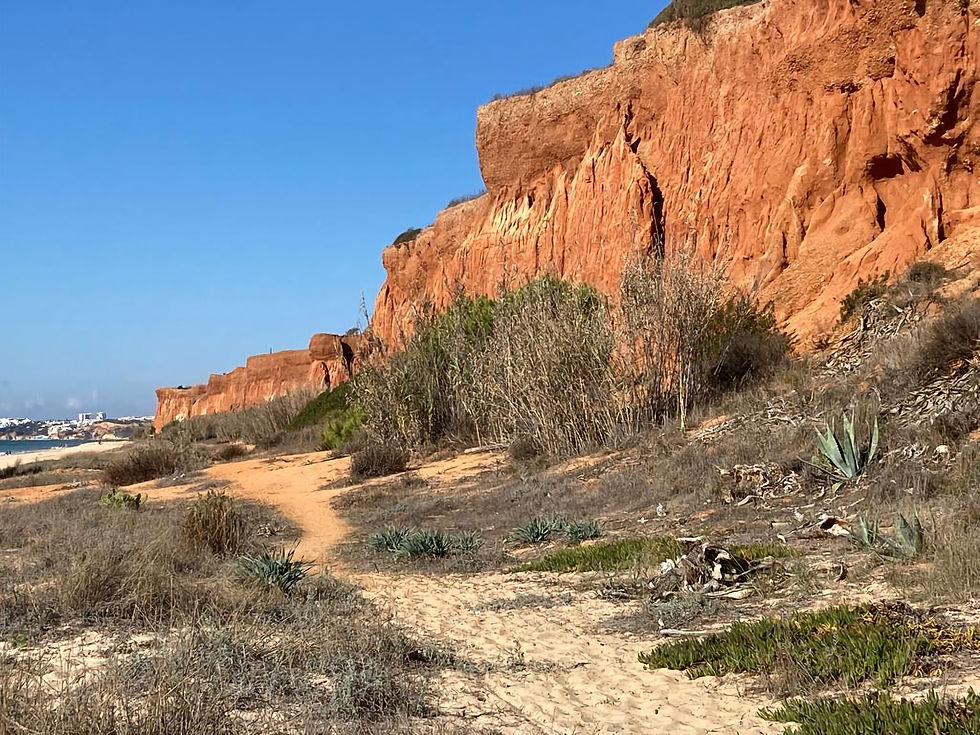
In the afternoon, head toward Praia da Falésia for a long beach walk under red cliffs.
If you prefer wild coast and history, replace Praia da Falésia with Sagres Fort and Cabo de São Vicente. This is a better choice for travelers who like dramatic landscapes more than resort areas.
Day 5: Silves, Loulé, and a Softer Cultural Finish
Use the final day to step away from the beach checklist.
Visit Silves Castle in the morning, then stop in Loulé if timing works, especially if you can visit the market. This is also a good day if the weather is mixed.
Vilamoura Marina can be added if you want a polished resort atmosphere, but it would not be my core TripnSense recommendation for a first Algarve itinerary.
If You Have 6 or 7 Days
Add the eastern Algarve.
Spend Day 6 in Tavira, with time for the old town, the riverfront, and Ilha de Tavira if the weather allows. You can also take a Ria Formosa boat trip from Tavira or Olhão.
On Day 7, visit Cacela Velha, enjoy a slow seafood lunch and return toward Faro Airport.
Alternative additions include Monchique for mountains, Estoi Palace for culture near Faro, or simply one slower beach day if the weather is beautiful.
If You Only Have 3 Days in the Algarve
Choose one base only, ideally Lagos or Carvoeiro.
Day 1: Lagos and Ponta da Piedade.
Day 2: Benagil and Praia da Marinha.
Day 3: Silves or Praia da Falésia.
Without a car, simplify even further and use organized tours.
Best Things to Do in the Algarve for First-Time Visitors
See Ponta da Piedade at Golden Hour
Best for: first-time visitors, golden-hour views, Lagos-based trips.
Ponta da Piedade is one of the most beautiful places in the Algarve, and it is the first place I would send someone staying in Lagos.
This is the Algarve of travel dreams: golden cliffs, sea stacks, arches, grottos, and Atlantic water shifting from deep blue to green depending on the light. You can visit by walking the cliffside paths and boardwalks, or by taking a small boat tour from Lagos.
The late afternoon light is especially beautiful. If you arrive in Lagos on your first day, check in, walk through the old town, and save Ponta da Piedade for sunset.
Take a Boat or Kayak Tour to Benagil Cave
Best for: iconic Algarve scenery, boat tours, early-morning planning.
Benagil Cave is the most famous cave in the Algarve, and yes, it is touristy.
You cannot walk into the cave from the coastal trail. You should not plan to swim into it. Current rules also prohibit disembarking on the sand inside the cave. That means you are there for the view from the water, not for a beach break inside the grotto.
Most visitors go by licensed boat tour, guided kayak tour, or guided SUP tour. Tours leave from Benagil, Portimão, Albufeira, Lagos, and other nearby points. The closer departures usually give you more time along that part of the coast, while longer boat trips may include several caves and beaches.
Go early in the morning if you can. The cave is famous for a reason, and crowds build quickly.
My practical advice: do not build your entire Algarve trip around Benagil. Treat it as one part of a bigger coastal day with Praia da Marinha, Algar Seco, or the Seven Hanging Valleys Trail.
If you are booking Benagil Cave, Ponta da Piedade or Ria Formosa tours, read my GetYourGuide review first, then compare Algarve boat trips and day tours on GetYourGuide before reserving.
Hike the Seven Hanging Valleys Trail
Best for: coastal views, active travelers, photography.
The Seven Hanging Valleys Trail is one of the most scenic hikes in the Algarve.
The full route runs between Praia da Marinha and Praia de Vale Centeanes, near Carvoeiro. It is about 5.7 km one way, or 11.4 km round trip. At a relaxed pace, with photo stops and heat, the full return walk can take 4 to 5 hours.
But you do not have to do the full trail.
For many travelers, especially in summer, the best version is a shorter section around Praia da Marinha, Benagil, and the clifftop viewpoints. You still get dramatic coastal scenery without turning the day into a serious hike.
There is very little shade, so avoid midday in summer. Wear sneakers or proper walking sandals, not flip-flops. Bring water. And stay away from cliff edges, even when people are taking photos too close to the drop.
Spend Time at Praia da Marinha
Best for: classic Algarve beach photos, cliffs, and scenic viewpoints.
Praia da Marinha is one of the most photogenic beaches in Portugal.
It has the golden cliffs, natural arches, and clear water that make the Algarve famous. It also has limited space, steep access, and heavy demand in peak season.
That does not mean you should skip it. It means you should go early, especially in July and August.
Praia da Marinha works beautifully with the Seven Hanging Valleys Trail. You can see it from above, walk part of the trail, then head down to the beach if the weather and crowds make sense.
For photos, the clifftop viewpoints are often more impressive than the beach itself. For a relaxed swim day, some travelers may prefer a wider and easier beach, such as Meia Praia near Lagos or Praia da Falésia near Albufeira.
Explore Lagos Old Town and Nearby Beaches
Best for: first-time visitors, restaurants, boat tours, and a walkable base.
Lagos is one of the easiest Algarve bases for first-time visitors because it combines a walkable old town, restaurants, marina tours, dramatic cliffs, beaches, and a real town feeling.
Nearby beaches include Praia do Camilo, Praia de Dona Ana, Praia dos Estudantes, and Meia Praia.
Praia do Camilo is beautiful but small, with a famous wooden staircase and limited parking. Praia de Dona Ana is easier and larger. Meia Praia is wide, sandy, and much better for families or travelers who prefer simple beach access.
Walk Around Algar Seco in Carvoeiro
Best for: cliff scenery without a boat tour.
Algar Seco is one of the best places in the Algarve for travelers who want cliff scenery without needing a boat tour.
It is located in Carvoeiro and has boardwalks, natural rock formations, small caves, sea windows, and the famous A Boneca viewpoint. The walk is easy to fit into a central Algarve
day, especially if you are also visiting Benagil or Praia da Marinha.
I like Algar Seco because it gives you that golden-cliff drama with more flexibility. If boat tours are cancelled due to sea conditions, or if you are not comfortable with kayaking, this is a very good alternative.
Go in the morning or late afternoon for better light and fewer people.
Discover Tavira and the Eastern Algarve
Best for: charm, slow travel, culture, and a quieter Algarve stay.
Tavira is often the prettiest old town in the Algarve.
It has a slower, more graceful atmosphere than many of the central and western resort towns. You will find a riverfront, tiled façades, churches, whitewashed streets, a castle area, and a rhythm that feels less dominated by beach tourism.
Tavira is also a great base for the eastern Algarve. From here, you can reach Ilha de Tavira, explore Ria Formosa, and visit nearby Cacela Velha.
Choose Tavira if you want charm, calm, food, architecture, and a softer eastern Algarve stay. If your priority is cliffs and famous beaches, Lagos or Carvoeiro will be more practical.
Explore Ria Formosa and the Barrier Islands

Best for: nature, birdwatching, seafood, and calmer beach days.
Ria Formosa is a natural park made of lagoons, channels, salt marshes and barrier islands.
It gives the Algarve a completely different mood. Instead of cliffs and caves, you get boats, birds, seafood, quiet beaches, and long horizons.
You can visit from Faro, Olhão, Tavira, or other eastern Algarve towns. Boat trips may include islands, fishing communities, birdwatching, and beach stops, depending on the route.
This is a great choice if you have already seen the cliffs, if you are staying in Faro or Tavira, or if you want a calmer nature day.
It is also a smart alternative when the western and central beaches feel too crowded.
Visit Sagres Fort and Cabo de São Vicente
Best for: wild Atlantic scenery, sunset, and maritime history.
Sagres feels different from the rest of the Algarve.
It is windier, wilder, and more exposed to the Atlantic. The beaches feel less polished. The cliffs feel more dramatic. The whole area has a raw edge that contrasts with the resort towns farther east.
Sagres Fort is connected to Portugal’s maritime history, while Cabo de São Vicente is one of the most famous sunset spots in the region. Bring a layer, even in summer. The wind can be surprisingly strong.
Sagres is one of the best day trips from Lagos in the Algarve, especially if you like history, surfing, dramatic landscapes, or the feeling of standing at the edge of Europe. Combined with Cabo de São Vicente, it makes a full and memorable western Algarve day.
Visit Silves Castle for Moorish History
Best for: history, rainy days, and a break from beach planning.
Silves Castle is one of the best cultural stops in the Algarve.
The red sandstone castle rises above the town and tells a different story from the beaches: Islamic history, inland trade, conquest, architecture, and the strategic importance of southern Portugal.
This is a good stop if you are staying in Carvoeiro, Lagoa, or Albufeira, or if the weather is mixed and you want a non-beach activity.
It also helps balance the itinerary. The Algarve is more interesting when you do not spend every day chasing cliffs. Silves makes an easy half-day trip from Carvoeiro, Lagoa, or Albufeira, and fits naturally into a central Algarve day that also includes Loulé or a wine estate near Lagoa.
Visit Loulé Market
Loulé Market is one of the best ways to see the Algarve beyond beaches and resorts.
The market building, with its Moorish-influenced architecture, is beautiful. Inside, you will find fish, produce, spices, regional products, ceramics, and local food rhythms that are easy to miss if you only eat along the waterfront.
Saturday is the liveliest time to visit, but it is also the busiest. Loulé works well as a cultural stop on a cloudy day, or as part of a softer inland itinerary with Silves or Estoi.
Visit Estoi Palace Near Faro
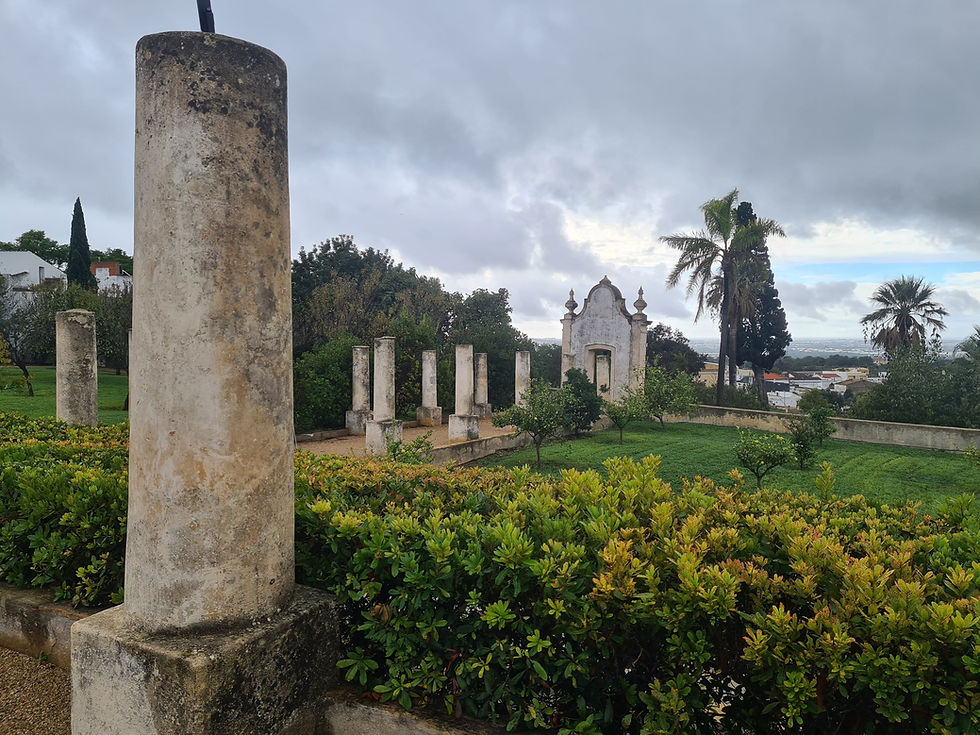
Estoi Palace is a small but memorable stop near Faro.
It has tiled gardens, fountains, columns, and pastel-toned architecture that feel almost unexpected in a region known mainly for beaches. It is not a place that needs half a day. But if you are staying in Faro, arriving early, leaving late, or dealing with rain, it is a lovely cultural detour.
This is the kind of Algarve stop that makes a trip feel more personal.
Take a Day Trip to Monchique
Monchique is the mountain contrast to the coastal Algarve.
The village and surrounding area offer cooler air, viewpoints, greenery, and a slower inland rhythm. It is not essential for a first 5-day trip, but it can be a good addition if you have 6 or 7 days, or if you want to escape beach crowds.
Think of Monchique as a change of mood, not a must-see checklist stop. From Lagos, Monchique is about 45 minutes by car, doable as a half-day trip if you want mountain air between beach days.
See Cacela Velha and the Quiet Eastern Algarve
Cacela Velha is small, whitewashed, and beautiful in a quiet way.
It is not a place for a packed itinerary. It is a place for a slow morning, a view over the lagoon, a simple lunch, and, if the tide and boats work in your favor, a beach experience that feels far removed from the busy Algarve.
For a first trip, I would keep Cacela Velha as a 6th or 7th day extension, especially if you are already staying in Tavira or the eastern Algarve.
The Prettiest Old Towns in the Algarve
Tavira is often the prettiest old town in the Algarve for travelers who want charm, history, architecture, and a slower atmosphere. Lagos is better for first-time visitors who want beaches, boat tours, and restaurants. Faro is more practical and underrated, while Silves is best for history.
Town | Best For | TripnSense Take |
Tavira | Charm, calm, eastern Algarve | Prettiest overall |
Lagos | First-time visitors, beaches, boat tours | Best all-around base |
Faro | Airport, trains, Ria Formosa | Practical but not ideal for a classic beach trip |
Silves | Castle, history, inland culture | Best cultural detour |
Olhão | Market, seafood, islands | Best local atmosphere |
Cacela Velha | Quiet village and remote beach | Best hidden-gem feel |
Carvoeiro | Cliffs, boardwalk, central coast | Best small scenic base |
Best Beaches in the Algarve for First-Time Visitors
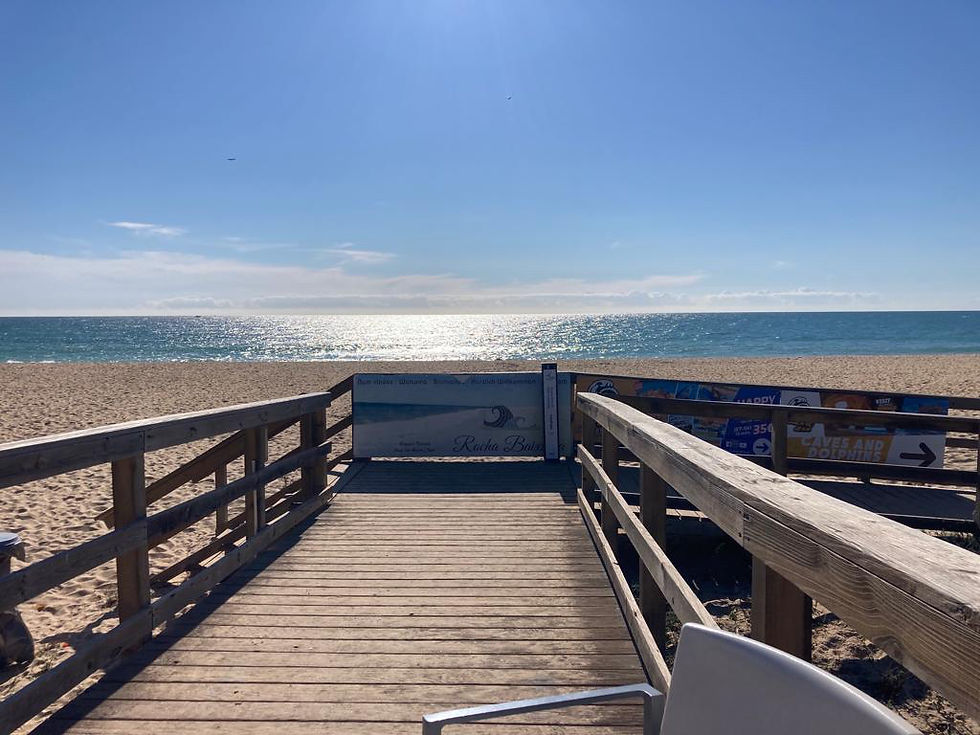
For a first Algarve trip, choose beaches by experience, not by trying to see them all. Praia da Marinha, Praia do Camilo, and Praia da Falésia are the best for dramatic cliff scenery. Meia Praia, Praia de Dona Ana, and Praia do Barril are easier for families or longer beach time. Ilha de Tavira and Praia de Cacela Velha are better if you want the quieter eastern Algarve.
Beach | Best For | Tip |
Praia da Marinha | Iconic cliffs and photos | Go early in summer |
Praia do Camilo | Lagos cliff scenery | Stairs and limited parking |
Praia de Dona Ana | Easier Lagos beach | Larger than Camilo |
Meia Praia | Families | Wide sand and easy access |
Praia da Falésia | Long walks | Red cliffs near Albufeira |
Praia do Barril | Eastern Algarve families | Walk or tourist train access |
Ilha de Tavira | Island beach day | Ferry or boat required |
Praia de Cacela Velha | Quiet eastern Algarve | Tide and boat dependent |
The cliff beaches are the most photogenic, but they are not always the most comfortable. Many have stairs, limited parking, and small patches of sand in summer.
For a slower day or for families with young children, prioritize wide and easier beaches over tiny cliff coves. Meia Praia, Praia da Falésia, Praia do Barril, and Ilha de Tavira are usually more practical than Praia do Camilo or Praia da Marinha because they offer more space and easier beach time.
Lagos, Alvor, Vilamoura, and parts of Tavira also work well for families who want restaurants, calmer evenings, and less complicated logistics.
Best Hiking, Boardwalks, and Nature Trails in the Algarve
The Algarve is not only about lying on the beach. Some of the best views come from walking.
The top coastal walks and boardwalks include:
Seven Hanging Valleys Trail
Ponta da Piedade Boardwalk
Carvoeiro Boardwalk and Algar Seco
Alvor Boardwalk
Ria Formosa walks
Selected Rota Vicentina and Fishermen’s Trail sections
Monchique viewpoints and inland walks
For first-time visitors, the easiest wins are Ponta da Piedade, Algar Seco, and a short section of the Seven Hanging Valleys Trail. They give you major scenery without requiring a full hiking holiday.
A few safety rules matter here. Avoid midday hikes in summer, bring water, wear proper shoes, and keep away from cliff edges. Do not hike cliff trails in flip-flops. And do not underestimate wind. The views are beautiful, but the coast is exposed.
The Algarve Food Scene: What to Eat and What to Avoid
The Algarve food scene is at its best away from the obvious tourist strips. Look for cataplana, clams à Bulhão Pato, razor clam rice, octopus, grilled sardines, garlic shrimp, piri-piri chicken, fig and almond sweets, and local Algarve wines.
Lagos Market, Loulé Market, and Olhão Market are worth visiting for more than food. They give you local rhythm, picnic ingredients, and a break from the resort version of the region.
For better restaurants, look for simple menus, local lunch crowds, handwritten specials, seafood priced by weight, and family-run tascas. Avoid laminated menus with international dishes and aggressive hosts at the entrance.
A sea view does not guarantee good food.
Outside high season, check hours before dinner. In November and December especially, some restaurants reduce schedules or close entirely.
Where to Stay in the Algarve for This Itinerary

For a first Algarve trip, Lagos is usually the best all-around base because it combines beaches, cliffs, boat tours, restaurants, and a walkable old town. Carvoeiro is better for Benagil, Praia da Marinha, and the Seven Hanging Valleys Trail.
Tavira is better for charm and a calmer eastern Algarve experience. Faro is practical for the airport and Ria Formosa, but it is not the best base if your dream is the classic cliff-and-beach Algarve.
Base | Best For | Watch Out For |
Lagos | First-timers, beaches, boat tours | Busy in summer |
Carvoeiro / Lagoa | Benagil, Marinha, Seven Hanging Valleys | Easier with a car |
Faro | Airport, trains, Ria Formosa, culture | Not ideal for famous cliffs |
Tavira | Charm, calm, eastern Algarve | Far from Lagos and Benagil |
Albufeira | Nightlife, resorts, convenience | More touristy |
Vilamoura | Comfort, marina, golf, upscale hotels | Less local atmosphere |
Sagres | Surf, wild coast, quiet | Remote |
Alvor | Families, beach, calmer base | Less central for eastern Algarve |
Lagos vs Albufeira
Choose Lagos if you want beaches, cliffs, a historic center, boat tours, and a balanced first-time base. Choose Albufeira if you want nightlife, resorts, and central convenience.
Lagos feels more scenic and personal. Albufeira can be useful, but it is also more touristy.
Faro vs Lagos
Faro makes sense for arrival, departure, Ria Formosa, and a more urban cultural stop. Lagos is better for the classic Algarve of cliffs, beaches, boat tours, and coastal scenery.
After staying in Faro on a rainy off-season trip, I understood why choosing the right base matters so much in the Algarve. Faro is practical for the airport, trains, and Ria Formosa, and its historic center is more interesting than the first impression may suggest. But if your dream is Ponta da Piedade, Benagil, Praia da Marinha, and golden cliffs, I would not choose Faro as my main base for a first Algarve trip.
Tavira vs Carvoeiro
Tavira is better for calm, history, and eastern Algarve charm. Carvoeiro is better for Benagil, Praia da Marinha, Algar Seco, and the Seven Hanging Valleys Trail.
If you have 5 to 7 days, you can combine them. If you only have 3 or 4 days, choose based on your priority: cliffs or calm.
Once you choose your Algarve base, read my hotel booking guide to compare location, cancellation rules and total price, then check Algarve hotel options on Booking.com or Hotels.com before reserving.
Do You Need a Car in the Algarve?
You do not strictly need a car in the Algarve, but renting one makes the trip much easier if you want to visit beaches, viewpoints, inland towns, and more than one part of the region. Without a car, the Algarve still works, but only if you choose your base carefully and simplify your itinerary.
Travel Style | Best Option |
First trip with beaches, towns and viewpoints | Rent a car |
Staying mainly in Lagos, Faro or Tavira | Possible without a car |
Traveling with young children | Car strongly recommended |
Visiting Benagil, Praia da Marinha, Sagres and Tavira in one trip | Rent a car |
Wanting a slow trip with one base and guided tours | No car can work |
Budget trip in peak summer | Mix trains, buses, Uber and group tours |
Remote beaches, sunrise or sunset viewpoints | Rent a car |
A no-car Algarve trip works best from a well-connected base, such as Lagos, Faro or Tavira, using trains between towns, taxis or Uber for short rides, and group tours for Benagil Cave, Ponta da Piedade and Ria Formosa. It is not the right approach if you want to switch beaches every day or reach remote viewpoints on your own schedule.
For budget travel, choose one strategic base, use public transport between towns, book group tours instead of private transfers, and avoid unnecessary one-way car rentals. Uber can be useful for short rides, but taxis and transfers add up quickly.
If you are renting a car, plan around summer parking, which can be more stressful than the driving itself, and be prepared for narrow rural roads. Main roads at night are generally manageable, but rural roads are darker and narrower than they look on a map. And if you are planning wine tastings, do not drive afterward.
If this is your first time driving abroad, read my guide to renting a car in Europe, then compare prices on DiscoverCars before booking.
How to Get to the Algarve from Lisbon, Porto, or Faro Airport

Faro Airport is the main gateway to the Algarve.
If you are coming from Lisbon, the drive to Faro usually takes around 2.5 to 3 hours, depending on traffic. Lagos and the western Algarve take longer. Lisbon also connects to Algarve towns by train and bus, which can work well if you are not planning a remote beach itinerary.
From Porto, the Algarve is a much longer journey. It works better as part of a larger north-to-south Portugal itinerary than as a quick beach add-on.
Planning a full Portugal itinerary? We have you covered: from Porto and Amarante in the north, through Coimbra and Serra da Estrela, all the way down to Lisbon before the Algarve.
If you are road-tripping from Lisbon to the Algarve, Évora can be a beautiful stop along the way. It breaks up the drive and adds history, food, and architecture before the beach portion of the trip.
What to Do in the Algarve When It Rains, in Winter, or in February
When it rains in the Algarve, focus on old towns, castles, markets, museums, wine tastings, cooking classes, ceramic shops, seafood lunches, and spa hotels instead of trying to force a beach day.
Good rainy-day ideas include Silves Castle, Faro Old Town, Tavira’s churches and cafés, Loulé Market, Olhão Market, Estoi Palace, local museums, wine tasting near Lagoa or Silves, ceramic shops, a cooking class, a spa day, or a long seafood lunch.
I stayed six days in the Algarve in November, and it rained every day. The beaches were still beautiful, but they did not have the same visual impact as the summer photos. Some towns also felt very empty.
That can be lovely if you want quiet, culture, lower prices, and a slower rhythm. It is not ideal if you are dreaming of beach energy, blue water, and lively summer evenings.
I would not plan a November or December Algarve trip expecting the same experience you see in summer photos. It can be rewarding, but it is a different trip.
February can work for walks, food, towns, castles, and lower prices. It is not the month for swimming or a classic beach holiday. Some seasonal businesses may also reduce hours, so check restaurants and tours before building a day around them.
Is the Algarve Expensive?
The Algarve can be expensive in July and August, especially in popular beach towns and resort areas, but it is usually better value in May, June, September, October, and winter.
Hotels vary strongly by season. Car rental prices can rise in summer. Boat tours, parking, and beach restaurants also add up, especially if you are moving around every day.
The eastern Algarve and inland towns can offer better value than the most famous beach bases. Shoulder season is usually the best balance between weather, prices, and crowds.
In May, June, September, and early October, you can often have a much better trip than in August: pleasant weather, easier parking, more comfortable hikes, and less pressure to book everything far in advance.
Still, demand has grown, so do not leave hotels and boat tours to the last minute if you are traveling in the best months.
Best Time to Visit the Algarve and What to Pack
Season | Best For | Watch Out For |
April and May | Walking, towns, lower crowds | Sea may feel cold |
June | Beaches, hikes, good weather | Prices start rising |
July and August | Peak beach season | Crowds, heat, high prices |
September | Best overall balance | Book ahead |
October | Softer weather, lower crowds | Some weather risk |
November to February | Culture, quiet, lower prices | Rain, short days, some closures |
For most travelers, September is the best overall month. June is also excellent. May and early October can be lovely if you accept that the sea may feel cooler and the weather is not guaranteed.
Pack a swimsuit, sunscreen, hat, sunglasses, refillable water bottle, comfortable sandals, sneakers for cliff trails, a light jacket or wind layer for Sagres, a warmer layer for winter, a beach towel, a small day bag, and offline maps on your phone.
Do not pack only beach clothes unless you are going in peak summer. Even in warmer months, wind and evenings can surprise you.
What Not to Do in Portugal as a Tourist
Do not ignore beach warning flags in the Algarve. The Atlantic can look calm from the sand, but currents, waves, and wind can change quickly.
Do not hike Algarve cliff trails in flip-flops. Trails such as the Seven Hanging Valleys Trail are exposed, dusty, and uneven, so wear proper walking shoes.
Swimming into Benagil Cave is prohibited under current rules. Visitors should use a licensed boat, kayak, or SUP tour and should not plan to disembark on the sand inside the cave.
Do not stand too close to cliff edges for photos. The Algarve’s golden cliffs are beautiful but exposed, and erosion is part of the natural landscape.
Do not block narrow streets, viewpoints, or restaurant entrances for photos. In smaller towns, respect local movement and private homes.
Do not treat the Algarve only as a resort strip. Some of the best experiences are in markets, old towns, inland castles, Ria Formosa, and simple seafood restaurants.
Do not rush the whole Algarve in two days. You will spend more time parking and driving than actually enjoying the beaches and towns.
Do not assume every beach restaurant is authentic. A sea view does not guarantee good food, especially in the most touristy areas.
Do not compare Portugal constantly to Spain. Portugal has its own language, rhythm, food, and culture.
Learn a few simple Portuguese words before you go. Bom dia, por favor, obrigado or obrigada go a long way, especially in smaller towns.
Final Algarve Travel Tips: Booking, Access and Planning
For a first Algarve trip, plan 5 to 7 days if possible, book boat tours early in high season, check sea conditions, start hikes early, and rent a car if you want flexibility. Add at least one old town, one inland stop, and one slower food-focused moment to balance the beaches.
The Algarve is at its best when you leave space for contrast: cliffs and old towns, boat tours and slow lunches, famous beaches and quieter corners. Plan with some flexibility, and the region becomes much more memorable than a rushed list of viewpoints.
Many famous Algarve cliff beaches have stairs, steep paths, or uneven access. If mobility is a concern, check beach access before going and favor flatter areas, promenades, boardwalks, or wider beaches with easier approaches. Old towns such as Lagos, Tavira, and Faro may also have cobblestones, slopes, and narrow sidewalks.
How far in advance should you book the Algarve?
For July and August, book accommodations, car rentals, and popular boat tours as early as you can, especially in Lagos, Carvoeiro, Albufeira, and Tavira.
For May, June, September, and early October, booking ahead still matters, but you usually have more flexibility than in peak summer. If Benagil Cave, Ponta da Piedade, or Ria Formosa is a priority, reserve the tour early and choose a morning departure when possible.
FAQ: What to Do in the Algarve
What are the top things to do in the Algarve?
The top things to do in the Algarve are visiting Ponta da Piedade, Benagil Cave, Praia da Marinha, the Seven Hanging Valleys Trail, Lagos, Tavira, Ria Formosa, Silves Castle, Sagres Fort, Algar Seco, Loulé Market, and Cabo de São Vicente.
How many days do you need in the Algarve?
You need at least 5 days in the Algarve for a first trip. With 5 to 7 days, you can combine beaches, boat tours, old towns, coastal hikes, food experiences, and one slower day without rushing.
Is Lagos or Albufeira better?
Lagos is better for first-time visitors who want cliffs, beaches, boat tours, restaurants, and a more scenic old town. Albufeira is better for nightlife, resorts, and central convenience, but it can feel more touristy.
Is Faro or Tavira better?
Tavira is prettier and more atmospheric for a slow Algarve stay. Faro is more practical for airport access, train connections, and Ria Formosa tours.
What is the prettiest old town in the Algarve?
Tavira is one of the prettiest old towns in the Algarve, thanks to its whitewashed streets, riverfront, tiled façades, churches, and slower eastern Algarve atmosphere.
Do you need a car in the Algarve, or can you visit without renting one?
You do not strictly need a car in the Algarve, but having one makes the trip much easier if you want to visit beaches, viewpoints, inland towns and different parts of the region. Without a car, stay in a well-connected base such as Lagos, Faro or Tavira, use trains, taxis, Uber and guided tours, and avoid trying to change beaches every day.
What can you do in the Algarve when it rains?
When it rains in the Algarve, visit Silves Castle, Faro Old Town, Loulé Market, Olhão Market, Tavira’s churches, Estoi Palace, local museums, wine estates, ceramic shops, spas, and seafood restaurants.
What is the best time to visit the Algarve?
The best time to visit the Algarve is May, June, September, or early October, when the weather is pleasant, the beaches are easier to enjoy, and prices are usually lower than in peak summer.
Is the Algarve worth visiting in winter?
The Algarve is worth visiting in winter if you want quiet towns, lower prices, cultural stops, walking, and food. It is not ideal if your main goal is swimming, beach clubs, long sunny days, and the classic summer beach atmosphere.


Comments