
Best Paris Neighborhoods for Repeat Visitors: Beyond the Tourist Trail
- Jun 27
- 24 min read
Where do you go after you have already seen the Eiffel Tower, the Louvre, and Montmartre? The best Paris neighborhoods beyond the tourist trail are Batignolles, Canal Saint-Martin, Belleville, Ménilmontant, and Buttes-Chaumont. These areas are ideal for repeat visitors who want cafés, parks, street art, local atmosphere, and a slower, more everyday version of Paris.

Most Paris guides focus on monuments, museums, and where to stay. This guide is for a different stage of the journey.
After living in France and returning to Paris many times over the years, I realized some of my favorite experiences happened far from the city’s most famous landmarks.
They happened in neighborhood cafés, local parks, markets, and streets where everyday Paris unfolds.
This guide is for travelers who want to discover that side of the city.
It is not about “secret Paris.” Paris has been loved, photographed, painted, filmed, and written about for centuries. Very little is truly secret.
But some parts of the city still feel more personal. They are not built around one famous monument. They are better discovered slowly, on foot, with time for a coffee, a park bench, a side street, or a wrong turn that becomes the best part of the afternoon.
Quick Answers: Best Paris Neighborhoods Beyond the Tourist Trail
If you’re looking for a specific type of Paris neighborhood, start here.
If you’re looking for… | Go to this neighborhood |
Café culture | Batignolles |
Canal-side walks | Canal Saint-Martin |
Street art and diversity | Belleville |
Local atmosphere | Ménilmontant |
Parks and viewpoints | Buttes-Chaumont |
Quick Comparison
Here's a quick comparison of the best Paris neighborhoods beyond the tourist trail for repeat visitors, based on atmosphere, walking style, and the kind of experience each area offers.
Neighborhood | Best for | Time needed | Best type of traveler |
Batignolles | Cafés, parks, local life | 2 to 3 hours | Repeat visitors who want a softer Paris |
Canal Saint-Martin | Canal walks, boutiques, cafés | 2 to 3 hours | Travelers who like creative urban areas |
Belleville | Street art, diversity, views | 2 to 3 hours | Travelers who want a less polished Paris |
Ménilmontant | Local atmosphere, cafés, side streets | 1.5 to 2.5 hours | Slow walkers and curious repeat visitors |
Buttes-Chaumont | Parks, views, scenic walks | 1.5 to 2.5 hours | Travelers who want greenery and surprise |
Paris Neighborhoods at a Glance
Interactive map of the best Paris neighborhoods for repeat visitors, showing five core areas beyond the tourist trail and three bonus neighborhoods with quieter layers.
Table of Contents
Why Paris Gets Better After the First Visit
Paris can feel overwhelming the first time. There is a lot of pressure to “do it right.”
You feel you should see the Eiffel Tower, visit the Louvre, walk through Montmartre, stop at Notre-Dame, cruise the Seine, and maybe squeeze in Versailles.
That first trip can be beautiful. It can also become a checklist.
The second, third, or seventh visit is different. You are no longer trying to prove you have seen Paris. You can finally start feeling it.
The Paris everyone sees first
Most first-time visitors naturally begin with the icons.
That usually means:
Classic Paris landmark | Why visitors go |
Eiffel Tower | The city’s most famous symbol |
Louvre | Art, history, and the Mona Lisa |
Notre-Dame | Gothic Paris and the heart of the city |
Montmartre | Village atmosphere and Sacré-Cœur views |
Champs-Élysées | Famous avenue and Arc de Triomphe |
Seine River | Classic views of bridges and monuments |
There is nothing wrong with this version of Paris. These places matter. They are famous for a reason. But they are only one layer of the city.
The Paris many travelers discover later
After the main sights, Paris becomes more interesting in a quieter way.
You start noticing:
The rhythm of café terraces
Parents walking their children home from school
Small parks used by locals, not tour groups
Neighborhood bakeries with a real morning line
Independent shops that still feel personal
Markets where people are buying dinner, not souvenirs
Streets where nothing major happens, yet everything feels Parisian
This is where Paris becomes less of a postcard and more of a place. For me, that transition changed the way I enjoyed the city.
The first trips were about landmarks. Later trips became about neighborhoods.
I still love seeing a beautiful monument suddenly appear at the end of a street, but I no longer need the whole day to revolve around it.
Now, the best Paris day might be a long walk, a café, a park, a bookstore, and a neighborhood I had ignored for too long.
Why repeat visitors often fall in love with Paris
Repeat visitors often enjoy Paris more because they travel with less pressure. They do not need to spend every hour chasing the next must-see attraction.
They can choose atmosphere over efficiency. They can return to a favorite café, sit longer in a park, or explore a neighborhood just because it feels right.
That is when Paris becomes easier to love.
Less sightseeing.
More atmosphere.
More serendipity.
And often, much better memories.
What Makes a Paris Neighborhood Worth Exploring?
A neighborhood does not need a major monument to be worth your time.
In Paris, some of the best areas are rewarding because of how they feel, not because of one famous attraction.
Walkability
A good Paris neighborhood should be easy to explore on foot.
The best walks have a natural rhythm: a lively street, a quiet square, a café, a park, a few shops, and enough visual variety to keep you curious.
You should be able to wander without needing a strict plan.
Café culture
Cafés are part of the Paris experience, but not all café areas feel the same.
In tourist-heavy zones, cafés can feel rushed or staged. In local neighborhoods, they often feel like part of daily life.
People meet friends, work on laptops, read, talk, sit alone, watch the street, or stop for a short break between errands.
That is the Paris café culture I prefer.
Local life
A neighborhood feels more rewarding when it is not built only for visitors.
Look for grocery shops, schools, pharmacies, bakeries, markets, parks, and people going about ordinary routines.
That is usually where the city feels most real.
Architecture and character
Paris is not visually uniform.
Some neighborhoods feel grand and Haussmannian. Others are more village-like, hilly, colorful, residential, creative, or mixed.
The best walks reveal those differences slowly.
Places that reward wandering
Some areas are better with a map.
Others are better when you let yourself drift.
For repeat visitors, the most satisfying Paris neighborhoods are often the ones where the walk itself is the attraction.
Batignolles (17th arrondissement, northwest Paris): The Paris Neighborhood I Wish I’d Explored Earlier
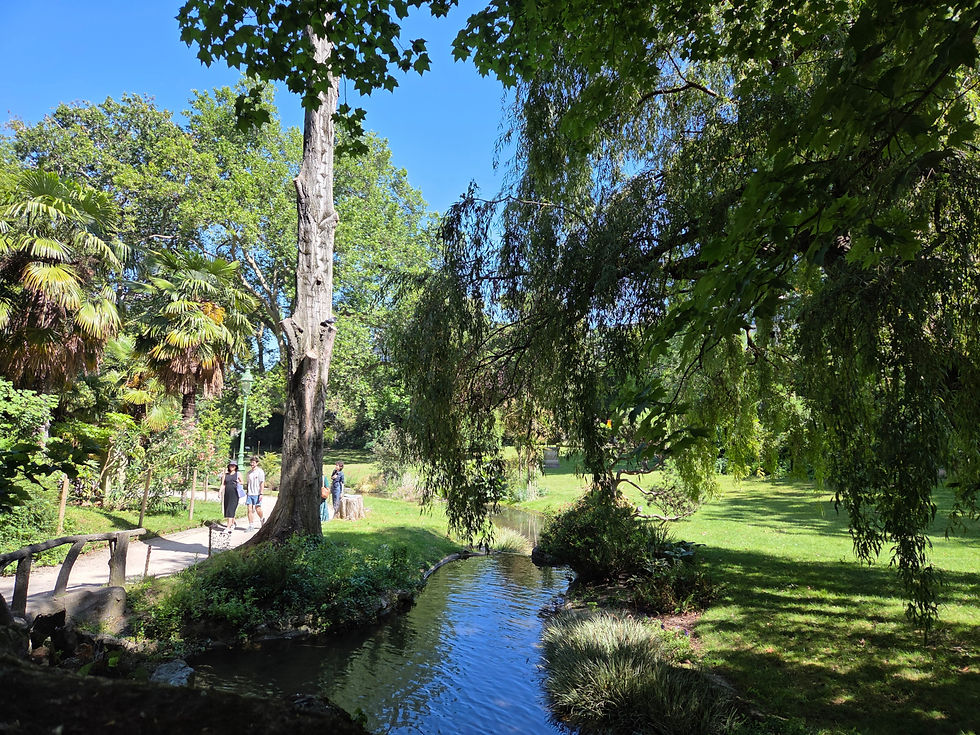
Square des Batignolles was designed in the English garden style in 1862, making it one of the rare informal gardens in Paris at a time when Haussmann was imposing formal symmetry across the city.
Batignolles is one of the Paris neighborhoods I wish I had paid attention to sooner.
For years, I passed near it, stayed in other areas, returned to the same familiar parts of the city, and somehow left Batignolles for another time.
That was a mistake.
When I finally spent time there, I understood immediately why many repeat visitors love it.
Batignolles does not shout.
It does not try to impress you with a single major monument.
Instead, it gives you a softer version of Paris: leafy squares, relaxed cafés, independent shops, young families, and streets that feel lived-in without feeling sleepy.
It is the kind of neighborhood that makes more sense after you have already seen the obvious Paris.
Why Batignolles feels different
Batignolles sits in the 17th arrondissement, north of the more formal and polished parts of western Paris.
It feels residential, but not dull.
Elegant, but not stiff.
Local, but still easy for visitors to enjoy.
The neighborhood has a mix that works especially well for slow travelers: pretty streets, everyday life, cafés with terraces, food shops, small boutiques, and green spaces.
It feels Parisian without feeling like a stage set. That is exactly why I liked it.
The atmosphere in Batignolles
Batignolles has a relaxed, neighborhood rhythm.
You see young families, people walking dogs, friends meeting for coffee, parents with strollers, and locals doing ordinary errands.
There are cafés, but they do not feel like they exist only for visitors. There are shops, but the area still feels practical.
There are parks, but they feel like part of the neighborhood’s daily routine, not just a sightseeing stop.
Some parts of Paris are beautiful but intense. Batignolles felt easy.
I was there on a Sunday late morning and stopped at a neighborhood bar for a glass of wine, not because it was on any list, but because the atmosphere made me want to stay.
Around me, the conversations were all in French. Groups of friends, families with children, people having breakfast or brunch, and the quiet rhythm of a Paris Sunday.
For a moment, I did not feel like I was visiting Paris. I felt almost Parisian.
It was the kind of place where I could imagine coming back with no plan at all.
Just walking, stopping, watching, and letting the afternoon unfold.
What to see in Batignolles
Batignolles is not a checklist neighborhood, but if you want to explore like a local, these are the best places and streets to focus on for cafés, parks, and everyday neighborhood life.
Place | Why go |
Square des Batignolles | A romantic neighborhood garden with ponds, paths, and a village-like feeling |
Rue des Batignolles | The main street for cafés, shops, and everyday Batignolles life |
Parc Martin Luther King | A modern park that shows a newer side of the neighborhood |
Café terraces | The best way to feel the rhythm of Batignolles |
Side streets | Quiet residential Paris, best explored slowly |
Square des Batignolles
Start with Square des Batignolles.
It is not one of the grand formal gardens people usually associate with Paris. That is part of its charm.
It feels intimate, green, and local. There are winding paths, water, trees, benches, and a soft neighborhood atmosphere that makes you want to slow down.
This is a good place to understand Batignolles before trying to “see” it.
Opening hours vary by season, so check the current schedule before planning an early morning or late evening visit.
Rue des Batignolles
Rue des Batignolles gives the neighborhood its daily-life energy. Walk it slowly.
Look at the bakeries, cafés, small shops, restaurants, and people coming and going.
It is not dramatic. That is the point.
It is a street that works because it belongs to the neighborhood.
If you want a slightly more contemporary shopping feel, you can also wander toward Rue Legendre, but for local atmosphere, Rue des Batignolles is the better anchor.
Parc Martin Luther King
Parc Martin Luther King shows another side of Batignolles. It is newer, larger, and more contemporary than Square des Batignolles.
Parc Martin Luther King is also one of the reasons young families and professionals are drawn to Batignolles.
It is large, green, and unhurried, the kind of park that gives the neighborhood a sense of space that is not always easy to find in Paris.
For a moment, it can feel closer to the countryside than to the city, even though you are still less than 20 minutes from central Paris.
That combination is rare: everyday neighborhood life, generous green space, and the heart of Paris still within easy reach.
If Square des Batignolles feels like old neighborhood Paris, Parc Martin Luther King feels like the city adapting to modern residential life. Together, they make the area more interesting. You see both the charm and the evolution.
Why repeat visitors love Batignolles
Batignolles is ideal for repeat visitors because it does not compete with the Eiffel Tower, the Louvre, or Montmartre.
It offers something else. A slower day. A more local pace. A version of Paris that feels pleasant instead of performative.
For travelers who have already done the major sights, that can be exactly what they are looking for.
Batignolles is also a good reminder that Paris is not only its monuments. Sometimes the city is at its best when nothing spectacular is happening.
A good café. A beautiful square. A street with just enough life. That can be enough.
Suggested Batignolles walk
Start at Place de Clichy.
From there, walk toward Rue des Batignolles and let the neighborhood become calmer as you move away from the traffic.
Stop at Square des Batignolles for a slow loop through the garden.
Then continue along Rue des Batignolles, choosing a café terrace if one feels inviting.
After that, walk toward Parc Martin Luther King for a more modern contrast.
This is not a walk to rush.
Give it 2 to 3 hours, especially if you want time for coffee or lunch.
Practical detail | Info |
Starting point | Place de Clichy |
Metro | Place de Clichy, lines 2 and 13 |
Transit tip | Check both bus and Metro options. For neighborhood walks, buses can be easier and more scenic. |
Duration | 2 to 3 hours |
Best season | April to October for café terraces and parks |
Best time of day | Late morning or afternoon |
Opening note | Square des Batignolles opens daily, with seasonal hours |
Best for | Cafés, local life, parks, repeat visitors |
Canal Saint-Martin (10th arrondissement, Right Bank): Paris at Its Most Effortlessly Cool

The canal was partially covered over in the early 20th century (the section running under Boulevard Richard-Lenoir) and only the northern stretch remains open today, which is why it ends so abruptly near République.
Canal Saint-Martin is one of the easiest neighborhoods to enjoy without a strict itinerary.
It has water, bridges, cafés, small shops, and a lively but relaxed urban mood.
It feels younger and more casual than classic central Paris.
This is the Paris of canal-side walks, weekend conversations, creative shops, and people gathering near the water when the weather is good.
Why people keep coming back
Canal Saint-Martin works because it is simple.
You walk.
You cross footbridges.
You stop for coffee.
You watch the locks.
You browse a shop.
You continue walking.
There is no pressure to complete the area. It is more about atmosphere than sightseeing.
That makes it ideal for repeat visitors who want a Paris day with movement, but not exhaustion.
The atmosphere around Canal Saint-Martin
The atmosphere is creative, urban, and lively.
It can feel trendy, especially around the most popular cafés and boutiques, but it still has a real neighborhood rhythm.
The canal gives the area a natural focus. Instead of moving from one monument to another, you follow the water.
That makes the walk feel intuitive.
What to see around Canal Saint-Martin
Place or experience | Why it matters |
Canal locks | A classic part of the area’s identity |
Iron footbridges | One of the most photogenic features of the canal |
Canal-side cafés | Good for a pause and people-watching |
Independent boutiques | A more contemporary shopping feel |
Side streets | Best for finding quieter corners |
Suggested Canal Saint-Martin walk
Start near République.
Walk toward the canal and follow the water north.
Cross the footbridges when they catch your eye.
Do not worry too much about the exact route.
The pleasure of Canal Saint-Martin is in the slow movement along the water.
You can continue toward Bassin de la Villette if you want a longer walk, or connect the area with Belleville for a more urban and varied afternoon.
Practical detail | Info |
Starting point | République |
Metro | République, lines 3, 5, 8, 9 and 11 |
Transit tip | Check both bus and Metro options. Buses can be calmer for short and medium neighborhood distances. |
Duration | 2 to 3 hours |
Best season | April to October for canal-side walking |
Best time of day | Afternoon into early evening |
Best for | Canal views, cafés, boutiques, urban atmosphere |
Good combination | Canal Saint-Martin plus Belleville |
Belleville (20th arrondissement, eastern Paris): The Most Unexpected Side of Paris

Marché de Belleville on Boulevard de Belleville (Tuesdays and Fridays) is one of the most multicultural street markets in Paris, with North African, Middle Eastern, and Asian vendors alongside longtime local stalls.
Belleville is one of the most interesting neighborhoods in Paris because it does not match the polished image many visitors have in mind.
It is multicultural, energetic, artistic, hilly, and sometimes rough around the edges.
That is exactly why it is worth exploring.
Belleville shows a side of Paris that is alive, mixed, and constantly changing.
Why Belleville feels different
Belleville does not feel like postcard Paris.
It has immigrant history, street art, markets, steep streets, local cafés, and some of the best
views in the city.
It feels less curated than many central neighborhoods. That can surprise visitors who arrive expecting only elegance and symmetry.
But Paris has always been more complex than its most beautiful façades. Belleville makes that clear.
The atmosphere in Belleville
Belleville is multicultural, artistic, and energetic. It is a neighborhood of contrasts.
You may see street art, small food shops, neighborhood bars, families, students, older residents, and visitors looking for a different side of the city.
For more context on the street art and the neighborhood’s layered history, a local-led walking tour of Belleville is one of the best ways to go deeper without spending hours researching on your own.
What to see in Belleville
These Belleville highlights are the best places to see street art, views, local markets, and the more unexpected side of eastern Paris.
Place or experience | Why go |
Parc de Belleville | Views over Paris and a good place to pause |
Street art | One of the neighborhood’s defining features |
Local markets | A glimpse of everyday life |
Rue Denoyez | A well-known street art area |
Hillside streets | Great for wandering and unexpected views |
Suggested Belleville walk
Start at Belleville Metro.
Walk toward Rue Denoyez for street art, then continue uphill toward Parc de Belleville.
Take your time in the park.
The views are part of the reward.
From there, explore the surrounding streets or continue toward Ménilmontant for a longer local walk.
Practical detail | Info |
Starting point | Belleville Metro |
Metro | Belleville, lines 2 and 11 |
Transit tip | Consider arriving by bus if you want to avoid stairs before a hilly walk. |
Duration | 2 to 3 hours |
Best season | Spring, early summer, or autumn |
Best time of day | Daytime, especially for a first visit |
Best for | Street art, diversity, views, local energy |
Good combination | Belleville plus Ménilmontant or Buttes-Chaumont |
Ménilmontant (20th arrondissement, eastern Paris): A Neighborhood That Still Feels Local
Rue Oberkampf, which runs along the edge of the neighborhood, was central to the Paris bar and live music scene in the late 1990s and early 2000s and still anchors the area's creative reputation.
Ménilmontant is close to Belleville, but it has its own mood. It feels residential, creative, and a little more under the radar.
This is not the place to come for major attractions.
Come here for streets, cafés, local squares, and the feeling of a Paris neighborhood that still belongs mostly to the people who live there.
Why Ménilmontant remains under the radar
Ménilmontant is not usually on a first-time Paris itinerary. It does not have the instant recognition of Montmartre or Le Marais.
That helps preserve its local feeling. Visitors who make it here usually come because they are already interested in everyday Paris, street life, and neighborhoods with character.
The atmosphere in Ménilmontant
The atmosphere is residential, creative, and authentic. There are cafés, bars, small restaurants, local streets, and a slightly bohemian feel.
It can feel relaxed in some corners and lively in others.
The pleasure is in walking without needing a major destination.
Ménilmontant is the kind of place where the reward is not one famous view or one museum entrance.
It is the gradual feeling of being away from the Paris everyone is trying to photograph.
I only realized how high Ménilmontant sits when I started walking uphill and the climb became harder than expected. Worth it, but on a second visit I took the bus up and walked back down, which is a much better way to arrive with energy left for the neighborhood itself.
What to see in Ménilmontant
Place or experience | Why go |
Side streets | Best way to feel the neighborhood |
Small cafés | Good for a local pause |
Local squares | Everyday neighborhood life |
Creative corners | A less polished, more personal Paris |
Nearby Père Lachaise | Easy to combine if you want a longer walk |
Suggested Ménilmontant walk
Start near Ménilmontant Metro.
Walk slowly through the surrounding streets, letting the route stay loose.
You can connect the neighborhood with Belleville, Père Lachaise, or Buttes-Chaumont, depending on your energy.
This is a good area for travelers who enjoy wandering more than sightseeing.
Practical detail | Info |
Starting point | Ménilmontant Metro |
Metro | Ménilmontant, line 2 |
Transit tip | Compare bus and Metro routes, especially if you are already nearby on the Right Bank. |
Duration | 1.5 to 2.5 hours |
Best season | Spring, early summer, or autumn |
Best time of day | Daytime or early evening |
Best for | Local atmosphere, cafés, creative streets |
Good combination | Belleville, Père Lachaise, or Buttes-Chaumont |
Père Lachaise is one of the easiest additions to a Ménilmontant walk. If you want more than a map and a list of famous graves, a guided Père Lachaise tour gives the cemetery real context. The history, the stories, and the parts most visitors walk straight past
Buttes-Chaumont (19th arrondissement, northeastern Paris): One of Paris’s Most Underrated Walks
The park was commissioned by Haussmann and inaugurated for the 1867 Exposition Universelle on what had been a gypsum quarry and rubbish dump. The dramatic cliff terrain is partly a result of that industrial past.
Parc des Buttes-Chaumont is one of the most surprising places in Paris. It is dramatic, green, hilly, and scenic.
For visitors who think Paris parks are mostly formal gardens with straight paths and clipped trees, Buttes-Chaumont feels completely different.
It has cliffs, bridges, water, slopes, and viewpoints. It is one of the best places in the city for a slow walk with a sense of escape.
Why Buttes-Chaumont surprises so many visitors
Buttes-Chaumont does not feel like the Paris many people imagine.
It is wilder, more vertical, and more theatrical than the Tuileries or Luxembourg Gardens.
You come here less for elegance and more for scenery.
That is why it works so well for repeat visitors. It gives you a different texture of the city.
The atmosphere in Buttes-Chaumont
The atmosphere is green, scenic, and local.
You will see people walking, relaxing on the grass, meeting friends, exercising, or enjoying the views.
It feels like a neighborhood park, but with enough drama to make the walk memorable.
When you climb toward the Temple de la Sibylle, the city suddenly opens below you, with treetops, rooftops, water, and sky all appearing at once.
That moment is what makes Buttes-Chaumont feel less like a simple park stop and more like a real discovery in Paris.
What to see in Buttes-Chaumont
These Buttes-Chaumont highlights are the most useful stops for scenic walks, viewpoints, bridges, and one of the most dramatic parks in Paris.
Place | Why go |
Temple de la Sibylle | The park’s most iconic viewpoint |
Bridges | Dramatic views and photo opportunities |
Lake | A scenic center to the park |
Sloping paths | Great for a longer walk |
Viewpoints | One of the reasons the park is so rewarding |
Suggested Buttes-Chaumont walk
Start at Buttes Chaumont Metro or Botzaris Metro.
Enter the park and follow the paths toward the lake.
Climb toward the Temple de la Sibylle if you are comfortable with slopes and steps.
Then loop slowly through the park instead of rushing back out.
Buttes-Chaumont is best enjoyed with time.
Opening hours vary by season, so check the current park schedule before planning a very early or late visit.
Practical detail | Info |
Starting point | Buttes Chaumont or Botzaris Metro |
Metro | Buttes Chaumont or Botzaris, line 7bis |
Transit tip | A bus can be more comfortable if you want to save your legs for the park’s hills. |
Duration | 1.5 to 2.5 hours |
Best season | Spring, early summer, or autumn |
Best time of day | Late morning or afternoon |
Opening note | Parc des Buttes-Chaumont opens daily, with seasonal hours |
Best for | Parks, views, local life, scenic walks |
Good combination | Belleville or Canal Saint-Martin |
Le Marais, Saint-Germain, and the Latin Quarter: Beyond the Obvious
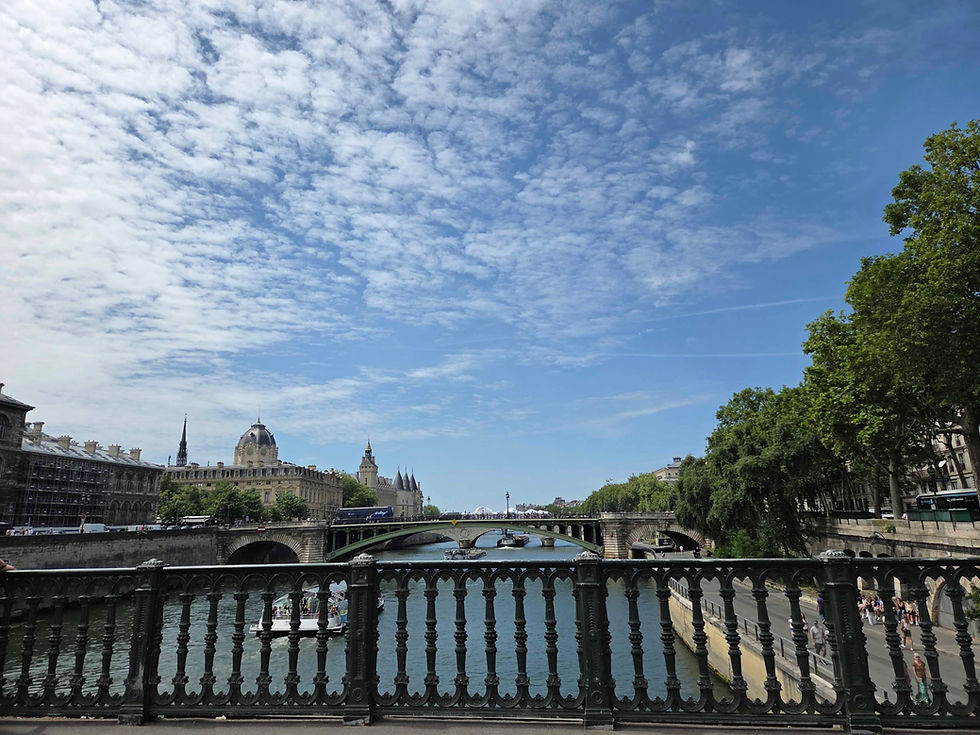
Some Paris neighborhoods are not hidden at all. They appear in almost every guidebook.
But that does not mean you have already seen them.
The neighborhoods below are not the focus of this guide. Treat them as bonus ideas rather than full walking routes.
They work well if you are already nearby, or if you want to connect these local walks with a more historical Paris itinerary.
Not hidden. Not secret. Just places that reveal more with every visit.
Familiar neighborhood | What to explore beyond the obvious | Best for |
Le Marais | Quiet courtyards, historic mansions, Jewish heritage, small museums | History, architecture, layered Paris |
Saint-Germain-des-Prés | Bookshops, galleries, churches, quieter streets beyond the famous cafés | Literary Paris, elegant walks, galleries |
Latin Quarter | Gardens, churches, old university streets, medieval corners | Medieval Paris, Left Bank history, bookshops |
Le Marais Beyond the Main Streets
Le Marais is one of the most visited neighborhoods in Paris, but many visitors only see the busiest shopping streets.
Beyond the crowds, it offers quiet courtyards, historic mansions, small museums, Jewish heritage, elegant squares, and some of the city’s most layered history.
Place des Vosges, built in 1612, is one of the finest architectural spaces in Paris and is usually quieter before 9am or after 6pm.
I always end up there at some point, no matter which part of the city I am supposed to be exploring.
This is also one of the best areas to explore through historical walking tours in Paris, especially if you want more context on medieval streets, Jewish heritage, aristocratic mansions, and revolutionary history.
Saint-Germain-des-Prés Beyond the Famous Cafés
Saint-Germain-des-Prés is currently my favorite neighborhood to stay in when I’m in Paris. It is close enough to everything that getting around the city is easy, and coming back at the end of the day never gets old.
For repeat visitors, it also works well as a base because it is walkable, central, and rewarding to return to after a day out in the city.
That familiarity is exactly why I notice its quieter layers more now. When a neighborhood becomes your base, you stop sightseeing it and start living in it.
Saint-Germain-des-Prés is famous for Café de Flore and Les Deux Magots, but the more personal version of the neighborhood begins around Rue de Fürstenberg and Square Laurent-Prache, where bookshops, galleries, churches, and small passages reward anyone willing to slow down.
It is not off the beaten path, just familiar Paris with quieter layers.
If you want a central base for this kind of slower Paris trip, hotels in Saint-Germain-des-Prés are worth comparing early, especially if you like coming back to a lively but walkable neighborhood at the end of the day
The Latin Quarter Beyond the Student Crowds

The Latin Quarter can feel overrun around its most touristy streets, but it still has beautiful corners that most visitors walk past.
Rue Mouffetard is the most useful anchor: a steep cobblestone market street with food vendors, cheese stalls, and café terraces that still functions as a real neighborhood market. Tuesday through Sunday mornings are the best time to go.
From there, the surrounding streets open into gardens, old university buildings, medieval traces, and some of the Left Bank’s most layered history.
It also pairs naturally with Île de la Cité, Notre-Dame, Sainte-Chapelle, and the Conciergerie for a longer historical day. For a more focused historical angle, you can also connect this area with a self-guided route on Women of the French Revolution.
On my last visit, I started at Pont Neuf, crossed into Île de la Cité, then wandered into the Latin Quarter for lunch before ending at Rue Mouffetard.
That combination of art, history, and everyday neighborhood life is one of the best ways to experience this part of Paris as a repeat visitor.
How to Combine These Neighborhoods in One Day
If you want a relaxed half day, choose one neighborhood and enjoy it slowly.
If you want a fuller local Paris day, the easiest combination is Canal Saint-Martin, Belleville, and Buttes-Chaumont.
Start at République, follow the canal, continue toward Belleville for street art and views, then finish in Parc des Buttes-Chaumont.
For a softer and less hilly day, choose Batignolles on its own. It works better as a slow neighborhood walk than as part of a packed itinerary.
Route | Best for | Time needed |
Batignolles only | Cafés, parks, local rhythm | 2 to 3 hours |
Canal Saint-Martin plus Belleville | Urban walking, street art, views | 3 to 4 hours |
Belleville plus Buttes-Chaumont | Hills, local streets, park scenery | 2 to 3 hours |
Canal Saint-Martin plus Belleville plus Buttes-Chaumont | Full local Paris afternoon | 4 to 5 hours |
These Paris neighborhood combinations work best when you want to build a half-day or full-day walking route beyond the main tourist sights.
If these neighborhoods make you want to go deeper, a local-led walking tour can add context without turning the day into a museum visit. This is especially useful in Belleville and eastern Paris, where street art, immigration history, and neighborhood identity are easier to understand with someone who knows the area.
If you want to balance local Paris walks with time outside the city, you can also explore the best day trips from Paris for a slower return itinerary.
Local Markets to Add to These Neighborhood Walks
Markets are one of the easiest ways to feel local Paris without turning the day into a restaurant checklist.
For these neighborhood walks, the best approach is simple: check the market schedule first, then build your walk around a morning visit, a coffee stop, or a picnic in a nearby park.
These Paris markets are ideal to add a local food stop to your neighborhood walk in Batignolles, Belleville, or Ménilmontant.
Market | Neighborhood connection | Usual opening days | Best way to use it |
Marché couvert des Batignolles | Batignolles | Tuesday to Sunday | Pair it with Rue des Batignolles and Square des Batignolles |
Marché Belleville | Belleville | Tuesday and Friday mornings | Visit before walking uphill toward Parc de Belleville |
Marché Ménilmontant | Ménilmontant / Belleville edge | Tuesday and Friday mornings | Combine with Ménilmontant streets or Père Lachaise |
Schedules can change around holidays or special closures, so check the current Paris market page before planning your day.
If you want a more structured introduction to Parisian market culture, a food tour in Paris is worth considering before you go solo.
Best Season for These Paris Neighborhood Walks
These Paris neighborhoods can be explored year-round, but the experience changes with the season.
Spring and early autumn are the easiest times for walking, café terraces, parks, and long afternoons outside.
Summer can be lively around Canal Saint-Martin and Buttes-Chaumont, but outdoor spaces may feel busier.
Winter is quieter and more atmospheric, especially in Batignolles, Belleville, and Ménilmontant, but parks and gardens have shorter seasonal hours.
Season | Neighborhood Walk | Perfect for |
Spring | Batignolles, Canal Saint-Martin, Buttes-Chaumont | Terraces, parks, flowers, comfortable walking |
Summer | Canal Saint-Martin, Belleville, Buttes-Chaumont | Lively evenings, longer daylight, busier outdoor spaces |
Autumn | Batignolles, Ménilmontant, Buttes-Chaumont | Softer light, good walking weather, calmer mood |
Winter | Batignolles, Belleville, Ménilmontant | Quieter streets, cafés, shorter park and garden hours |
Practical Tips for Exploring Local Neighborhoods in Paris
These neighborhoods are easy to enjoy, but they work best when you approach them differently from the big-ticket sights.
Think less in terms of attractions and more in terms of rhythm, walking, and small pauses.
Do not overplan the walk
These neighborhoods are best with a loose structure.
Choose a starting point, a few highlights, and one place to pause.
Leave room for wandering.
Go during the day
For first visits to Belleville, Ménilmontant, and Buttes-Chaumont, daytime is the easiest choice.
You will see more, feel more oriented, and enjoy the parks and street life better.
Wear comfortable shoes
These walks can include hills, cobblestones, stairs, and long stretches on foot.
Belleville, Ménilmontant, and Buttes-Chaumont especially require comfortable shoes.
Check buses as well as the Metro
For neighborhood walks, do not assume the Metro is always the best option.
On my last visit, I often preferred buses because they were calmer, more scenic, and easier than dealing with stairs and long underground corridors.
Check both options before you leave, especially for short and medium distances.
Stop often
The point is not to cover ground quickly. The point is to notice more.
A café stop, a park bench, or a quiet street can be the best part of the day.
FAQ: Paris Neighborhoods Beyond the Tourist Trail
What are the best Paris neighborhoods to visit and walk in beyond the tourist trail?
The best Paris neighborhoods beyond the tourist trail and for walking are Batignolles, Canal Saint-Martin, Belleville, Ménilmontant, Buttes-Chaumont, Le Marais, and the Latin Quarter. Batignolles is best for cafés and parks, Canal Saint-Martin for canal walks, Belleville for street art and views, and Buttes-Chaumont for scenic green space.
What neighborhood in Paris feels most local?
Batignolles is one of the Paris neighborhoods that feels most local because it combines cafés, parks, independent shops, families, and everyday residential life.
Ménilmontant is another good choice for a more creative, less polished local atmosphere.
Is Batignolles worth visiting?
Yes, Batignolles is worth visiting, especially for repeat visitors to Paris.
It is a relaxed neighborhood in the 17th arrondissement with café terraces, Square des Batignolles, Rue des Batignolles, Parc Martin Luther King, independent shops, and a local rhythm that feels very different from the main tourist areas.
Is Belleville safe for visitors?
Belleville is generally fine to explore during the day, especially around its main streets, street art areas, and Parc de Belleville.
Like in any busy urban area, stay aware of your surroundings, keep valuables secure, and avoid wandering into very quiet streets late at night if you do not know the neighborhood.
What is the difference between Belleville and Ménilmontant?
Belleville is larger, busier, and more multicultural, with street art, a twice-weekly market on Boulevard de Belleville, and views over Paris from Parc de Belleville. Ménilmontant, directly adjacent, is quieter and more residential, with a creative, slightly bohemian atmosphere and fewer visitors. Both are in the 20th arrondissement and easy to combine in one walk, but Belleville tends to feel more energetic while Ménilmontant rewards slower, less structured wandering.
What is the most underrated neighborhood in Paris?
Batignolles is one of the most underrated neighborhoods in Paris for travelers who want café culture, local parks, and a relaxed residential atmosphere.
Buttes-Chaumont is also underrated, especially for visitors who want one of the city’s most scenic park walks.
Which Paris neighborhoods are best to revisit on a second or third trip?
The best neighborhoods to revisit on a second or third trip are Le Marais beyond the main streets, Saint-Germain-des-Prés beyond the famous cafés, and the Latin Quarter beyond the busiest student areas, along with Batignolles, Canal Saint-Martin, Belleville, Ménilmontant, and Buttes-Chaumont.
Is it better to use the Metro or buses for these Paris neighborhood walks?
For these Paris neighborhood walks, check both Metro and bus options.
The Metro is useful for crossing the city, but buses can be less crowded, easier than stairs and long corridors, and more scenic for short or medium distances.
Can I explore these neighborhoods without speaking French?
Yes, you can explore these Paris neighborhoods without speaking French.
In cafés, shops, and restaurants, a polite “bonjour” before asking a question makes a difference. Many people in Paris speak some English, but courtesy matters.
Learn a few basic French words and keep your requests simple.
Final Thoughts: The Paris You Find After the Checklist
The best version of Paris often appears after the first trip. Once the major sights are behind you, neighborhoods like Batignolles, Canal Saint-Martin, Belleville, Ménilmontant, and Buttes-Chaumont reveal a city that feels more personal, more local, and more rewarding to explore slowly.
For me, this is where Paris becomes easier to love. Not because the Eiffel Tower stops being beautiful. Not because the Louvre stops mattering.
But because the pressure fades. You stop asking, “What do I still need to see?” You start asking, “Where do I want to spend the afternoon?” That small change makes Paris feel completely different.
A coffee in Batignolles. A canal walk near République. Street art in Belleville. A quiet corner in Ménilmontant. A view from Buttes-Chaumont. Even the way you move through the city changes.
Instead of disappearing underground between monuments, you may find yourself taking a bus, watching Paris pass by the window, and arriving with more energy for the walk itself.
These are not the Paris moments that always make the cover of a guidebook. But for many repeat visitors, they are the ones that stay.


Comments