
Best Historical Walking Tours in Paris
- Jun 23
- 26 min read
Updated: Jun 27
Last updated: June 2026
The best historical walking tour in Paris depends on the story you want to follow. First-time visitors usually do well with a historic center or medieval Paris walk around Île de la Cité, Notre-Dame, Sainte-Chapelle, and the Latin Quarter. Repeat visitors may prefer a French Revolution, women’s history, WWII, literary Paris, or a hidden neighborhood tour for a deeper view of the city.
About the Author
Mona has lived in France and returned to Paris many times over the years, walking the city in different seasons and at different rhythms. Her travel style focuses on cultural context, slow exploration, and the stories behind the places most visitors only photograph. This guide combines personal experience in Paris with current research on historical walking tours, independent guides, and major booking platforms. Not every tour listed here has been personally taken by the author. Recommendations are based on route logic, operator reputation, review signals, theme fit, and the kind of thoughtful travel TripnSense readers value. |
Note: Prices, ratings, review counts, and group sizes change often. Always check the booking page before reserving.
After living in France and returning to Paris dozens of times, I realized that many tours treat the city like a static museum.
They point at monuments, give you a few dates, and move on. The best historical walking tours do something different.
They make you feel as if you are walking beside Victor Hugo, Josephine Baker, Simone de Beauvoir, Marie Antoinette, or the women of the French Revolution. They turn Paris from a postcard into a living city.
Paris is best understood on foot. Not because walking is romantic, although it often is. But because Paris reveals itself in layers.
A bridge.
A café.
A square.
A church door.
A narrow street behind a busy boulevard.
These places make more sense when someone helps you connect them.
This guide is for curious travelers who want more than a checklist. You will find specific bookable tours, independent operators, self-guided ideas, women’s history, medieval Paris, literary walks, French Revolution routes, and options for repeat visitors who already know the classic sights.
Table of Contents
Best Historical Walking Tours in Paris: Top Bookable Picks
Tour | Duration | From | Rating | Group |
Paris: Révolution(s) Walking Tour Best for: French Revolution and political history | 2.5 to 4h | €40 | 5.0 ★ (31) | Private option |
Paris: French Revolution Tour, Relive the 14th July 1789 Best for: immersive 1789 storytelling | 2 to 3h | €35 | 5.0 ★ (203) | Group |
Best for: women’s history with an independent operator | 2.5h | €35 | New | Group |
Unique Tour of Literary Women in Parisian History with Tastings Best for: women writers and Left Bank culture | 2.5h | €45 | 99% (76) | Group |
Paris: Old Town & Latin Quarter Guided Walking Tour Best for: medieval Paris and first-time visitors | 3h | €39 | 4.9 ★ (570) | Group |
Paris: Left Bank, Writers, Revolution and Black Coffee Best for: literary Paris and cafés | 1.5h | €15 | 5 ★ (17) | Group |
Paris WWII History Tour: Nazi Occupation and the Resistance Best for: deep history with an expert guide | 3h | €126 | 4.8 ★ (875) | Small group |
Paris Walks Scheduled Walking Tours Best for: budget-friendly classic walks | 2h | €25 | Verified on site | Group |
TripnSense note: Do not choose based on rating only. For historical tours, the guide’s storytelling matters more than almost anything else. A 2-hour focused walk with a strong guide can be better than a 5-hour tour that tries to cover too much.
Quick Answers: Which Paris Historical Walking Tour Should You Choose?
If you want to… | Choose this tour style |
Understand the French Revolution | French Revolution walking tour |
Discover women’s history | Women-focused Paris history tour |
Explore medieval Paris | Île de la Cité and Latin Quarter walk |
Follow literary Paris | Left Bank literary walking tour |
Go beyond tourist Paris | Hidden neighborhood walk |
Get deeper context | Private or small-group historian-led tour |
Move at your own pace | Self-guided historical route |
Paris Historical Walking Tours Map
The map above covers the main areas referenced in this guide: Notre-Dame and Sainte-Chapelle on Île de la Cité, the Latin Quarter, Saint-Germain-des-Prés, Place de la Concorde, Palais-Royal, Place de la Bastille, Le Marais, Montmartre, Batignolles and Canal Saint-Martin.
Find Your Paris History Tour by Traveler Type
“It’s my first time in Paris.”
Choose a historic center or a medieval Paris walk.
Most first-time visitors start with the Eiffel Tower and the Arc de Triomphe, and that makes sense.
But if you want to understand the older city, a walk around Île de la Cité, Notre-Dame, Sainte-Chapelle and the Latin Quarter adds real context to places you may already be planning to see.
These are not obscure stops. A good historical walk simply helps you understand what you are looking at.

“I want drama, politics, and turning points.”
Choose a French Revolution walking tour.
This is one of the strongest themes in Paris because the story is intense, human, and deeply connected to the streets.
“I care about women’s stories.”
Choose a women’s history tour.
A good one does not simply add a few famous women to a standard route. It shows how women shaped Paris across politics, literature, science, fashion, resistance and public memory, changing the way you see the city.
“I love books, cafés and writers.”
Choose a Literary Left Bank walk.
This is perfect if you want Paris through cafés, bookshops, intellectual life, and writers who shaped the city’s image.
“I’ve already seen the major monuments.”
Choose a hidden neighborhood or local history walk.
After your third or fourth Paris trip, the best moments often happen away from the most obvious landmarks.
“I dislike big groups.”
Choose a private historian-led tour or a very small group.
This is especially useful if you want a slower pace, more questions, or a guide who can adapt the route.
“I prefer to explore alone.”
Choose a self-guided historical walk.
This works well for literary Paris, the Left Bank, parts of the French Revolution route, and neighborhoods you already know a little about.
Why Some Paris Walking Tours Feel Disappointing
Not every Paris walking tour is worth your time.
Some tours are pleasant, but forgettable. Others feel rushed. A few give you so many names and dates that you stop listening halfway through.
The problem is not walking. The problem is the lack of a story.
Too many facts, not enough meaning
A good historical tour does not just say, “This happened here.”
It explains why it mattered.
It connects people, places, and choices. It helps you understand how a street, a square, or a café fits into the bigger story of Paris.
Large groups can weaken the experience
Large groups are not always bad, but they can make a history tour less enjoyable.
You may struggle to hear the guide. You may have less time for questions. You may feel as if you are being moved from one stop to another without time to absorb what you are seeing.
For historical walks, smaller groups usually work better.
Sightseeing is not the same as understanding
Sightseeing shows you what is famous.
A strong historical walk helps you read the city.
It explains who lived there, what changed there, what was lost, and why the place still matters.
That is the difference between looking at Paris and understanding Paris.
How to Choose the Right Historical Walking Tour in Paris
The best Paris history tour is not always the most famous one. It is the one that matches your curiosity.
Before booking, ask yourself a few simple questions.
Start with the story you want to follow.
Paris has many histories.
You could follow medieval Paris, the French Revolution, women’s history, Jewish Paris, WWII, Black Paris, literary Paris, food history, fashion history, or neighborhood history.
Do not choose a tour just because it has many reviews. Choose the one that tells the story you actually want to understand.
Choose small groups when possible
For history-focused travelers, small groups are usually better.
They give you more space to listen, ask questions, and walk at a natural pace. This matters even more if you prefer a slower rhythm, are traveling solo, or simply dislike being rushed.
Look for narrative, not just landmarks
Avoid tours that try to cover too much.
A tour that promises “all of Paris in two hours” may be useful for orientation, but it is rarely the best choice for history.
Look for words like:
small group
historian-led
storytelling
themed walk
local guide
in-depth history
focused route
Keep the duration realistic
For most travelers, 2 to 3 hours is the sweet spot.
It is long enough to learn something meaningful, but short enough to remain enjoyable.
Longer tours can be excellent, but only if they include a good pace and time to pause.
Check the walking level
Paris is walkable, but not always effortless.
Cobblestones, bridges, stairs, metro transfers, and uneven sidewalks can make a tour more tiring than it looks on paper.
If you prefer a gentler pace, look for small-group or private options.
Decide between marketplaces and independent guides
GetYourGuide and Viator are useful when you want easy booking, visible reviews, and flexible cancellation.
Independent guides can be better when the topic is very specific, such as women’s history, Jewish Paris, literary Paris, or a historian-led route.
My rule is simple:
Use marketplaces for convenience. Use specialist guides when the guide’s knowledge is the main reason you are booking.
Consider the season and weather
Spring and fall are usually the most comfortable seasons for walking tours in Paris. Summer can be hot and crowded, so shorter morning routes or shaded neighborhood walks work better. Winter tours are quieter and can feel more reflective, but you should dress for cold, rain and shorter daylight.
Best Tour for Understanding the French Revolution

A French Revolution walking tour is one of the strongest historical tours in Paris.
The story is dramatic, political, and deeply human. It is also one of the themes where a good guide makes a real difference.
Many revolutionary sites are not visually obvious today. You may be standing in a modern square, a quiet street, or beside a building that looks ordinary.
Then the guide explains what happened there, and suddenly the place changes.
What to look for on a French Revolution walk
A good French Revolution walk usually connects several places where Paris changed from a royal capital into a revolutionary city:
Place de la Bastille: the symbolic starting point of the Revolution, where Parisians stormed the royal fortress on July 14, 1789. The prison is gone, but the square still carries the memory.
Palais-Royal: one of the places where revolutionary energy gathered. Camille Desmoulins called on the Parisians to rise up here, two days before the Bastille fell.
Conciergerie: the former prison where Marie Antoinette was held before her execution, and one of the most powerful stops for understanding the Revolutionary Tribunal.
Place de la Concorde: once renamed Place de la Révolution, this is where Louis XVI, Marie Antoinette, and Robespierre were executed. Today, it is elegant and open, which makes its history feel even more unsettling.
Recommended options
For a broad, bookable option, compare Paris: French Revolution Tour, Relive the 14th July 1789 on GetYourGuide.
For a more independent or specialist feel, check Paris: Révolution(s) Walking Tour by Ode to Paris.
For deeper context, compare historian-led options such as Context Travel’s French Revolution History Tour.
Want the women’s side of the Revolution?
Most French Revolution walking tours focus on major political events, royal power, and revolutionary landmarks.
But walking through revolutionary Paris, I kept feeling that one layer was missing: the women who shaped, challenged, and suffered through those years.
That is why I created Paris Itinerary: In the Footsteps of the Women of the French Revolution, a self-guided route for travelers who want to see this history through women’s lives, not only through institutions and monuments.
It follows figures such as Olympe de Gouges, Théroigne de Méricourt, Charlotte Corday, Madame Roland, Germaine de Staël and Marie Antoinette through the city.
TripnSense note
This is a good choice if you want Paris to feel less decorative and more political, human, and layered.
The French Revolution is not just about dates and famous names. It is about hunger, fear, power, hope, violence, and the idea that ordinary people could change history.
Best for
French Revolution tours are best for:
political history lovers
repeat visitors
travelers who want Paris beyond romance
readers who enjoy historical context
anyone interested in monarchy, revolution, and public power
Typical duration and pace
Most French Revolution walking tours last 2 to 3 hours.
The walking level is usually moderate. Expect several stops, some distance between sites, and a lot of storytelling.
Key areas covered
Routes vary, but they may include:
Bastille area
Palais-Royal
Conciergerie
Place de la Concorde
Tuileries area
revolutionary squares
places linked to the monarchy, trial, or imprisonment
Booking strategy
For this theme, do not choose only by price.
Look for a guide who can tell a clear story. French Revolution tours work best when the guide can explain both the big events and the human details.
If a listing only says “see historic places” but does not explain the route or guide background, keep looking.
Strengths
This is one of the clearest historical stories to follow in Paris.
A good guide can make the Revolution feel less like a school chapter and more like a human drama that unfolded in streets you can still walk today.
Potential drawbacks
Not every stop is visually dramatic.
You may be looking at a calm square or a rebuilt street where something enormous once happened. That is why guide quality matters so much.
Best Women’s History Tour in Paris
Women’s history is one of the most rewarding ways to revisit Paris. It takes familiar streets and changes the lens. Suddenly, you are not only hearing about kings, emperors, architects, and male writers.
You are following women who wrote, resisted, painted, performed, studied, organized, and changed the city.
A good women’s history walk should move across different kinds of power: Marie de’ Medici and royal patronage around the Luxembourg Garden, Marie Curie and science, Simone de Beauvoir and the Left Bank, Colette and literary reinvention, Josephine Baker and resistance, and Simone Veil and public memory. The best tours do not simply add women to Paris. They make you see the city through women’s lives.
Recommended options
For a specialized independent tour, check Great Women of French History by Ode to Paris.
For a broader women-focused route with strong booking signals, compare the Unique Tour of Literary Women in Parisian History with Tastings on Viator.
Also check Women of Paris, an operator dedicated to women-focused walking tours in the city.
TripnSense note
This is one of the most TripnSense-aligned themes in Paris.
It works especially well for travelers who have already seen the classic sights and want to understand the city through stories that are often left out of traditional tours.
Best for
Women’s history tours are best for:
women interested in women’s history
solo travelers
repeat visitors
culturally curious travelers
readers who want a more human Paris
travelers tired of the same old landmark tour
Typical duration and pace
Most tours last 2 to 3 hours.
The pace is usually easy to moderate, depending on the neighborhood.
Key areas covered
Routes vary by operator. They may include:
Saint-Germain-des-Prés
the Panthéon area
the Left Bank
Le Marais
Montmartre
sites linked to writers, artists, scientists, performers, and activists
Booking strategy
For women’s history, I would start with specialized operators before browsing general marketplaces.
Read the description carefully. Some tours are truly centered on women’s stories. Others only add a few women to a general route.
Look for a tour that explains:
which women are included
which neighborhood the tour covers
whether the guide specializes in the topic
whether the route connects women to real places
What you’ll usually discover
A women’s history tour may introduce you to writers, artists, scientists, performers, political voices, and women who shaped Paris without always being included in the main tourist story.
Depending on the route, you may follow women such as Olympe de Gouges, who challenged revolutionary France to include women’s rights; Marie Curie, whose scientific legacy is tied to the Latin Quarter and the Panthéon; Simone de Beauvoir, whose intellectual life shaped the Left Bank; Colette, who turned Paris into literature; or Josephine Baker, whose story connects performance, resistance and national memory. Or lesser-known women connected to a specific neighborhood.
Strengths
This theme gives Paris a different emotional texture.
It is not only about what happened. It is about who was remembered, who was ignored, and who deserves to be seen again.
Potential drawbacks
Quality varies.
A strong guide can make this unforgettable. A weak tour can become a list of names. Choose a tour that promises stories, places, and context, not only “famous women.”
Best Medieval Paris Walking Tour

A medieval Paris walking tour is ideal for travelers who want to understand the city before grand boulevards, elegant façades, and postcard Paris.
During the Middle Ages, Paris was not one single center. It grew around three main poles: Île de la Cité, the heart of royal and religious power; the Right Bank, the commercial and artisan heart of the city; and the Left Bank, especially the Latin Quarter, which became the city’s intellectual and religious center.
A good medieval Paris walk helps you understand how these three areas shaped the city long before Haussmann’s boulevards.
For a first visit, it is one of the most useful themes because it adds depth to places you may already plan to see.
What to look for on a medieval Paris walk
A good medieval Paris walk may connect places you already know with layers you might miss alone:
Sainte-Chapelle: built under Saint Louis in the 13th century, famous for its stained glass that still feels astonishing when you step inside.
Notre-Dame: reopened after the 2019 fire, it is now both a Gothic landmark and a living example of how Paris rebuilds its own history.
Cluny Museum: one of the best places to understand medieval Paris beyond church façades, with Roman baths as an unexpected bonus.
Jean-Sans-Peur Tower: a rare medieval tower, worth seeking out if you want a deeper angle that most visitors miss.
Recommended option
For a central route with strong review signals, compare Paris: Old Town & Latin Quarter Guided Walking Tour on GetYourGuide.
This kind of walk works well if you want Notre-Dame, Île de la Cité, and the Latin Quarter to feel connected rather than separate stops.
TripnSense note
Medieval Paris is subtle.
You may walk past traces of it without noticing. That is why a guide can be helpful, especially around Île de la Cité and the Latin Quarter.
Best for
Medieval Paris tours are best for:
first-time visitors
architecture lovers
travelers interested in old Paris
people visiting Notre-Dame or Sainte-Chapelle
travelers who want central Paris with more context
Typical duration and pace
Most medieval Paris walks last around 2 to 3 hours.
The walking level is usually easy to moderate.
Key areas covered
A good medieval walk may include:
Île de la Cité
Notre-Dame area
Sainte-Chapelle area
Conciergerie area
Latin Quarter streets
medieval street patterns
religious and academic Paris
traces of the older city
Booking strategy
Look for tours that clearly mention Île de la Cité, Sainte-Chapelle, the Conciergerie, Notre-Dame, or the Latin Quarter.
If the description is too broad, it may be a general city tour rather than a real historical walk.
Strengths
This is a strong choice for first-time visitors.
It provides context for the historic center without requiring you to leave the main areas of Paris.
Potential drawbacks
Some medieval traces are easy to miss.
If the guide is not strong, the tour may feel like a standard central Paris walk with a few older buildings added in.
Best Literary Paris Walking Tour
A good literary Paris walk should move between cafés, bookshops, and places where writers lived, met, or are remembered.
It is less about monuments and more about atmosphere. You are walking through the Paris of notebooks, arguments, books, coffee, exile, ambition, and reinvention.
On the Left Bank, that might mean Shakespeare and Company, the bouquinistes along the Seine, Café de Flore and Les Deux Magots.
For a wider literary Paris, visit La Closerie des Lilas in Montparnasse, Maison de Victor Hugo in Le Marais, Maison de Balzac in the 16th arrondissement, or Père-Lachaise Cemetery.
Just do not try to fit them all into one walk. Literary Paris is better when you leave time to sit, read, look around, and let the city do some of the talking.
This is one of the best Paris tours for solo travelers because it naturally invites slow walking and quiet stops.
Recommended option
For a short and affordable literary route, compare Paris: Left Bank, Writers, Revolution, and Black Coffee.
For a more women-centered literary angle, check Unique Tour of Literary Women in Parisian History with Tastings on Viator.
TripnSense note
Literary Paris is best when you leave room for cafés, bookshops, and detours. Café de Flore and Les Deux Magots are very touristic today, but they can still give you a small sense of the Saint-Germain atmosphere if you go with the right expectations. Think of them as an echo of literary Paris, not the whole story.
Best for
Literary walks are best for:
book lovers
solo travelers
slow travelers
repeat visitors
writers and readers
people who prefer cafés to crowds
Typical duration and pace
Most literary walks last 1.5 to 3 hours.
The pace is usually easy.
Key areas covered
Routes often include:
Saint-Germain-des-Prés
Latin Quarter
Luxembourg Garden area
Montparnasse
historic cafés
bookshops
writers’ homes or addresses
Booking strategy
Literary Paris is one of the few themes that can work well, guided or self-guided.
Book a guide if you want stories, context, and connections between writers.
Walk alone if you already know the books, want to stop often, or prefer to wander slowly.
Possible themes
A literary Paris walk may touch on:
Victor Hugo
Colette
Simone de Beauvoir
Hemingway
James Baldwin
Shakespeare and Company
Saint-Germain cafés
Montparnasse in the interwar years
Strengths
Literary Paris is flexible and atmospheric.
It works well as a guided tour, but also as a self-guided walk with a saved map and a little reading before you go.
Potential drawbacks
Some literary tours can become name-dropping.
The best ones connect writers to the city around them: politics, money, cafés, publishers, exile, love affairs, arguments, and daily life.
Best WWII History Tour in Paris
Paris during WWII is a difficult and powerful subject. A good WWII tour does not only talk about occupation and liberation. It also shows how fear, daily life, resistance, and compromise existed side by side.
This is one of the themes where an expert guide can make a major difference.
What to look for on a WWII history walk in Paris
Museum of the Liberation of Paris: one of the most meaningful places to understand the Liberation. Its underground bunker, used during the Paris uprising in August 1944, makes history feel very close.
Shoah Memorial: a deeply moving site in Le Marais, with the Wall of Names honoring Jews deported from France.
Memorial to the Martyrs of the Deportation: a quiet, powerful monument at the tip of Île de la Cité. Its architecture makes you slow down.
Hôtel Meurice: the former headquarters of the German military command in Paris, tied to the final days before the city's liberation.
Recommended option
For deeper context, compare Paris WWII History Tour: Nazi Occupation and the Resistance by Context Travel.
This is a better fit for travelers who want an expert-led approach rather than a quick overview.
TripnSense note
WWII history in Paris can be emotionally heavy.
Choose this kind of tour when you have the time and attention to absorb it. It is not the best option for a rushed first morning after an overnight flight.
Best for
WWII history tours are best for:
deep history lovers
repeat visitors
travelers interested in occupation and resistance
readers of 20th-century history
people who want Paris beyond romance and art
Typical duration and pace
Most serious WWII walks last around 3 hours.
Expect a slower, more reflective experience than a classic highlights tour.
Key areas covered
Routes vary, but they may include:
sites connected to the Occupation
Resistance history
Liberation of Paris
memorials
government buildings
streets where daily life continued under pressure
Booking strategy
For WWII history, prioritize expertise.
Look for guide credentials, historical focus, and a route that clearly explains what you will learn.
This is not the theme where I would choose the cheapest general walking tour.
Strengths
A good WWII tour adds depth to Paris in a way many visitors miss.
It can help you understand the city’s 20th-century memory, not just its monuments.
Potential drawbacks
The subject can be intense.
Some tours may be too general, while others may assume you already know the basic history.
Want to go deeper into WWII history?
A Paris WWII walking tour is a good starting point for understanding occupation, resistance and liberation.
But if this part of history really speaks to you, I strongly recommend visiting the D-Day beaches in Normandy next.
I found that route deeply moving: the beaches, cemeteries, bunkers and museums give the story a scale and emotional weight that Paris alone cannot. For a practical route, read my guide: Explore D-Day Beaches: A Self-Drive Tour of Normandy’s WWII History.
Best Hidden and Local Paris Walking Tour for Repeat Visitors
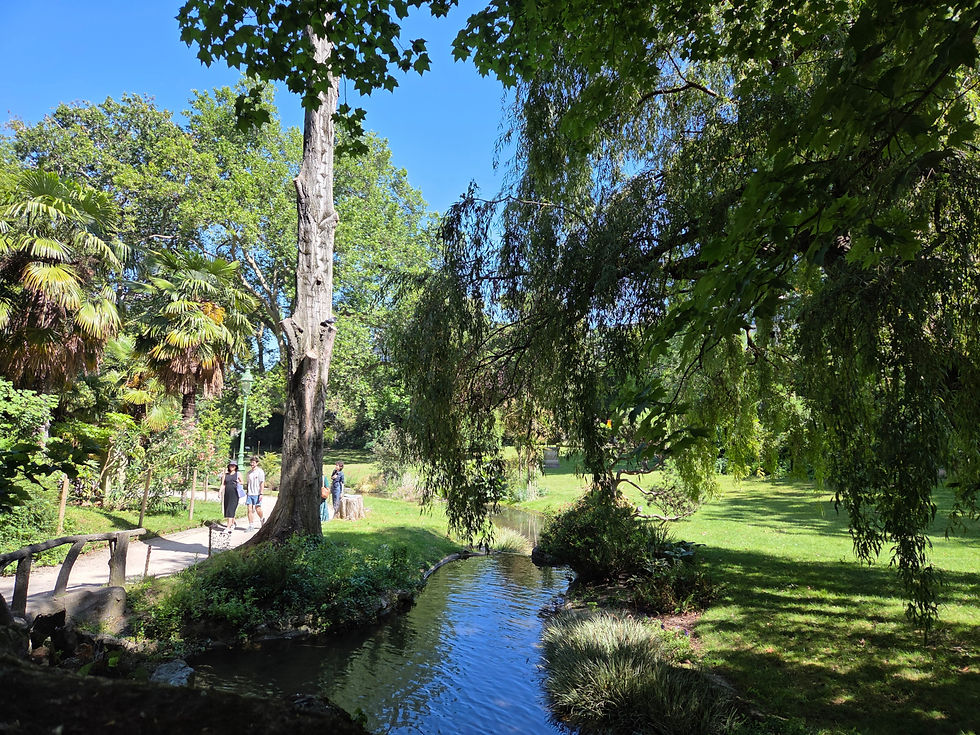
After your third or fourth trip to Paris, something changes.
You may still love the Seine, the Eiffel Tower, and the classic views. But the real pleasure begins to shift. You stop needing to “see Paris” and start wanting to notice it differently.
That is where hidden neighborhood and local history walks become interesting.
If you are ready for a slower side of the city, my guide to Paris neighborhoods for repeat visitors explores Batignolles, Canal Saint-Martin, Belleville, Ménilmontant, and Buttes-Chaumont beyond the usual checklist.
Recommended options
For lower-cost scheduled walks, check Paris Walks.
For neighborhood-based tours on marketplaces, look carefully for routes with a specific focus, such as Le Marais, Belleville, Canal Saint-Martin, covered passages, or local history.
Avoid vague “hidden gems” tours that do not explain what makes the route historically meaningful.
Best for
Hidden and local walks are best for:
repeat visitors
slow travelers
people who already know the classics
travelers who enjoy neighborhoods
anyone who wants a less obvious Paris
Typical duration and pace
Most hidden neighborhood walks last 2 to 3 hours.
The walking level is usually easy to moderate.
Key areas covered
Depending on the guide, routes may include:
Batignolles
Belleville
Canal Saint-Martin
Parc des Buttes-Chaumont
eastern Paris
lesser-known corners of Le Marais
covered passages
local markets
quieter residential streets
TripnSense note:
On my most recent trip to Paris, I spent time in Batignolles properly for the first time, and the neighborhood surprised me. It felt local, young and lived-in, with cafés, families, children everywhere, and the beautiful Parc Martin Luther King giving the area a relaxed rhythm. It is a good reminder that repeat visits to Paris are not only about finding hidden places, but about noticing everyday Paris more closely.
The covered passages can be beautiful, especially Galerie Vivienne, but I would not cross Paris only for them. I visited Galerie Vivienne recently, and while the architecture is elegant, the visit itself can take ten minutes if you are not stopping for photos or a meal. Go if you are already in the neighborhood, or if your tour uses the passages to tell a larger story about 19th-century Paris.
Booking strategy
Be careful with vague “hidden Paris” promises.
Look for a clear neighborhood, period, or theme. “Hidden Paris” is too broad. “Belleville and local history,” “covered passages,” or “Jewish Marais” is much stronger.
Strengths
This type of walk can make Paris feel fresh again.
It is especially good if you have already visited the Louvre, Montmartre, Notre-Dame, the Eiffel Tower, and Versailles.
Potential drawbacks
Some tours use “hidden” as a marketing word.
Choose one with a real route and a clear point of view.
Best Private Historian-Led Tour in Paris
A private historian-led tour is not necessary for every traveler.
But for the right person, it can be the most rewarding way to explore historical Paris.
This is the kind of tour to consider when you want depth, flexibility, and a guide who can adapt the route to your questions.
Recommended options
Check Context Travel for expert-led private and small-group tours.
Also, compare private licensed guides and specialist operators if you want a custom route around the French Revolution, Jewish Paris, medieval Paris, architecture, WWII, or women’s history.
TripnSense note
Private tours are especially useful when the topic is complex or when the walking rhythm matters.
They can work well for older travelers, families, small groups of friends, or anyone who wants to slow down without feeling they are holding up a group.
Best for
Private historian-led tours are best for:
deep history lovers
families
older travelers
small groups
travelers with a specific interest
people who dislike big groups
visitors who want to ask many questions
Typical duration and pace
Private tours often last 3 hours or more.
The walking level depends on the route, but the advantage is that you can usually ask about the pace before booking.
Key areas covered
These tours are often customizable.
You might focus on the French Revolution, medieval Paris, Jewish Paris, WWII, architecture, art history, fashion history, or one neighborhood.
Booking strategy
Before booking, ask:
Who will guide the tour?
What is their background?
What route will we follow?
Can the pace be adapted?
Is the tour private or a small group?
What happens in bad weather?
Strengths
A private guide can adjust the story to your interests.
This creates a more personal and often richer experience.
Potential drawbacks
Private tours cost more and require more careful selection.
Do not book only because a tour says “private.” The guide’s knowledge and style still matter.
Best Budget Historical Walking Tour in Paris
A budget-friendly history walk can be a good choice if you want context without booking a premium private or specialist tour.
Paris has many lower-cost walking tours, including scheduled group walks and tip-based tours.
Recommended options
Check Paris Walks for scheduled English-language tours at a lower price point.
You can also compare reputable free walking tour platforms such as SANDEMANs New Europe Free Tour of Paris, GuruWalk or FreeTour. But remember that “free” usually means tip-based.
It can be useful at the beginning of a trip if you want orientation around the historic center, Notre-Dame, the Louvre and Sainte-Chapelle.
TripnSense note
Budget does not have to mean superficial.
A focused, low-cost tour with a good guide can be better than an expensive tour with a weak guide. But avoid huge “everything in Paris” walks if your goal is real history.
Free walking tours can be a good first step, especially if you are on a budget or want a general introduction to Paris. But they are not usually the best choice for deep historical themes like the French Revolution, women’s history or WWII. For those, I would still choose a smaller or more specialized guide.
Best for
Budget walking tours are best for:
first-time visitors
budget travelers
students
travelers who want orientation
people who prefer a lighter introduction
Typical duration and pace
Most budget walks last 2 to 2.5 hours.
The pace is often moderate.
Key areas covered
Budget tours may cover:
historic center
Latin Quarter
Le Marais
Montmartre
Notre-Dame area
classic Paris neighborhoods
Booking strategy
Choose a budget tour with a specific route and strong recent reviews.
If the tour is tip-based, bring cash. If the guide does a good job, tip fairly.
Strengths
Budget tours are easy to join and useful for orientation.
They can be a good first walk early in your trip.
Potential drawbacks
Groups can be large, and depth varies a lot.
If you want a serious French Revolution, women’s history, or WWII walk, you may be happier with a more specialized guide.
Self-Guided Historical Walks We Love
Not every historical walk in Paris needs a guide.
Sometimes you want your own rhythm. You want to stop for coffee, sit in a church, browse a bookshop, or change direction because a street looks beautiful.
Self-guided walks work best when the story is clear, and the route is not too complicated.
French Revolution Walk
Duration: 2 to 3 hours
Best for: independent travelers who like political history
Best with: a saved map and some reading in advance
Possible highlights:
Bastille area
Palais-Royal
Conciergerie
Place de la Concorde
revolutionary squares
This walk is better if you already know the basic story of the Revolution.
If not, book a guide first or read a short overview before going.
Literary Left Bank Walk
Duration: around 2 hours
Best for: readers, solo travelers, and slow travelers
Best with: time for a café stop
Possible highlights:
Saint-Germain-des-Prés
historic cafés
Shakespeare and Company
Luxembourg Garden area
writers’ addresses
quiet Left Bank streets
This is one of the easiest historical themes to enjoy alone. The point is not to rush. The point is to let the city feel like a book you can walk through.
Women Who Shaped Paris Walk
Duration: 2 to 3 hours
Best for: travelers who want stories often missing from classic routes
Best with: a specialized women’s history tour
Possible themes:
writers
scientists
artists
activists
performers
women of the Revolution
women of the Left Bank
This theme can work as a self-guided route, but a strong guide often adds more nuance.
When to Book a Guide and When to Walk Alone
There is no single right answer. Some Paris history walks are better with a guide. Others are lovely on your own.
Book a guide when the history is complex
A guide is especially useful for:
the French Revolution
WWII and Occupation history
Jewish Paris
women’s history
political history
private mansion and architectural history
In these cases, the meaning is not always visible from the street.
Walk alone when the atmosphere matters more than explanation
Self-guided walks work beautifully for:
literary Paris
café history
the Left Bank
familiar neighborhoods
slow repeat visits
routes where you want many pauses
If you love wandering, give yourself space.
Choose a guide if you like asking questions
Some travelers learn best through conversation.
If that is you, a guide is worth it. A good guide can explain contradictions, connect places, and adjust the story as you walk.
Choose self-guided if you want flexibility
Self-guided walks are better if you want to:
stop often
take photos
sit in cafés
visit shops
skip places
change direction
move slowly
This can be especially nice if you have already been to Paris before.
Who Each Paris Historical Tour Is Best For
Traveler type | Best tour |
First-time visitor | Medieval Paris or historic center walk |
Deep history lover | French Revolution, WWII or private historian-led tour |
Solo traveler | Small-group literary or women’s history tour |
Repeat visitor | Hidden neighborhood or local history walk |
Women interested in women’s history | Women-focused Paris history tour |
Literary traveler | Left Bank literary walk |
Traveler who dislikes big groups | Private or small-group historian-led tour |
Budget traveler | Self-guided route or budget walking tour |
Older traveler who prefers a slower pace | Private tour or small-group historic center walk |
Traveler short on time | Historic center walk around Île de la Cité |
Are Historical Walking Tours in Paris Worth It?
Yes, historical walking tours in Paris are worth it if you want to understand the city beyond monuments.
They are especially valuable for complex themes like the French Revolution, WWII, women’s history, Jewish Paris, or literary Paris. A good guide can connect places, people, and context in a way that is difficult to do alone.
When they are worth it
A Paris history tour is worth it when:
you want narrative and context
you are visiting Paris for the first time
you are returning and want a deeper angle
you enjoy asking questions
you want stories that are not obvious from the street
you prefer a clear route instead of planning everything yourself
When they may not be worth it
A tour may not be worth it if:
you dislike group activities
you prefer total flexibility
the tour is too broad
the group is too large
you already know the topic well
you only want photos and famous landmarks
Who gets the most value
The travelers who get the most from historical walking tours are usually curious, patient, and open to slower travel.
You do not need to be a history expert. You just need to care about why a place matters.
Where to Book Historical Walking Tours in Paris
There is no single best platform for every traveler.
The best place to book depends on your priority: convenience, reviews, price, guide quality, or depth.
Check the tour language before booking
Many Paris historical walking tours run in English by default, but booking platforms often let you filter by language, including French, Spanish, Italian, and German. Private and specialist guides may also offer other languages on request. Always check the listing before booking if language matters to you.
GetYourGuide
GetYourGuide is useful for easy booking, visible reviews, and comparing several options quickly.
It works well if you want a simple booking process and clear cancellation rules.
Use it for:
classic history walks
medieval Paris tours
women’s history tours
general walking tours
first-time visitor routes
Not sure whether GetYourGuide is the right platform for you? Read our honest GetYourGuide review for a full breakdown of how it compares to Viator.
Viator
Viator is useful for private tours, small-group options, and specialized themes.
Use it for:
French Revolution tours
private history tours
literary walks
custom guided walks
small-group themed tours
Context Travel
Context Travel is a good option if you want deeper historical context and a more expert-led approach.
Use it for:
historian-led tours
French Revolution history
medieval Paris
WWII history
art and architecture
private or small-group depth
Paris Walks
Paris Walks is useful for classic English-language walking tours and a lower-pressure way to explore with a guide.
Use it for:
scheduled walks
budget-friendly history walks
repeat visits
neighborhood routes
literary or classic Paris themes
Women of Paris
Women of Paris is worth checking if you want a specialized women’s history angle.
Use it for:
women-centered stories
overlooked Paris history
solo travelers
repeat visitors
travelers looking for something beyond the classic route
Ode to Paris
Ode to Paris is worth checking for themed walks with a more focused narrative.
Use it for:
French Revolution themes
women’s history
monarchy and power
Napoleon III
smaller thematic tours
Independent guides and specialist operators
Independent guides can be excellent for themes that need voice and depth.
This includes:
women’s history
Jewish Paris
WWII
literary Paris
Black Paris
neighborhood history
private historian-led walks
Before booking, read the guide bio and not only the tour title.
FAQ
What is the best historical walking tour in Paris?
The best historical walking tour in Paris depends on your interests. First-time visitors usually enjoy a historic center or medieval Paris walk, while repeat visitors may prefer the French Revolution, women’s history, WWII, literary Paris, or hidden neighborhood tours.
Which Paris walking tour is best for repeat visitors?
Repeat visitors usually enjoy hidden neighborhood tours, women’s history tours, literary walks, WWII tours, or French Revolution walks because they reveal a more layered side of Paris.
Are women’s history tours in Paris worth it?
Yes, women’s history tours in Paris are worth it if you want to discover figures and stories often left out of traditional sightseeing routes. They are especially good for repeat visitors and solo travelers who want Paris beyond the usual monuments.
How long should a historical walking tour in Paris last?
For most travelers, 2 to 3 hours is ideal. It allows enough time for context without becoming tiring. Longer tours can be excellent, but only if the pace is comfortable and the route includes pauses.
Are there Paris history tours for travelers with limited mobility?
Yes, but some routes are easier than others. Paris has cobblestones, stairs, bridges, and metro transfers, so private or small-group tours are usually the best option if you need a slower pace. Before booking, ask the operator about walking distance, surface type, stairs, rest stops, and whether the route can be shortened or adapted.
How far in advance should I book a Paris historical walking tour?
For popular small-group or specialist tours, booking one to two weeks ahead is a good rule, especially in spring, summer, and early fall. Marketplaces like GetYourGuide and Viator often offer free cancellation up to 24 hours before the tour, but policies vary. Always check the exact cancellation window before paying.
Conclusion
Paris rewards travelers who slow down.
The best historical walking tours do not simply show you buildings. They help you understand the people, conflicts, ideas, and forgotten stories behind them.
For a first visit, choose a historic center or a medieval Paris walk.
For deeper history, choose a French Revolution, WWII, or women’s history tour.
For repeat visits, look for neighborhood walks, literary Paris, or self-guided routes that let you see the city with fresh eyes.
Because Paris is not only a city to look at.
It is a city to read, question, and walk through slowly.


Comments