
Unique Local Experiences in Cairo Beyond the Pyramids: a Native's Guide
- 11 de set. de 2025
- 20 min de leitura
Atualizado: 8 de mai.
The best unique local experiences in Cairo beyond the pyramids include wandering Gamaliya’s medieval alleys, having coffee at 200-year-old El Fishawy, following the coppersmiths of Nahhasin, exploring Belle Époque Downtown, and taking a sunrise felucca on the Nile. These experiences connect you to the real Cairo locals actually live in, beyond the monuments and postcard views.
The five you should not miss:
Gamaliya's literary alleys: where Naguib Mahfouz set his Cairo Trilogy
El Fishawy café: 200 years old, order coffee and have your grounds read
Nahhasin workshops: follow the sound of hammers to the coppersmiths' alley
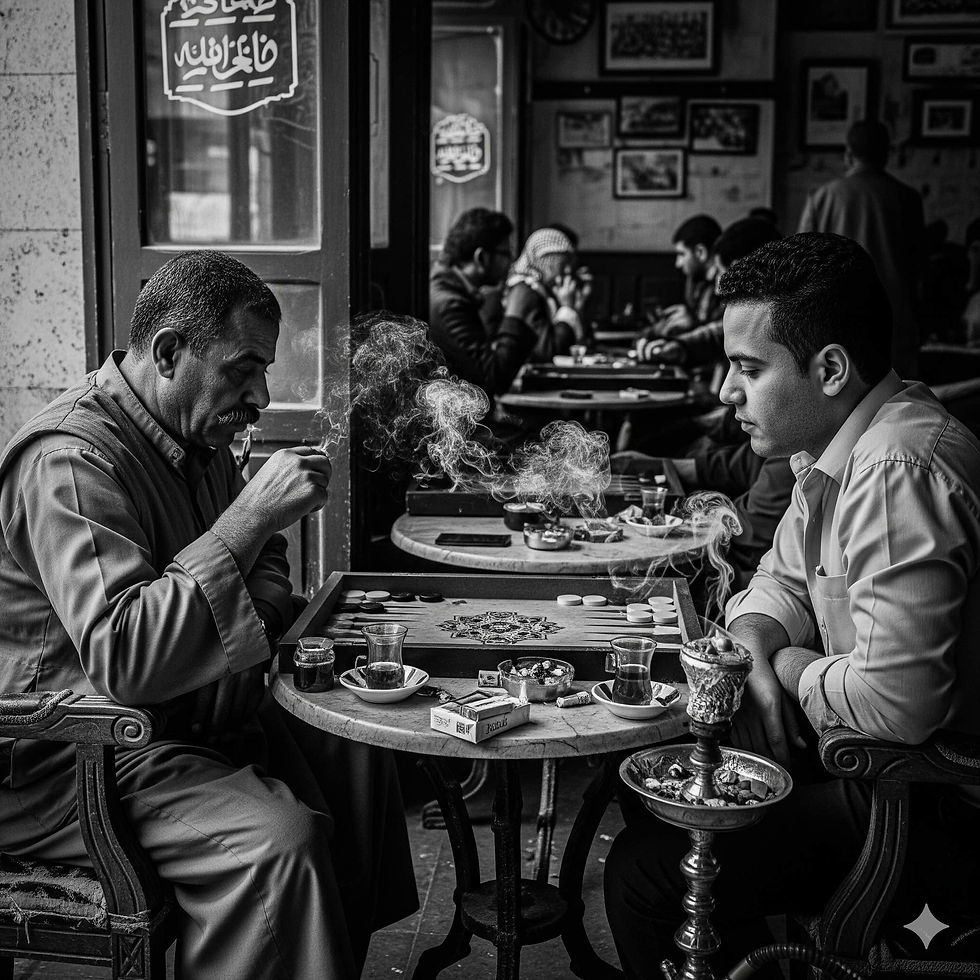
A backstreet ahwa: sit, play tawla, watch Cairo's social life unfold
Sunrise felucca at 5:30 AM: the Nile before the city wakes up
Keep scrolling for all 15 hidden gems with exact locations and childhood memories.

The sound that announced Cairo to me as a child was not the desert wind or the Nile’s slow breath.It was the shrill bell in the street, the signal that the milkman had arrived.
From our third-floor window, my mother would lower a metal bucket tied to a rope.The milkman placed two glass bottles of fresh milk inside, and she pulled them back up, smiling.
That simple ritual was my first taste of the real Cairo, the local Cairo visitors rarely see, a daily gesture that made the city pulse with small neighborhood rhythms.
When I say I was born in Egypt, people imagine pyramids, pharaohs, and gold masks.But the Cairo I love lives in its hidden gems, quiet alleys, in the scent of hot coffee, and in the quiet elegance described by Naguib Mahfouz and Lucette Lagnado.
It is a city layered with memory, literature, and small acts of everyday beauty.
Below are the 15 best non-touristy things to do in Cairo: intimate, authentic hidden gems my family taught me to see. A Cairo beyond the pyramids and postcards, where the soul of the city lives in its rituals, its stories, and its stubborn magic.
If you want to experience Egypt not just as a tourist but as someone who feels its heartbeat, start here, with these authentic Cairo experiences.
👉 Planning your own trip? Don’t miss my 10-day Egypt itinerary with Cairo, Nile cruise, Luxor and Aswan, a complete guide with costs, logistics, and local tips.

Tourist Cairo vs. Real Cairo: What’s the Difference?
Aspect | Tourist Experience | Authentic Cairo Experience |
Breakfast | Hotel buffet | Foul & ta’ameya from a street cart, still warm from the pan |
Coffee | Starbucks latte | A tiny ahwa like El Fishawy, where cups are read and stories unfold |
Shopping | Khan el-Khalili’s main street stalls | Nahhasin back alleys with coppersmiths hammering lanterns by hand |
Evening | Sound & Light Show at the pyramids | Tawla (backgammon) in a neighborhood café, mint tea and laughter |
15 Non-Touristy Things to Do in Cairo (Real Local Experiences You Won’t Find in Guidebooks)
You've come for the monumental history, but the soul of Cairo is found in its everyday rituals, its literature, and its inherited traditions.
Born and raised just a few kilometers from the pyramids, here is the scannable guide to the 15 unique experiences my family taught me to love, revealing the city's literary cafés, artisan alleys, and daily rituals that guidebooks miss
Local Cairo Experience | Neighborhood | Why Locals Love It | |
|---|---|---|---|
1. | Wander the alleys of Gamaliya | Islamic Cairo | Mahfouz’s childhood neighborhood: the living backdrop of the Cairo Trilogy. |
2. | Follow the coppersmith soundtrack | Nahhasin (behind Khan el-Khalili) | The rhythmic clang reveals the true, working soul of medieval Cairo. |
3. | Sip coffee at El Fishawy | Khan el-Khalili | A 200-year-old ahwa where my mother used to read my coffee grounds. |
4. | Have your coffee grounds read | Any traditional ahwa | Flip the cup, trace the shapes, hear your story — an intimate Egyptian ritual. |
5. | Explore the quiet lanes off Al-Mu’izz Street | Old Cairo | Atmospheric micro-streets most visitors bypass for the main sights. |
6. | Play tawla in a backstreet café | Any neighborhood | The clack of backgammon stones is the heartbeat of Cairo’s social life. |
7. | Stop for sweets at Groppi | Downtown (Wust el-Balad) | A time capsule of elegant Cairo — and the setting of my father’s proposal. |
8. | Visit Café Riche | Downtown | Cairo’s legendary home of writers, artists, and political revolutionaries. |
9. | Try bright-green ta’ameya & koshary the street way | Family-run eateries | Egypt’s comfort food: green falafel plus chaotic, delicious koshary. |
10. | Peek into artisan workshops | Darb al-Ahmar & Old Cairo alleys | Marquetry, leather, and textile artisans working in tiny studios. |
11. | Wander Belle Époque Downtown | Wust el-Balad | Faded balconies & old cinemas — echoes of a cosmopolitan past. |
12. | Step into a historic cinema frozen in time | Downtown | A nostalgic relic of mid-century Cairo with velvet seats and flickering screens. |
13. | Look up for the milkman’s bucket ritual | Doqqi, Mohandesseen, Zamalek | A disappearing early-morning gesture: neighbors lowering buckets for fresh milk. |
14. | Watch the grape-leaf rolling ritual | Family kitchens or tiny restaurants | Women rolling wara’ enab while sharing stories, the heart of Egyptian warmth. |
15. | Take a sunrise felucca with fishermen | Maadi or Zamalek docks | At 5:30 a.m., the Nile is quiet, and only fishermen share the river with you. |
Each can be experienced in 1-3 hours, connects you to Cairo's real heartbeat, and can be combined into a 3-5 day Cairo itinerary that balances iconic sights with authentic local life.
Interactive Map: All 15 Hidden Gems in Cairo
Here’s every secret alley, café, and sunrise spot from this guide pinned on one map: zoom, click, and save to your phone. Bonus: two ready-to-follow walking routes included (Gamaliya + Downtown literary loop).
Table of Contents
The list below also works as a handy table of contents. To jump directly to a specific paragraph, click on it!
Part 1 : How to Pair Cairo's Classic Sights with Local Experiences
Let's start with the itinerary everyone dreams of taking, but with the secrets and sensations that only those who have lived there can share.
This is the Egypt of postcards, seen through a lens of affection. But once you've marveled at the monumental wonders, what unique treasures and vibrant tales could be waiting to capture your imagination in the nooks and crannies of My Cairo?
Cairo at a Glance: Essential Numbers📍 Best Time to Visit: October–April 💰 Mid-Range Daily Budget: $40–80 ⏱️ Minimum Stay: 3–4 days 🏛️ UNESCO Sites: 1 (Historic Cairo) ☕ Historic Cafés: 3+ operating for 200+ years 🕌 Medieval Mosques in Islamic Cairo: 50+ |
The Pyramids of Giza and the Sphinx: What a Local Actually Thinks

No photograph prepares you for the scale. Standing at the base of Khufu’s pyramid, the stones above you are taller than you expect, and the silence inside the plateau at 8am, before the crowds, is something no guidebook mentions.
As a child, the pyramids were just a shadow on the horizon outside my window. Returning as an adult, I saw them with different eyes.
My one local tip: arrive at opening, before 8am. The early light is better for photos, the heat is manageable, and for one hour the plateau feels like it belongs to you.
For full logistics, including tickets, timings, what to skip and how to combine Giza with the Grand Egyptian Museum, see my 10-day Egypt itinerary with Cairo, Nile cruise, Luxor and Aswan.
Memory Box🌿 My Childhood Memory at the Pyramids On my return to Egypt, I had an unforgettable experience. I was with my cousins, and given the choice, everyone opted for horses, wary of the camel's size and unsteady gait. I was the only one to venture out. What I didn't know is that camels stand up with their hind legs first: I was nearly thrown forward, clinging to the saddle, amidst general laughter. Then I noticed the camel was much slower than the horses. I finished the ride covered in dust, but with an amazing view and a memory I still treasure. |
The Grand Egyptian Museum (GEM): What to See First & Small Details Most Visitors Miss
The Essential:
The ancient Egyptian Museum, in downtown Cairo, has always been the guardian of incomparable pharaonic treasures. Now, the brand-new Grand Egyptian Museum (GEM) is an architectural masterpiece, designed to be the definitive home of Egypt's greatest treasures.
It is here that more than 5,000 pieces of the complete Tutankhamun collection are finally assembled, with many artifacts on public display for the first time.
In addition to the famous golden mask, I recommend paying attention to some details that tell more human stories:
Everyday objects, such as Tutankhamun's sandals, board games like Senet, or delicate kohl bottles, remind us that, behind the pharaonic grandeur, there were people with vanities, hobbies, and routines as tangible as our own.
The princesses' jewelry, including necklaces and bracelets, found in royal tombs, reveals the extraordinary talent of artisans and the love of beauty that permeated all classes.
The statues of scribes, almost always seated cross-legged, are fascinating: they were not kings, but the intellectual elite of the time. Their serene expressions contrast with the pharaohs' imposing presence, and demonstrate the value placed on knowledge.
My Egyptian Take
My personal connection is with the old museum, where I learned that true emotion lay not only in the famous pieces, but also in the small, worn statues and discreet amulets that revealed the daily lives of ancient Egyptians.
My suggestion for visitors is the same one that has always guided me: after seeing the icons, take time for an anonymous piece. In addition to the famous mask of Tutankhamun, look for the wooden statue of Ka-aper, "The Village Chief."
His crystal eyes look so real, it feels like he's watching you, whether in an old hallway or a new museum. It's these small details that make Egypt feel alive, not just a place from history.
Being born in Egypt, I like to call myself a descendant of Tutankhamun. My only regret is that I never inherited the jewels buried with him! :)
Khan el-Khalili Market: Back Alleys, Artisan Corners & How to Enjoy It Like a Local

The Essential:
Losing yourself in this medieval souk is one of the most intense experiences you can have in Cairo. It's a vibrant labyrinth of colors, scents, and sounds.
Founded in the 14th century, it remains the commercial heart of Old Cairo to this day. Here you can find everything: silver jewelry, fragrant spices, embroidered fabrics, and the inevitable tourist souvenirs.
It's a chaotic and fascinating place, where time seems to flow at a different pace; a vibrant labyrinth of colors, scents, and sounds, from polishers tapping brass to coffee beans cracking in the roaster.
An Egyptian’s Guide to the Real Khan el-KhaliliTo feel the soul of the market, step off the main streets and into the back alleys. Landmarks like the Al-Hussein Mosque or the historic Wikala of Al-Ghuri can guide you. Or simply ask a local. Cairo loves pointing the way.
The finest souvenirs here aren’t objects, but the greetings, aromas, and stories you carry back home. |
My Egyptian Take
I remember my mother navigating these alleys with a skill I've never been able to match. She seemed to know every shortcut, every face, and stopped at every stall to exchange a few words, as if the market were a natural extension of her home.
The secret is not in the main streets, but in the back streets, where the true artisans live, and daily life unfolds far from the flashy storefronts. It's in these passages that my grandmother bought spices, and I lost myself in the smell of freshly ground coffee
Tired from exploring Khan-el-Khalili? Take a break at the famous Café El Fishawy, an institution in the heart of the market, in continuous operation for over 200 years. Amid stained mirrors and worn wooden chairs, it has welcomed kings, artists, and writers, including Naguib Mahfouz, who immortalized these streets in his novels.
Sitting there, with a mint tea or Turkish coffee, to the sound of tawla (backgammon) stones hitting the board, is like feeling the social and literary breath of the city, as if at any moment Mahfouz might pull up a chair next to you.
Golden tip: In Khan el-Khalili, haggling is part theater, part sport, just like in Istanbul's Grand Bazaar. Open at ~50% of the first price, smile, and enjoy the banter. Aim to pay what feels fair, not to “win.” The memory is worth more than the margin.
Ready to explore the rest of Egypt? After falling in love with the real Cairo, most travelers head south to Luxor and Aswan for a Nile cruise: the classic, poetic way to watch Upper Egypt’s temples glow at sunrise and fade into gold at sunset.
If you’re planning to continue your journey, I’ve written the complete step-by-step guide here: 👉 10-day Egypt itinerary with Cairo, Nile cruise, Luxor and Aswan
Part 2: My Real Cairo: A Literary, Intimate & Memory-Filled Walking Itinerary
If essential Egypt is made of pyramids, temples, and pharaonic treasures, my Cairo beats to a different rhythm.
It lives in the alleys of Gamaliya, in the school of my childhood, in the literary cafes where my father proposed to my mother and where Naguib Mahfouz wrote.
It's in the smell of morning coffee and the sound of tawla stones hitting wooden trays. It's a route invisible in tourist guides, but one that I carry within me.
A second map that lay gently over Cairo’s streets, where memories, literature, and affection give landmarks their soul and turn a simple tour into a deeper connection.
What you’ll explore: • Gamaliya (literary Cairo) • Legendary cafés • Belle Époque downtown • Street food flavors • Early-morning rituals |
When to visit Cairo attractions
Cairo operates on rhythms tourists rarely notice. Here's when to visit each experience for the best atmosphere and fewest crowds:
Experience | Best Time | Avoid |
Gamaliya alleys | 8–10 AM or sunset | Fridays at noon (prayer time) |
Nahhasin coppersmiths | 10 AM–12 PM | Late afternoon (workshops close) |
El Fishawy Café | 4–6 PM (golden hour) | 11 AM–1 PM (tour groups) |
Khan el-Khalili back alleys | 10 AM–12 PM or after 7 PM | 12–4 PM (heat + siesta) |
Downtown Belle Époque walk | Late afternoon (4–6 PM) | Rush hour (7–9 AM, 5–7 PM) |
Street food (ta'ameya & koshary) | Morning or lunchtime | After 3 PM (less fresh) |
Sunrise felucca with fishermen | 5:15–6 AM (before city wakes) | After 8 AM (too hot, crowded) |
Pro tip: Most artisan workshops close 2–4 PM for afternoon rest. Plan morning or evening visits.
Gamaliya: Walking the Alleys That Shaped Naguib Mahfouz (and My Childhood)
Naguib Mahfouz didn't just write about Cairo; he transformed it into literature. His famous Cairo Trilogy brought Gamaliya's narrow alleys, centuries-old mosques, and bustling markets to life as living characters.
Walking through Gamaliya means smelling spices mixed with dust of ancient stones, hearing the call to prayer echo through alleyways, and stepping directly into the pages of his novels, where the passions, dramas, and transformations of a family mirror those of an entire country.
For me, it's also personal. My school was here. The streets Mahfouz described were the same ones I walked every morning shaped my first steps; an invisible link between his fiction and my childhood reality.
When I returned, I walked through two novels at once: his masterpiece, and my own memory, frozen in time.
📚 An Egyptian's Guide: A Literary Walking Tour of GamaliyaTo truly step into the pages of Naguib Mahfouz’s Cairo, you need to know where to look. Follow this mini-itinerary to explore the heart of his literary world:
"Cairo is more than a city; it is a world entire." Naguib Mahfouz |
How to explore Gamaliya in Islamic Cairo
Best approach: Get lost on foot, through the narrow, bustling streets.
For deeper insight: Hire a local guide from Viator or GetYourGuide, or through local tourism offices. They reveal hidden stories behind ancient facades that guidebooks miss.
Practical note: Gamaliya is part of Historic Cairo, an area recognized as a UNESCO World Heritage Site. It sits steps from Khan el-Khalili market, and easily combined in one visit.
Cairo’s Legendary Literary Cafés: Riche, Groppi & the Stories Behind Their Tables
Café Riche
In downtown Cairo, Café Riche isn't just a café: it's an institution. Since 1908, it's hosted literary gatherings, political debates, and bohemian evenings that shaped Egypt's 20th century.
Naguib Mahfouz, writers, artists, and intellectuals found inspiration at its tables. The atmosphere feels suspended in time: walls that heard heated discussions, love stories, and ideas that built modern Egypt.
It echoes the Parisian salons where the women of the French Revolution conspired and dreamed, the cafés of Saint-Germain-des-Prés in Paris where culture unfolded over endless conversations.
Sit at Riche, order strong Turkish coffee, gaze at old portraits, and feel the weight of history.
Café Groppi
Groppi is more than a pastry, t's a symbol of elegant early 20th-century Cairo
Famous for chocolates and ice cream, it was the cosmopolitan elite's meeting place. It gained literary life in the pages of the Man in the White Sharkskin Suit, that immortalized it as the setting for sophisticated, international Cairo.
For me, Groppi holds something deeper: this is where my father proposed to my mother. I can imagine the scene: a discreet table, refined sweets, a Cairo breathing romance and modernity.
Groppi proves how literature and life intertwine: a place existing in both fiction and family memory.
How to explore the cafés:
Both sit in Downtown Cairo (Wust el-Balad) and combine perfectly with an architecture walk.
Café Riche: Longer stop to soak up historic atmosphere
Groppi: Quick sweet treat and nostalgic elegance
Downtown Cairo (Wust el-Balad): Best Passages, Old Cinemas & Fading Elegance

Downtown Cairo (Wust el-Balad) was built in the 19th century, designed to be the "Paris of the Nile."
Its wide avenues, and monumental squares still feature stunning Belle Époque architecture, boasting wrought-iron balconies that recall a cosmopolitan, elegant past.
It is this atmosphere that vibrates in the pages of Lucette Lagnado's The Man in the White Sharkskin Suit.
Today, the faded grandeur of these buildings contrasts with the chaotic energy of the streets, filled with shops, old cinemas, and incessant traffic.
For me, it's impossible not to think of the echoes of that dreamed-of Cairo, so far removed from the frenetic hustle and bustle that dominates today.
Here, nostalgia and contemporary Cairo meet at every corner, competing for space under the same Nile light.
Downtown Cairo Walking Tour: Where to Start and What to Look for
The soul of Downtown is best explored on a walking tour:
Start your leisurely stroll at Tahrir Square, following major avenues likeTalaat Harb and Qasr al-Nil avenues.
Wander the passages: Enter the narrow, high-arched galleries that open between grand buildings; many house old bookstores and shops that feel frozen in time.
Visit a historic cinema and combine your walk with a stop at Café Riche or Groppi, icons of the elegant Cairo that still pulsates here.
Want more than Cairo?
After (or even before) Cairo, many travelers add a nostalgic day or overnight in Alexandria. Enjoy Mediterranean breezes, Belle-Époque cafés, and a Corniche that feels like Europe in the 1940s.
For a truly seamless experience, my best tip is to join a guided day trip. You’ll get the context of a local guide and skip the stress of navigating on your own. A great choice is this private day trip to Alexandria, which covers all the essential sights in comfort.
Cairo’s Essential Street Food: 7 Dishes My Family Ate Every Week

No memory is as powerful as the one awakened by a flavor. When I think of Egyptian food, I almost taste again the dishes of my childhood. In Cairo, food nourishes not only the body but also the soul of the city. And the memory begins even before the taste itself.
Ta’ameya (Fava Falafel)
What it is: Crispy, green, herb-packed Egyptian falafel
→ Try at: Morning carts in Gamaliya / Doqqi
My memory: Breakfast on the way to school
Koshary
What it is: Rice + lentils + pasta + chickpeas + spicy tomato sauce
→ Try at: Koshary El Tahrir or any hole-in-the-wall spot
My memory: The ultimate comfort lunch
Ful Medames
What it is: Slow-cooked fava beans with garlic, lemon & olive oil
→ Try at: Café Riche or any breakfast ahwa
My memory: Sunday mornings with my father
Hawawshi
What it is: Spiced minced meat baked inside baladi bread
→ Try at: Sobhy Kaber or neighborhood vendors
My memory: After-school stops, sharing one sandwich with my cousins
Wara’ Enab (Stuffed Grape Leaves)
What it is: Grape leaves rolled with herbed rice
→ Try at: Family-run eateries in Islamic Cairo
My memory: Hours of gossip with my aunts around the table
Basbousa
What it is: Syrup-soaked semolina cake
→ Try at: Groppi & old pastry shops
My memory: Every birthday celebration
Konafa
What it is: Crispy pastry with cream or nuts
→ Try at: Downtown bakeries & Ramadan stalls
My memory: The smell of Eid filling the whole house
These seven dishes are the real taste of Cairo: cheap, chaotic, and unforgettable.
Sunrise & Everyday Rituals: Milkman Bucket, Coffee-Ground Reading & Felucca Dawn
But memories of Egypt aren't limited to places or flavors; they also live on in unexpected encounters.
On that same trip, at the restaurant of the hotel where we were staying, the friendly waiter who served us every day approached my uncle with a very serious proposal: he offered some of his best camels in exchange for my hand in marriage.
Amid the family's surprise and laughter, there was Egypt in all its intensity: a place of warm hospitality, unique humor, and an infinite ability to leave us speechless.
The Shock of Return: Where Memory and Reality Collide
Rediscovering Cairo also meant confronting the brutal changes that time imposes. One afternoon, my family and I went in search of the cemetery where my grandfather was buried.
What we found was a shock: on the sacred ground of our memories, a new building stood, indifferent to the past it had buried.
The feeling was horrifying. A void that no pyramid or temple can fill. It was the moment I realized that, sometimes, the places we keep inside us no longer exist on the outside.
This encounter with absence, with the city's relentless transformation, is also part of my history with Egypt.
🕊️ The Cemetery Shock We went in search of my grandfather’s grave. Instead, a new building stood where memory once lived. A reminder that cities change, even when our hearts don’t. |
👉 Have you ever experienced the shock of returning to a special place and finding it no longer as you remembered? Share your experience in the comments. Let's talk about the memories that remain, even when places are gone.
How to Blend the Two: A Simple Way to Combine the Classics & Real Cairo
Traveling through Egypt is navigating between two worlds: that of grand history, imposing itself in temples and pyramids, and that of life that pulsates in the streets, in cafes, and in the simplest gestures. The first dazzles, the second connects.
I hope this two-layered itinerary inspires you to seek both. To marvel at Tutankhamun's gold, but also to find humanity in an anonymous statue.
To lose yourself in the chaos of Khan el-Khalili, but also to find a moment of peace in a cafe that inspired a Nobel Prize in Literature.
From Cairo, I carry with me the echoes of my childhood: the sound of backgammon tiles I learned to play with my father, and the art of reading coffee grounds, a family secret shared by my mother. Upon my return, I added to these memories the grandeur of its monuments.
It is this blend of affection and the eternal that transforms a tourist trip into an unforgettable journey. So I invite you not only to witness the timeless story told in stone, but also to linger in the quiet moments between them. The sweetness of a fresh date, the clatter of backgammon in a café, the warmth of a shared smile.
This is the Egypt that cannot be seen with the eyes alone, but must be felt with the heart. And this is the Egypt that I invite you to discover.
If you’re planning your first trip, this guide to the best non-touristy things to do in Cairo is the perfect complement to a classic Egypt itinerary.
How to Plan a Cairo Itinerary Beyond the Pyramids in 3 Perfect Days
Day 1 – Pyramids & Hidden Giza Morning: Pyramids of Khufu, Khafre, Menkaure (arrive 8 AM) → Great Sphinx Midday: Grand Egyptian Museum (GEM) Evening: Sunset from a rooftop in Giza Day 2 – Islamic Cairo & Its Literary Soul Morning: Gamaliya alleys → Nahhasin coppersmith workshops Afternoon: Khan el-Khalili back-streets → El Fishawy (optional: coffee-ground reading ritual) Evening: Café Riche or Groppi Day 3 – Downtown Charm & Nile Moments Early morning: Sunrise felucca with fishermen (5:30 AM) Day: Belle-Époque passages, old cinemas, street-food lunch Late afternoon: Milkman bucket spotting in Zamalek or Doqqi |
Which Egypt would you like to discover first: the Egypt of the pharaohs or the bustling streets of Cairo?
Cairo FAQ: Things to Know Before You Go Beyond the Pyramids
Is Cairo overwhelming for first-time visitors?
Yes, Cairo can feel overwhelming on a first visit, but it is manageable. The traffic, noise, heat and persistent vendors around major sites are real. Staying in Zamalek or Downtown, using Uber or Careem instead of street taxis, and avoiding trying to see too much in one day makes the city significantly easier to navigate. For Islamic Cairo, a local guide transforms the experience. Most first-time visitors find that after one day, the city starts to make sense on its own terms.
Is 3 days in Cairo enough to see beyond the pyramids?
Yes, 3 days in Cairo is enough to cover the main highlights and experience a genuine slice of local life. Use day one for the Pyramids and the Grand Egyptian Museum, day two for Islamic Cairo, Khan el-Khalili and the literary cafés, and day three for Coptic Cairo and Downtown.
A fourth day is worth it if you want to add Saqqara or move more slowly through Cairo’s neighbourhoods.
What are the most authentic neighborhoods in Cairo for a local experience?
Gamaliya, in Islamic Cairo, is the neighbourhood that feels most connected to old Cairo. Its medieval alleyways, working mosques and small workshops are the same streets Naguib Mahfouz described in his Cairo Trilogy.
For a more residential, everyday atmosphere, Zamalek and Doqqi show a different side of Cairo, with tree-lined streets, neighbourhood cafés and far fewer tour groups.
Is Khan el-Khalili worth visiting?
Yes, but how you visit makes all the difference. The main street is touristy and crowded. The real experience is in the back alleys: Nahhasin for the coppersmiths, Sharia Khayamiya for the textile workshops, and the quieter lanes off Al-Mu’izz Street where daily life carries on around you.
Arrive before 11am or after 7pm to avoid the midday tour group rush.
What is the best time of year to visit Cairo?
October to April is the most comfortable time to visit Cairo. March is the sweet spot: mild temperatures, fewer crowds than peak December and January, and long enough days for both morning sightseeing and evening café culture.
Summer, from May to September, is very hot in Cairo, especially if you plan to explore Islamic Cairo on foot. Hotel prices can be lower, but the heat changes the pace of the trip.
What local food should I try in Cairo?
Start with ta’ameya, Egypt’s version of falafel, made from fava beans instead of chickpeas, bright green inside and served hot in pita.
Then try koshary, Cairo’s comfort food: rice, pasta, lentils and chickpeas layered together with spicy tomato sauce and fried onions.
For something slower and more homemade, look for wara’ enab, stuffed grape leaves prepared the way many Cairo families have made them for generations.
These are still among Cairo’s most affordable everyday foods, especially from street carts and simple local restaurants.
How do I add these Cairo experiences to a full Egypt itinerary?
The easiest way is to spend 3 to 4 days in Cairo at the beginning of your trip, then continue south to Aswan, the Nile cruise and Luxor. This gives you enough time for the Pyramids and Grand Egyptian Museum, but also for Islamic Cairo, Khan el-Khalili, literary cafés and a slower look at the city’s everyday life.
If you want the full route, use my 10-day Egypt itinerary with Cairo, Nile cruise, Luxor and Aswan as your planning base.
About the author: Cairo-born, now living in São Paulo, I return to Egypt once in a while and combine childhood memories with insider tips to show readers the Cairo that tourists never see. |