
24 Hours in Bruges Without Rushing: The Only Itinerary You Need
Updated May 2026
Bruges, Belgium, is small enough that you can walk across it in less than half an hour. Many visitors rush through the main sights: the Belfry, canals, chocolate shops, and Markt square, before lunch, only to feel a bit unsatisfied on the train ride home.
That's exactly the wrong way to do it.
Bruges rewards slowness. The city's real charm isn't in its landmarks. It's in the cobbled streets between them, in a second beer at a brown café while the afternoon light hits the water, in finding Rozenhoedkaai before the tour groups arrive. The landmarks are just the excuse to be there.
This guide is built for first-time visitors who want to see the best of Bruges in 24 hours, whether you're making a day trip or staying overnight, arriving on a weekday or a Sunday, without the anxious feeling of having missed something. One day, done properly, is enough.

Table of Contents
Is 24 hours enough time to see Bruges?
Yes, 24 hours is enough to see Bruges well if you focus on the historic centre, arrive by train or park near the station, and resist the urge to rush between every landmark.

24 hours in Bruges itinerary in brief: Start at Minnewater Park and the Begijnhof, continue toward St. John’s Hospital, Markt, Burg Square and Rozenhoedkaai, then slow the afternoon down with canals, chocolate, beer and dinner. This compact route is designed to show you the best of Bruges without turning the day into a rushed checklist. |
From Brussels, the train takes around 1 hour and costs roughly €18; from Amsterdam, it's around 2.5 hours, and from Paris, around 2.5 hours via Brussels.
The station is a short, walkable 15-minute walk from the city centre, no taxi needed. The key is resisting the urge to rush between every landmark. Bruges is best experienced on foot, not in a sprint.
Below you'll find a full hour-by-hour itinerary, honest picks on what's worth your time and what isn't, a rainy-day backup plan, and a budget breakdown so there are no surprises.
If you are planning a short European escape by season and travel style, our European weekend escapes guide has Bruges in the spring slow travel slot.
Where is Bruges?

Bruges is a medieval city in the Flanders region of northwest Belgium, roughly 95 kilometres from Brussels and close to the North Sea coast. It sits in West Flanders and is one of the best-preserved medieval city centres in Europe. The entire historic centre is a UNESCO World Heritage Site, designated in 2000.
How to Get to Bruges (Without the Stress)
Bruges has no major airport of its own. Most visitors fly into Brussels Airport (BRU) and take the train, or cross from the UK via Eurostar to Brussels and connect from there.
Whatever your origin, the train is the most reliable option: frequent, affordable, and it drops you right at the edge of the historic centre.
Brussels (Midi/Zuid) | 1 hour | Budget–Moderate | Direct, every 20 minutes. No booking needed. |
Brussels Airport (BRU) | 1 hr 25 min | Moderate | Hourly direct trains or one change at Midi. |
Amsterdam | 2.5–3 hours | Moderate–High | Intercity or Thalys to Antwerp or Brussels, then connect. |
Paris [Planning a Paris stopover? Read our Paris guide | 2.5 hours | Moderate–High | High-speed to Brussels Midi, then direct to Bruges. |
London (UK) Read our London guide | 3.5 hours | High | Eurostar to Brussels + separate NMBS ticket |
🚂Booking tip: Brussels to Bruges is a low-cost domestic route with no need to book in advance. Prices change frequently. Check NMBS or Rail Europe for Belgian routes and Trainline or Eurostar.com for international legs. Book international trains as early as possible; fares climb fast.
Arriving by Car: The P1 Secret
I drove from Brussels on a grey, wet afternoon and noticed something I did not expect: the motorway is fully illuminated the entire way. That kind of continuous lighting is rare on European autoroutes, and on a dark, rainy day, it made the drive feel far more relaxed than the weather had any right to allow.
If you are renting a car or already have one, it is a comfortable route. Just leave it at the station when you arrive.
That said, do not take the car into the historic centre. The streets are narrow, mostly car-free, and parking inside the old town costs around €3 per hour with a four-hour limit.
The smart move is to use the Centrum-Station P1 car park right next to the train station. If you use the parking lot and then take the bus or train into the center, the daily rate is just €8.50 (otherwise, it's approximately €25+). It's the best deal in the city.
From P1, you have two options into town: a 15-minute walk through Minnewater Park, which happens to be one of the more pleasant entries into any city centre you will find, or a quick De Lijn bus (€3.00, contactless card accepted) straight to the Markt.
And if you are arriving on a wet day, that walk through a misty Minnewater is not a hardship; it sets the tone for the city perfectly.
The walk back to the station at night is safe, well-lit, entirely walkable alone, and far more welcoming than a taxi queue. See our Solo Travel guide for more tips on traveling Europe alone
Getting Around Once You Are There
Bruges is built for walking. The entire historic centre is compact enough to cover on foot in a day without any other transport. If your bags are heavy, tap your contactless card on any De Lijn bus (€3.00) for a five-minute ride to the centre.
Bikes are also available to hire from several shops near the Markt if you want to cover ground faster or head out to the quieter streets beyond the centre.
For travelers with limited mobility, the historic centre features step-free routes in major public areas, and De Lijn buses offer low-floor boarding and designated wheelchair spaces. Several attractions provide accessible entrances; it is advisable to consult the official Visit Bruges resources or contact individual venues in advance to ensure a smooth and accommodating visit.
The "Without Rushing" Philosophy: What to Skip and Why

To see Bruges in 24 hours without feeling like you're on a treadmill, you have to make peace with the "Honest Skip." In a city this dense, trying to see everything is the fastest way to see nothing. Here is how I suggest you curate your time.
1. Skip: The 90-Minute Queue for the Belfry
(unless you pre-book online, in which case the queue disappears entirely)
The Reality: The climb is 366 cramped steps, and the wait can be over an hour during peak times.
The Alternative: Walk 10 minutes to the Jerusalem Chapel in the St. Anna quarter or visit the Historium Terrace on the Markt (if open; check for seasonal closures). You’ll get a magnificent view of the city’s skyline with a drink in your hand and zero minutes of waiting in line.
2. Skip: The "Window Waffle."
The Reality: Waffles piled with mounds of synthetic cream and frozen fruit are "tourist bait."
The Alternative: Go to Chez Albert or Oyya, or any artisan spot tucked into a side street where waffles are made to order. A real Belgian waffle should be served warm, with the pearl sugar caramelized inside; it doesn't need five toppings to be perfect.
3. Skip: The Canal Boat at Rozenhoedkaai
The Reality: This is the most famous photo spot in the city, and the queues for the boat reflect that.
The Alternative: Wander 10 minutes away to the Jan van Eyckplein jetty. The boats follow the same route and cost the same fixed 2026 price, but the atmosphere is quiet and much more aligned with a "slow" day.
4. Skip: Sunday Shopping (If You Can)
The Strategy: While some gift shops stay open, many of the best local boutiques close. If you are visiting on a Sunday, treat it as a day for architecture and art. Save your shopping for a weekday when the artisan lace and chocolate workshops are in full swing.
5. Skip: The "Day-Trip" Rush Back to Brussels
The Reality: Most visitors scramble to catch the 5:30 PM train.
The Alternative: Stay for dinner. When the day-trippers leave, Bruges undergoes a transformation. The lighting on the canals is cinematic, giving off that "In Bruges" film vibe we discussed earlier.
Crucially, the city at night is safe, well-lit, and entirely walkable alone; the evening crowd is calm rather than chaotic. One slow evening walk after the crowds have vanished is worth five hours of frantic morning sightseeing.
The 24-Hour "No-Rush" Bruges Itinerary
09:00 AM – 10:30 AM: The Soft Entry
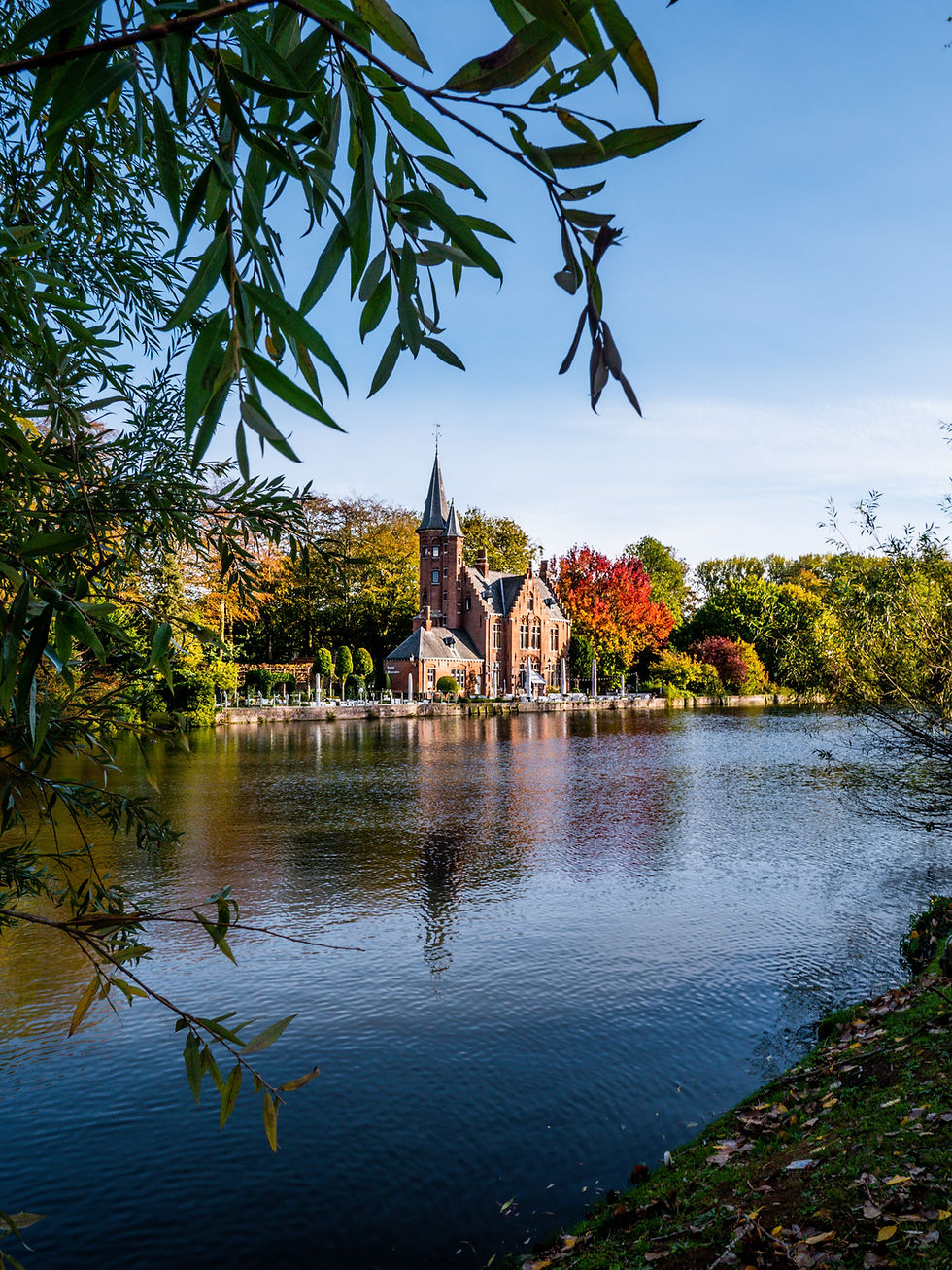
The Minnewater Mist: Start your walk from the station through Minnewater Park (The Lake of Love). If you’re visiting on a grey day, the mist over the Poertoren (Gunpowder Tower) creates a medieval atmosphere that evaporates once the midday crowds arrive.
The Begijnhof: Cross the bridge into this 13th-century sanctuary. It is a designated "silence zone", the perfect place to reset your internal clock to Bruges time.
St. John’s Hospital (Sint-Janshospitaal): Just a few minutes further, this is one of Europe’s oldest hospitals. The recently renovated museum inside is an ideal indoor refuge if the rain starts early, offering a quiet, contemplative look at 900 years of history.
Pro Tip for Solo Travelers: If you want historical context before exploring on your own, start with a tip-based walking tour from the Markt. It’s an easy, low-pressure way to get oriented and hear a little of Bruges’s medieval history before you wander at your own pace. Search 'Bruges free walking tour' to find the current operators and departure times. |
10:30 AM – 12:30 PM: The Medieval Heart
Grote Markt & The Belfry: Head to the main square. If you want to climb the Belfry (Belfort), the city recommends that you pre-book your time slot online at museabrugge.be to avoid the queue. It’s 366 steps, but the view of the red-tiled roofs is the quintessential Bruges photo.
Burg Square: A 2-minute walk from the Markt. Here you’ll find the Basilica of the Holy Blood.
Expert Tip: The lower chapel is free, silent, and ancient. It is a hidden pocket of peace right in the center of the action.
The Iconic View: Walk behind the Burg to Rozenhoedkaai. Even with other visitors nearby, the sight of the Belfry reflecting in the canal is essential for understanding why this city is a UNESCO treasure.
12:30 PM – 02:30 PM: A Slow Belgian Lunch
The Choice: Skip the overpriced terraces directly on the Markt. Instead, wander into the side streets near the Fish Market (Vismarkt).
What to Eat: Look for Stoofvlees (Flemish beef stew) or fresh grey shrimp croquettes.
The Beer Factor: If you want a local brew, De Halve Maan Brewery is nearby. You can take a guided tour or simply enjoy a Brugse Zot in their courtyard.
.
02:30 PM – 04:30 PM: Waterways & Waffles
The Canal Boat Tour: All five boat companies in town charge the same fixed official price (check the current rate at visitbruges.be) and follow the same route.
Strategic Move: Head to the Jan van Eyckplein jetty. It’s the "Old Port" and much quieter than the main square docks.
Waffle Stop: Avoid the "window waffles" piled with neon toppings. Seek out Chez Albert or Oyya, or any spot away from the Markt where waffles are made to order. A real Belgian waffle needs nothing more than warm dough and caramelized pearl sugar.

04:30 PM – 06:00 PM: The Artisanal Path
Chocolate Hunting: Visit Chocolatier Dumon or The Chocolate Line to see the craft in action.
Note: As mentioned, if today is Sunday, some smaller boutiques may close early, so don't leave your chocolate shopping until the final hour!
The Jerusalem Chapel: If you have the energy, walk to the Adornes Domain in the St. Anna quarter. It’s a private estate and a "hidden gem" where you can experience the city as it was centuries ago.
06:00 PM – Late: The Evening Glow

Dinner: The city empties significantly after 6 PM. This is the time for a long, multi-course dinner in a quiet neighborhood bistro.
The Walk Back: The walk back to the station at night is safe, well-lit, and entirely walkable alone. The canals are illuminated, the evening crowd is calm, and that cinematic "In Bruges" vibe is at its peak.
Quick Itinerary Summary Table
Time | Activity | Slow Travel Benefit |
09:00 | Minnewater & Begijnhof | Peace, morning mist, and a quiet entry. |
10:30 | Belfry & Burg Square | Icons checked off before the 11 AM peak. |
12:30 | Authentic Local Lunch | Escaping the "tourist menu" traps. |
14:30 | Canal Boat Tour | Seeing the city from its original "streets." |
16:30 | St. Anna Quarter | Finding the "real" Bruges away from the crowds. |
18:00 | Evening Canal Walk & Dinner | The city transforms when day-trippers leave. |
Where to Stay in Bruges
Bruges is compact, but where you sleep dictates how you experience the city. For a true 24-hour immersion, I recommend staying inside the historic centre. While hotels near the station are convenient for transit, stepping directly onto quiet cobblestones is what makes a slow visit feel special.
The Budget Choice: Snuffel Hostel
A clean, well-run hostel a short walk from the Markt. Unlike many hostels, it keeps a calm, mature atmosphere and is one of the few budget options actually inside the historic core. Check Availability
The Mid-Range Pick: Dukes’ Academie Brugge
A quietly stylish hotel tucked into a peaceful side street less than a minute's walk from Minnewater Park and the Beguinage. It gives you immediate access to the quietest, most scenic entry point of the historic center while offering comfortable, unpretentious rooms and a lovely internal courtyard to unwind in after a day of walking. Check Availability
The Splurge: Hotel De Orangerie
A 15th-century convent turned boutique hotel. Breakfast is served in a conservatory over the canal. If you want to feel the medieval city rather than just see it, this is the version that lingers. Check Availability
Pro Tip: Bruges hotels fill up 3–4 weeks in advance for summer weekends. For the best rates and a quieter atmosphere, aim for a mid-week stay.
What to Do in Bruges If It Rains
Belgium rains. Plan for it. Instead of retreating to your hotel, use the weather as an excuse to lean into the city’s indoor treasures.
Because Bruges is so compact, you can move between these spots without getting soaked, and the silver lining is significant: Bruges in the rain is a photographer's dream. Misty canals and glistening cobblestones look far better through a lens than a crowded, sun-drenched square.
Morning: The Flemish Masters & Virtual History
Groeningemuseum: Immerse yourself in the world of the Flemish Primitives. Jan van Eyck’s masterpieces were painted for this city; seeing them while the rain drums on the roof is a core Bruges experience. It’s compact enough to enjoy at your own pace without feeling like a marathon.
Historium Bruges: Located directly on the Markt, this is the ultimate rainy-day refuge. It offers a virtual reality journey back to the city's medieval Golden Age, entirely indoors and high-tech.
Afternoon: Chocolate & Brown Cafés
Choco-Story: This isn't just a shop; it's a multi-floor museum that traces the history of cocoa through to modern Belgian craft. It’s a deep dive (with plenty of samples) that will keep you dry for at least 90 minutes.
The Covered Market Halls: Head to the base of the Belfry. The inner courtyard and covered arcades provide shelter while still allowing you to admire the architecture.
A Long Sit in a Brown Café: This is the peak of "Slow Travel." Find a historic tavern like Café Vlissinghe(established in 1515) and settle in for a local beer. You cannot talk about Belgian culture without talking about its brewing heritage.
In the rain, these wood-paneled "brown cafés" are the coziest places in Europe.

Christmas Markets Callout
Visiting in December? Bruges's markets are mostly outdoors, but the city's covered arcades and heated tents make a rainy market visit surprisingly doable. The mist actually adds to the lighting.
Budget Breakdown: What a Day in Bruges Actually Costs
Is Bruges expensive? Compared to major capitals like London or Paris, Bruges offers surprisingly good value, but costs can climb if you stick strictly to the primary tourist squares.
For a "Slow Travel" day of high-quality experiences without the high-end price tag, here is what to budget.
The Daily "Slow Traveler" Estimate (Per Person)
Category | Estimated Cost | Notes |
Transportation | €30–50 | Return train from Brussels plus a local bus. |
Food & Drink | €50–80 | Side-street dining, not Markt terraces. |
Activities | €30–45 | One museum and a canal boat tour. |
Total Daily Budget | €110–175 | Excluding accommodation. |
The Evergreen Check
Prices in Belgium generally adjust annually. To get the most accurate, up-to-the-minute pricing for museum tickets and boat tours, I recommend a quick glance at visitbruges.be or nmbs.be for rail fares before you head out. This ensures your "No-Rush" day doesn't start with a budget surprise.
Strategic Ways to Save
The "Station P1" Parking Deal: As mentioned in our logistics section, using the station parking with a bus or train ticket can save you over €20 compared to central garages.
The Musea Brugge Card: If you plan on visiting more than two museums (such as the Belfry and the Sint-Janshospitaal), the Musea Brugge Card often pays for itself by the third stop.
Tap Water is Free: Belgian tap water is excellent. Carry a reusable bottle to save €3–5 per meal; just look for the "Drinkwater" signs at public fountains or in restaurants.
Walk the "Old Port" for Free: You don’t need a boat to enjoy the water. A slow walk around the Jan van Eyckplein and the northern canals offers the same views as boat tours for zero euros and far fewer crowds.
Frequently Asked Questions: Planning Your Bruges Trip
Are Bruges and Brugge the same place?
Yes. Brugge is the local Flemish (Dutch) name, while Bruges is the French and English name. You will see both on train schedules and road signs, but they refer to the exact same medieval city. It is helpful to remember "Brugge" when using local ticket machines.
Are Bruges and Brussels the same place?
No. Brussels is the large, international capital of Belgium. Bruges is a much smaller, preserved medieval UNESCO World Heritage site located about 95km (60 miles) to the northwest. They are roughly one hour apart by a direct train.
How do you pronounce Bruges?
In English and French, it is pronounced "BROO-zh" (rhyming with the word rouge). In the local Flemish, it is pronounced "BROO-guh" with a soft 'g'. Most locals will understand either, but "Broo-zh" is the standard for English speakers.
Are shops in Bruges open on Sunday?
Most boutiques and galleries in the historic center stay open on Sundays to welcome visitors, though they may have shorter hours (typically 11:00 AM – 6:00 PM). However, local supermarkets and shops outside the tourist zone are generally closed. Check individual artisan chocolate shops in advance if you have a specific favorite.
Can you do Bruges and Ghent in one day?
Technically, yes. They are only 30 minutes apart by train. However, for a "no-rush" experience, it is inadvisable. Both cities have deep histories and unique atmospheres; trying to see both in ten hours results in a frantic checklist rather than a meaningful travel experience. Pick one and do it well.
Is Bruges safe to visit?
Bruges is exceptionally safe. Belgium consistently performs well on global safety indices, and Bruges, in particular, has a calm, community-focused atmosphere. While it is safe to walk alone at night, standard traveler awareness applies: keep an eye on your bags in crowded areas such as the Markt during peak summer weekends.
Is Bruges expensive to visit?
Bruges is mid-range by Western European standards. While high-end dining and chocolate can be pricey, the city’s greatest attraction, its architecture and atmosphere, is entirely free to explore on foot. You can expect to spend between €110 to 175 per day for a high-quality, comfortable experience, excluding accommodation.
Next Steps for Your Belgian Adventure
Bruges is a city that lingers in the mind long after the train pulls away from the station. By choosing to see it at a walk rather than a sprint, you’ve experienced the version of the city that most day-trippers miss, one defined by light, atmosphere, and a true sense of place.
If you're ready to keep the momentum going, here are two ways to do it:
1. Stay Connected for More "Slow Travel" Insights
The best way to travel without the rush is to stay informed. Join the TripnSense community by signing up for our newsletter. You'll receive monthly guides focused on deep cultural immersion, logistical "hacks" for mature travelers, and honest reviews of Europe's most iconic and hidden destinations.
2. Plan Your Bruges Trip
Everything you need to organize your "no-rush" day, gathered in one place:
Service | Where to Book / More Info |
🚂 Train tickets (Brussels → Bruges) | Book via Rail Europe |
🎟️ Belfry & Museum Tickets | Pre-book via GetYourGuide |
🚤 Canal Boat Tour | Check Rates via GetYourGuide |
🏛️ Historium Bruges | Book Entry via GetYourGuide |
🚌 Local Bus (De Lijn) | delijn.be (Official Site) |
🅿️ Station P1 Parking | interparking.be (Official Site) |
Seeking more magic?
If Bruges has given you a taste for canal cities done slowly, you might recognize the same magic in Annecy, France: medieval waterways, far fewer crowds, and a pace that rewards the unhurried traveler.
Have a question about your upcoming visit? Drop a comment below. I’d love to help you plan your perfect day in Bruges.


Comments